
Milton Faver
American cattleman
About Milton Faver
Lived 1822 – 1889 (aged 66–67).
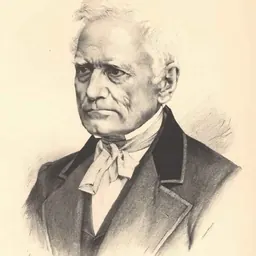
Milton Faver (c. 1822–1889) was a pioneering cattle rancher in Presidio County, Texas, the preeminent cattle baron of the Big Bend in the nineteenth century, and one of the most important individual contributors to Big Bend history. Also known in his time by the honorary title, don Melitón, he founded Cibolo Creek Ranch halfway between Marfa and Presidio, Texas in 1857. He was one of the earliest Texas trail drivers, driving his cattle to market in New Orleans in the 1850s and to other markets later. Although his birthplace is not known with certainty, he was most likely born and raised in Missouri around 1822. Local lore contends that, while in his teens, he fought a duel and fled south, believing he had killed his opponent. Recognizing the business opportunity that Fort Davis offered, Faver acquired land on Cíbolo Creek, the site of a Cibolo Indian village before the arrival of Europeans in the area. It was likely the site of a Spanish mission to the Cibolos, Mission Santa María de las Caldas.
Defensive Forts Faver built the first of his three adobe forts, El Fortín del Cíbolo, in 1857, as a defensive measure against Apaches, Comanches, and bandits of all kinds. His ranching empire boasted as many as 20,000 longhorns—some say as many as 100,000—irrigated farms, and herds of sheep and goats, making him the preeminent pioneer rancher of the Big Bend. (the Fort on Cíbolo Creek) was Faver’s stronghold, where he operated a sizable farming enterprise irrigated by Cibolo Springs. Faver later built El Fortín de la Ciénega (the Fort at the Marsh), where he headquartered his cattle operation, and El Fortín de la Morita (the Fort at the Little Mulberry Tree), which became the center of his sheep and goat operations. His vast enterprise not only supplied beef but also farm produce and his famous peach brandy to cavalry troops at Fort Davis, settlers in the region, and after silver was discovered, to the miners in Shafter, next door.
His ranch withstood the withdrawal of Union and Confederate troops during Civil War times and the resulting onslaught of Apaches and Comanches until the return of the US Army in 1867. During the tumultuous times of the latter 1800s, Faver managed to keep the inhabitants of his colony faithful and active in the defense of his settlements. Continued trade with Fort Davis supplied Union troops at the fort, supporting their stay in the region, and ensured continued settlement of the area until the advent of the railroad. He was an early pioneer in Texas cattle drives and is thought by some to be the inspiration for the television character Gil Faver on Rawhide. Upon his death in 1889, Faver was buried in an adobe tomb on Cibolo Creek Ranch.
Recent history The ranch thereafter passed through several owners over the years and finally succumbed to picturesque ruin prior to its purchase in 1990 by John Poindexter, who restored all three of Faver’s adobe forts and built a resort at Cíbolo Creek Ranch.
Don’t just read it —
keep it.
Full-length biographies made to live with: read them, listen on the way to work, watch them tonight.
- E-book
- Audio
- Video
Instant download · yours to keep · every purchase keeps this site free
Important facts
People in Milton Faver's life
Named in this biography and alive at the same time

Contemporaries
People whose lives overlapped Milton Faver's




Frequently asked questions
Who was Milton Faver?
American cattleman
When was Milton Faver born?
Milton Faver was born in 1822.
When did Milton Faver die?
Milton Faver died in 1889.
Sources & further reading
Cite this page
APA: Biography.guide. (2026). Milton Faver. https://biography.guide/milton-faver/
MLA: "Milton Faver." Biography.guide, https://biography.guide/milton-faver/.
Chicago: "Milton Faver." Biography.guide. https://biography.guide/milton-faver/.
Data last updated: 2026-09-22 · Spot an error? Report a correction.
Page generated 2026-09-27 05:19 UTC