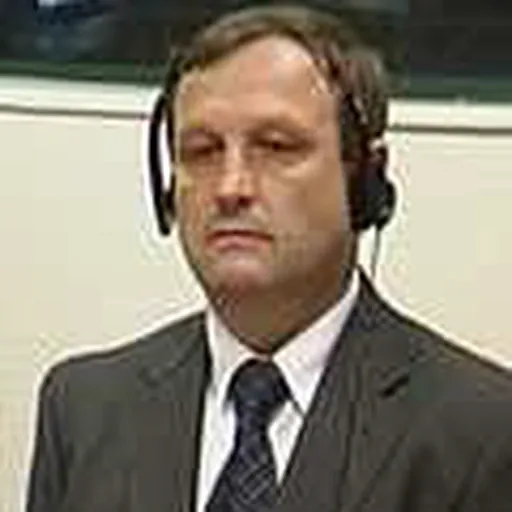
Milan Martić
Croatian Serb politician (born 1954)
About Milan Martić
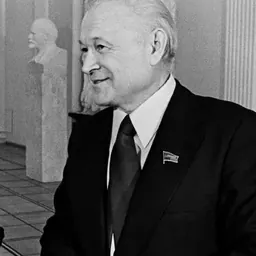
Born 1954. Milan Martić is a Croatian and Yugoslav politician, police officer and military personnel.
Milan Martić (; born 18 December 1954) is a Croatian Serb politician who served as the president of the unrecognized Republic of Serbian Krajina, a self-proclaimed state largely populated by Serbs of Croatia that wished to remain in Yugoslavia during the Croatian War of Independence.
After the war, Martić was indicted for war crimes by the International Criminal Tribunal for the former Yugoslavia (ICTY). He was convicted of war crimes on 12 June 2007 and sentenced to 35 years in prison. He is serving his sentence in Estonia since 2009.
Biography Martić was born on 18 November 1954 in the village of Žagrović, in the Knin municipality. He graduated from the Post-Secondary Police School in Zagreb and between 1976 and 1981 worked as a policeman at the Public Security Station (SJB) in Šibenik. He was the local police chief in Knin at the time of Croatia's declaration of independence. In 1990, he took on the position of local Serb leader, organizing the Milicija Krajina militia, also known as Martić's Police.
From 4 January 1991 to August 1995, Martić held various leadership positions, including President, Minister of Defence, Minister of Internal Affairs, in SAO Krajina and the Republic of Serbian Krajina (both unrecognised).
Also in 1991, Serbian opposition leader Vuk Drašković claimed Martić and Goran Hadžić had organized an assassination attempt on him. Martić replied that this was "an ordinary stupidity" and that "if he were to organize an assassination attempt, he would go through with it." Martić was critical of Drašković as Drašković called against mobilization and called for desertion.
Martić was supported by Slobodan Milošević during the presidential election in Serbian Krajina. Martić ran for the Serb Party of Socialists which received significant financial support from Milošević's Socialist Party of Serbia. On 21 January, Martić stated that he would “speed up the process of unification” and “pass on the baton to our all Serbian leader Slobodan Milošević. and remained in power until the fall of Serbian Krajina during Croatia's Operation Storm in 1995. After the fall of the Republic of Serbian Krajina, Martić and a large portion of the Serbian Krajina army and civilians, escaped to Banja Luka. Initially, he was rumored to have been either killed or wounded. He did not issue any statement for a number of days.
Martić went on to announce a plan of guerrilla warfare that would "last until the final freedom of the Republic of Serbian Krajina". Martić said in a statement:
ICTY prosecution
Initially indicted by the International Criminal Tribunal for the former Yugoslavia (ICTY) on 25 July 1995, Martić surrendered on 15 May 2002, and was transferred to the tribunal in The Hague the same day. He was charged with murder, persecution, inhumane treatment, forced displacement, plunder of public or private property, and wanton destruction of cities, towns or villages. He pleaded not guilty to all counts.
According to the ICTY, in the amended indictment, he "helped organize an ethnic cleansing campaign of Croats and other non-Serbs from Krajina and virtually the entire non-Serb population was forcibly removed, deported or killed". He was originally charged only with ordering rocket attacks on Zagreb which killed seven civilians and wounded 214 as retaliation to Operation Flash. Two days later, in an interview, Martić admitted he had personally ordered the shelling of the city.
Milan Babić, who, along with Martić, was one of the most important leaders of the rebel Croatian Serbs, stated in court during Martić's trial that the entire war in Croatia was Martić's responsibility, orchestrated by Serbian authorities under Milošević from Belgrade.
His trial started on 13 December 2005 and ended on 12 January 2007. On 12 June 2007, Martić was sentenced to 35 years in prison. His sentence of 35 years in prison was confirmed by ICTY appellate council on 8 October 2008. He was found to have been part of a "joint criminal enterprise" which included Blagoje Adžić, Milan Babić, Radmilo Bogdanović, Veljko Kadijević, Radovan Karadžić, Slobodan Milošević, Ratko Mladić, Vojislav Šešelj, Franko Simatović, Jovica Stanišić, and Dragan Vasiljković.
Don’t just read it —
keep it.
Full-length biographies made to live with: read them, listen on the way to work, watch them tonight.
- E-book
- Audio
- Video
Instant download · yours to keep · every purchase keeps this site free
Important facts
People in Milan Martić's life
Named in this biography and alive at the same time
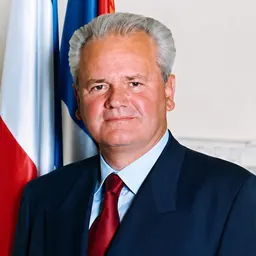

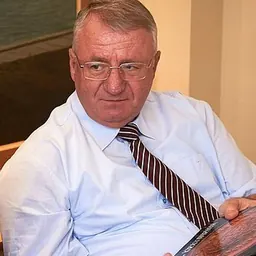
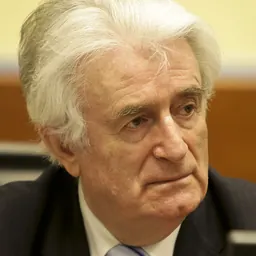

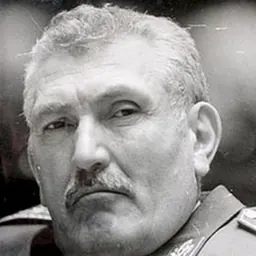

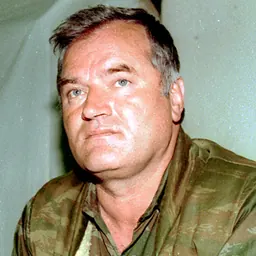
Related people
Same field, nearest in time




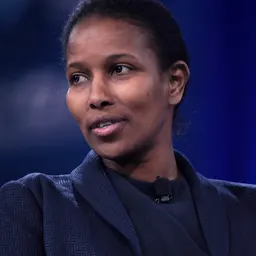
Contemporaries
People whose lives overlapped Milan Martić's

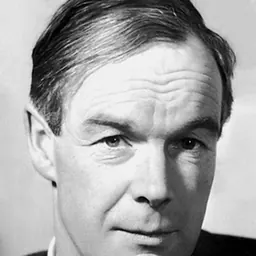

Frequently asked questions
Who is Milan Martić?
Croatian Serb politician (born 1954)
When was Milan Martić born?
Milan Martić was born on 18 November 1954 in Žagrović.
What is Milan Martić's occupation?
Milan Martić is a politician, police officer and military personnel.
What nationality is Milan Martić?
Milan Martić is Croatian and Yugoslav.
Sources & further reading
Cite this page
APA: Biography.guide. (2026). Milan Martić. https://biography.guide/milan-martic/
MLA: "Milan Martić." Biography.guide, https://biography.guide/milan-martic/.
Chicago: "Milan Martić." Biography.guide. https://biography.guide/milan-martic/.
Data last updated: 2026-09-21 · Spot an error? Report a correction.
Portrait: Wikimedia Commons · author & licence
Page generated 2026-09-27 05:00 UTC