
About Mikołaj Kruszewski
Lived 1851 – 1887 (aged 35). Mikołaj Kruszewski was a linguist.
Mikołaj Habdank Kruszewski (18 December 1851 – 12 November 1887) was a Polish linguist active in the Russian Empire. Kruszewski was a student and colleague of Jan Baudouin de Courtenay at Kazan University, where they developed the Kazan school of linguistics. At Kazan, Kruszewski developed his theory of alternations and jointly invented the modern concept of the phoneme with Baudouin de Courtenay. After publishing his doctoral dissertation Outline of Linguistic Science in 1883, he succeeded Baudouin de Courtenay as professor and Chair of Indo-European at Kazan University.
In 1884, Kruszewski became ill of a neurodegenerative disease, which resulted in his death in 1887 at the age of 35. With the exception of the Swiss linguist Ferdinand de Saussure, Kruszewski's work remained obscure until the late 20th century.
Early life and education
Mikołaj Habdank Kruszewski was born on December 18, 1851 in Łuck, Volhynia, in present-day Ukraine. His father, Wacław Kruszewski, came from a szlachta (Polish noble) family, and bore the Abdank coat of arms. Wacław began his career as a military officer in the uhlan regiments of Congress Poland, participating in the November Uprising of 1831. He later entered the civil service, serving as governor of various towns in the Volyn Governorate, including Ostroh, Ovruch, Lutsk (where Mikołaj was born), and Kovel. Mikołaj Kruszewski's mother, Rozalia Ignatiivna Kruszewska , came from a German merchant family. Wacław and Rozalia Kruszewski had five children, of which Mikołaj was the eldest. Mikołaj had three brothers, Wincenty-Eliasz, Klemens, and Aleksander-Albert, and a sister, Maria. Mikołaj was named after St. Nicholas, the patron saint of Lutsk.
In 1862, Kruszewski started his primary education at Lutsk District Noble School. During this period, Kruszewski moved between a rented residence in Lutsk and his mother's estate in Solotvyn, where his family had moved to after his father's retirement. In Solotvyn, Kruszewski acquired the Ukrainian language and learned about Ukrainian folklore, which he would go on to academically study.
In 1866, Kruszewski continued his studies at the Greek-Uniate gymnasium in Chełm. In 1871, Kruszewski passed examinations in Latin, Greek, Russian, and general and Russian history and was admitted into the Faculty of History and Philology at the University of Warsaw. He took an interest in analytic philosophy under the influence of the Russian philosopher In 1875, Kruszewski graduated from the University of Warsaw; his graduation thesis, "Incantations as a genre of Russian folk poetry", was published in the university's journal in the following year.
Career At Warsaw, the Slavist suggested that Kruszewski should pursue graduate study either under Alexander Potebnja in Kharkiv or under Jan Baudouin de Courtenay in Kazan. Kruszewski chose Baudouin, likely because Baudouin was also Polish and had also studied at Warsaw as an undergraduate. In the summer of 1875, Kruszewski applied for admission as a graduate student at Kazan University, but was unsuccessful. However, —then rector of the University of Warsaw—or the classicist Ivan Tsvetaev helped Kruszewski find a job as a teacher of classical languages in the town of Troitsk, near Orenburg.
Kruszewski taught in Troitsk between 1875 and 1878, during which he kept correspondence with Baudouin, studying Indo-European linguistics and Sanskrit under his guidance. By 1878, Kruszewski had saved up enough money to afford graduate study at Kazan without requiring a stipend from the university, which in 1875 Kruszewski was unable to obtain from either Kazan or Warsaw. Kruszewski was appointed to the position of "candidate for a faculty position without a professorial fellowship", which the linguist Joanna Radwańska-Williams described as "enter[ing] the system through the back door by the force of his own determination".
Upon arriving in Kazan, Kruszewski became Baudouin's closest student. Although Baudouin was known for being unusual in advocating for his students' careers, he was especially in active in his efforts to accelerate Kruszewski's linguistic career on account Kruszewski's ambitions and financial situation. In addition to the Sanskrit and Indo-European material required by the university, Baudouin organized private lessons for Kruszewski in his own home, spending between eight to ten hours per week on topics including readings of the Rigveda and Lithuanian folktales, exercises in Slavic dialectology, and discussion of contemporary works in linguistics. These sessions soon grew into what is now known as the Kazan Linguistic Circle, attracting many of Baudouin's other students and even the Turkologist Wilhelm Radloff, who already held an administrative position at Kazan. Baudouin also secured a scholarship for Kruszewski for his second year at Kazan.
Over his first academic year, Kruszewski focused his studies on Sanskrit and Indo-European, publishing translations of several hymns from the Rigveda into Russian. He decided to study Sanskrit verbs as the subject of his master's thesis. In 1879, Kruszewski produced a short article from his study of Sanskrit verbs titled "Observations on certain phonetic phenomena connected with accentuation". Kruszewski received a candidate's degree for the paper, and submitted it as qualification for a position as a salaried lecturer , which he obtained in the following year, teaching phonetics and Sanskrit.
In 1880, Kruszewski came upon Swiss linguist Ferdinand de Saussure's on the Proto-Indo-European vowel system, which had been published in 1879. Saussure's Mémoire accounted for the previously inexplicable inconsistent correspondence between the vowel a in Sanskrit and the vowels e, o, and a in other Indo-European languages, among other problems. Kruszewski wrote a review of Saussure's Mémoire praising its analysis and novel methodology. Thus, he considered the problem of Indo-European vowels solved and changed the topic of his master's thesis to applying Saussure's reconstruction of Proto-Indo-European vowels to the study of Old Church Slavonic. In May 1881, Kruszewski defended his master's thesis, "On the question of the 'guna'". Baudouin praised the thesis in presenting Kruszewski to the department as a candidate for the position of docent, saying that it "sheds completely new light on many linguistic phenomena" and that "in the Russian scientific literature until now there was nothing like it".
Although the linguistic scholarship at Kazan was developing rapidly, both Baudouin and Kruszewski felt Kazan to be too remote and inhospitable. Shortly before he obtained docentship in Kazan, Kruszewski inquired in private about the possibility of docentship at Kyiv University, complaining that he and his family were so ill-suited for Kazan's climate that affording medicine for their constant sickness had become a significant financial burden; however, Kruszewski was not allowed to be employed at Kyiv because he was Catholic. Meanwhile, Baudouin went on sabbatical leave in the academic year of 1881–1882, during which he traveled around the major centers of linguistics in western Europe. At the Paris Linguistic Society, Baudouin presented recent works by Kazan linguists, including Kruszewski's master's thesis. In Baudouin's absence, his teaching and administrative duties back in Kazan began to fall onto Kruszewski.
Facing the prospect of Baudouin's departure from Kazan, Kruszewski wrote his doctoral thesis over the academic year of 1882–1883 under time pressure. In May 1883, Kruszewski defended his doctoral thesis, Outline of Linguistic Science, which earned him the position of . With Kruszewski's education complete, Baudouin left Kazan for the University of Dorpat (now Tartu), leaving Kruszewski to succeed him as chair of Indo-European at Kazan. In addition to Indo-European and Sanskrit, which he had already been teaching, Kruszewski also taught phonetics, comparative grammar of Romance languages, the history of French, Russian grammar, and general linguistics.
Illness and death In 1884, Kruszewski's health began to decline, not publishing anything over the academic year of 1883–1884. In the spring of 1884, Kruszewski suffered a fever. This was followed by insomnia, memory loss, and tremors that rendered him unable to write. By the start of 1885, Kruszewski reported feeling suicidal and approaching insanity. Later in the year, Kruszewski was promoted to the rank of , but he was unable to continue teaching. His illness further worsened, developing hallucinations and losses of consciousness. In February 1886, it became apparent that Kruszewski's illness was terminal, so he resigned his positions at the University of Kazan. He spent the remainder of his life at the mental hospital in Kazan, dying on November 12, 1887. He was buried at the Catholic cemetery in Kazan. Although Kruszewski had been initially diagnosed with neurasthenia (mental exhaustion) and treated with electro-shock therapy, his symptoms suggest that he was likely suffering from neurodegeneration caused by tertiary syphilis, which was frequently misdiagnosed for neurasthenia at the time.
Works Due to Kruszewski's background in philosophy and logic, his linguistic scholarship was markedly theoretical compared to his peers. He frequently introduced theoretical distinctions and coined corresponding terminology, although few of his coinages have survived. Along with his teacher Baudouin de Courtenay, Kruszewski is generally considered one of the founders of modern phonology.
The phoneme Kruszewski was the first to introduce the term phoneme in Kazan, having borrowed it from Saussure, who used the term phoneme as an equivalent for the phonetic notion of "speech sound". Kruszewski took the notion of phoneme not from Saussure's work on general linguistics, which did not exist in 1880, but rather from his earlier work on Indo-European, specifically from the Mémoire. Saussure's use of in that work referred to a historical unit: a hypothesized sound in the protolanguage ancestral to a given language family, together with its reflexes in the each of the daughter languages. A "phoneme" understood in this way is essentially an individual correspondence set, as one would identify these in the course of a historical investigation. If a single sound undergoes various sound changes in various environments, the resulting sounds remain members of the same phoneme' in this sense, regardless of how much they may diverge phonetically.
Kruszewski took over this notion and recast it in synchronic terms, as with Saussure's usage, to a unit established by systematic comparison, but this time within a single language rather than across a family. In comparing instances of the same morphological unit in different words or families of words, one may find an alternation among distinct but anthropophonically related sounds: sounds that are related historically but no longer identical, being linked by the morphological relation between associated categories. This is the basis of a phoneme in a new sense: a set of alternating sounds occupying parallel positions within the same morphological unit in different families of words.
Although he asserted that this notion was essential to any scientific study of phonetics and morphology, Kruszewski did not immediately develop it further. He considered each alternation a distinct phoneme in a synchronic system; that is, the phonemes each consist of a set of alternating anthropophonic elements together with the conditions for the alternation. In this view, a sound may belong to several different phonemes if it happens to participate in several different alternations. For example, in a language like German, in which final consonants are systematically devoiced, to express the fact that the forms 'association' and Bunde 'associations' contain the same morphological element, one says that this element consists of the sequence , , , and a unitary "phoneme" { finally, before a vowel}.
Alternations Kruszewski's major work was in the theory of alternations. He was one of the first to create a modern systematic approach to the phonological structure of language. Above all, Kruszewski was preoccupied with classifying the alternations and describing their status.
Kruszewski proposed three types of alternations and stressed the fact that each alternation is influenced by two important factors. The first factor involves the changes sounds undergo within themselves, while the second involves the conditions that stimulate a given change. Such an approach results in the classification of alternations into three major groups.
The first category of alternations is restricted to the sounds that are very similar. Alternations that belong to this category are governed by four rules:
The cause of the alternation is determinate The alternation is general The alternation has no exceptions Alternations occur among sounds that do not differ markedly in phonetic properties. An example of the first type are those variations between particular sounds in Russian as a function of the palatalization of the preceding consonant.
The alternations that represent the second and third categories are quite similar and there are three important conditions under which the alternations take place:
The cause of the alternation may be absent The alternation may have exceptions Alternations occur among sounds that differ markedly in phonetic properties.
The sounds involved in alternations of the sounds of the second and the third category are known as correlatives. The only difference between the second and the third category is the degree to which a given category is morphologized. Kruszewski's example for the second category is u-umlaut in Icelandic. He does not strictly separate the second and the third category.
Personal life Kruszewski married Julia Hankiewicz in 1875, immediately after graduating from the University of Warsaw. Julia was well educated, knew Greek, was interested in French and Polish literature, and would help Kruszewski with academic work. The couple's first child, Wacława, was born in 1878 in Troitsk and baptized in Kazan, with Baudouin as her godfather. Wacława would become a teacher and die in 1958. Kruszewski's second daughter Stanisława was born in 1879. She would also become a teacher, dying in 1944 after being captured during the Warsaw Uprising. In 1884, Julia and Mikołaj Kruszewski had a son, Marian Oskar, who would die in 1916 fighting in World War I. Kruszewski's fourth child, Berta-Justyna, was born in 1885, and also died during the Warsaw Uprising in 1944.
Legacy References to Kruszewski in subsequent linguistic scholarship has been limited, partially because his work has been difficult to access, being mostly written in Russian. From Kruszewski's death in 1887 until 2012, his work had not been reprinted, and his personal archive has not been preserved. Kruszewski's ideas were also poorly received by Slavists at the time, with eastern European scholars such as Vatroslav Jagić and Aleksander Brückner criticizing Kruszewski's focus on formalisms and theory-building over the interpretation of data. Kruszewski's works were similarly received by Western scholars, with the exception of the German linguist Friedrich Techmer, who gave a favorable review of Kruszewski's On Sound Alternation and published the German translation of Outline of Linguistic Science.
Kruszewski's work started to receive more attention in the latter half of the 20th century due to efforts by the Russian linguist Roman Jakobson, who described Kruszewski as "one of the greatest theoreticians of language among the world's linguists of the late nineteenth century". However, Kruszewski was still overshadowed by Baudouin de Courtenay, whose work had been subject to considerably more studies, as Baudouin published more throughout his longer life. English-language information about Kruszewski remained largely obscure until Radwańska-Williams published her monograph about him in 1993. By 2012, there had been a total of two monographs, three doctoral dissertations, and around fifty scientific articles on Kruszewski's works.
Selected bibliography
Translations
Don’t just read it —
keep it.
Full-length biographies made to live with: read them, listen on the way to work, watch them tonight.
- E-book
- Audio
- Video
Instant download · yours to keep · every purchase keeps this site free
Important facts
People in Mikołaj Kruszewski's life
Named in this biography and alive at the same time
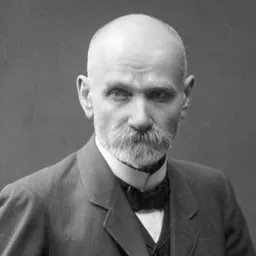


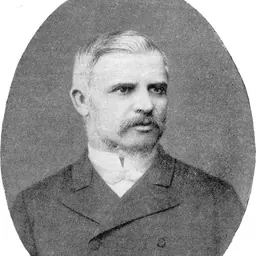
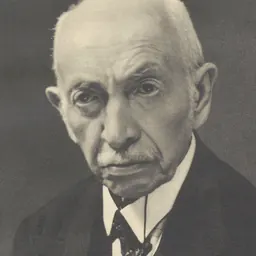

Related people
Same field, nearest in time
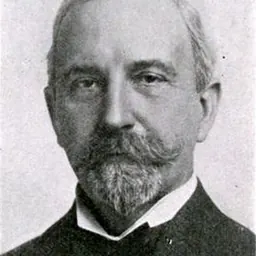
Contemporaries
People whose lives overlapped Mikołaj Kruszewski's



Frequently asked questions
Who was Mikołaj Kruszewski?
linguist (1851-1887)
When was Mikołaj Kruszewski born?
Mikołaj Kruszewski was born on 18 December 1851 in Lutsk.
When did Mikołaj Kruszewski die?
Mikołaj Kruszewski died on 12 November 1887 in Kazan.
What was Mikołaj Kruszewski's occupation?
Mikołaj Kruszewski was a linguist.
What nationality was Mikołaj Kruszewski?
Mikołaj Kruszewski's recorded nationality: Congress Poland.
Sources & further reading
· Wikipedia: Mikołaj Kruszewski
Cite this page
APA: Biography.guide. (2026). Mikołaj Kruszewski. https://biography.guide/mikolaj-kruszewski/
MLA: "Mikołaj Kruszewski." Biography.guide, https://biography.guide/mikolaj-kruszewski/.
Chicago: "Mikołaj Kruszewski." Biography.guide. https://biography.guide/mikolaj-kruszewski/.
Data last updated: 2026-09-20 · Spot an error? Report a correction.
Page generated 2026-09-27 05:23 UTC