
About Mikhail Savoyarov
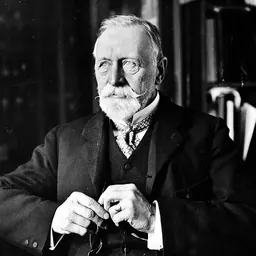
Lived 1876 – 1941 (aged 64). Mikhail Savoyarov was a Russian chansonnier, poet, singer, composer, actor and songwriter.
Mikhail Savoyarov (, Mikhai'l Nikoláevič Savoyárov) (, Moscow – 4 August 1941, Moscow) was a Russian chansonnier, composer, poet, comic actor, mime and the only fumist on the stage of the Russian Empire. In the first quarter of the 20th century he was a famous satirical singer-songwriter. His popularity peak was in the years of war (1914–1917) when he began to be called the «King of eccentrics». It was also the time when he became friends with Aleksandr Blok. Considering that the period of his greatest popularity was almost at the exact time as the brief period of renaming the capital, Savoyarov can be called the Petrograd artist in the strict sense of the word.
Biography
Mikhail Nikolayevich Savoyarov (Solovyov) was born on 30 November 1876 in Moscow. As a child he didn't receive music education. He learned to play violin without a teacher, also took private lessons. In the end of the 1890s Savoyarov moved to Saint Petersburg, started working as a violinist in a private opera house, and then in the Palace Theatre. The repertoire of these theatres included mostly operettas, which influenced his style. Savoyarov made his début on stage as an operetta tenor comedian by chance substituting for an ill actor. He had a success though not grand. Having an independent streak, soon he quit the theatre and started living on his own resources. Since 1905 he was seen playing in musical single-show companies (so called "capellas"), Russian, Ukrainian, Gipsy or pseudo-French ones which were in fashion and brought profit. It's significant that his style of acting coincides with his last name Savoyarov that comes from French word savoyard which means a strolling musician, a troubadour from Savoy.
In 1907 Savoyarov had a success on fair of Nizhny Novgorod where he performed together with his first wife Ariadna Azagarina. Earlier she was famous in single-show companies as a French cabaret singer. Performing as "French-russian duet" they had a repertoire that consisted of comic and satiric scenes including singing, dancing, disguise and impersonations using theatrical costumes, make-up, mise-en-scènes and even decorations. were reissued and many times and were very popular to quote, and the eccentric scene "Moon oh moon, are you drunk indeed?" was sung by literally everyone in Petrograd. Sometimes Blok brought actors who recited his poems and plays onstage. Thus in 1918 he persistently showed Savoyarov’s performances to his wife L.D. Mendeleyeva-Blok so that she could "adopt" his eccentric manner (for reading "The Twelve" poem). Vsevolod Meyerhold also attended Savoyarov’s concerts while working on his play Balaganchik (‘The Puppet Show’). According to Blok, Savoyarov’s Balaganchik was "way better than ours". — Aleksandr Blok, sketchbooks (20 March 1918).
Blok didn't recite "The Twelve" himself because he couldn't do it well. Usually, his wife performed reading of the poem. However, according to the audience who listened The Twelve performed by Liubov Dmitriyevna her did it poorly, falling into bad theatricism. A big woman with massive arms bare almost to her shoulders was rushing about on the stage dramatically shouting and gesticulating, sitting down and jumping up again. It seemed to some of the audience that Blok didn’t like listening to Lyubov Dmitriyevna’s reading either. But it was unlikely to be truth because Blok was always advising her and showing how to recite the poem. That’s why he was taking Lyubov Dmitriyevna to Savoyarov’s concerts. Apparently Blok believed The Twelve poem should be recited in this specific rough and eccentric manner, the way Savoyarov did it playing the role of a criminal from St. Petersburg. However Blok himself didn’t know and didn’t learn how to recite. To do that he would have to become, as he put it, a ‘variety poet and singer of satirical songs’ himself.
Savoyarov didn’t leave it unanswered. Specially for the famous guest of his concerts he wrote a few mock verses imitating ‘with delicate irony’ Blok’s most popular lines or intonation (for example: "A night. A street. A lamp. A drugstore" turned into "A store. A crowd. A low price"). Being aware that Blok is in the audience Savoyarov always performed such satirical songs for him. The live dialogue between the two poets during the concert delighted the public.
Like Blok, Savoyarov tried to cooperate with the new regime during the first years after the October Revolution. He headed the Petrograd variety actors’ union for three years. Then however he was supplanted by ‘real’ proletarian actors. During the 1920s Savoyarov endeavoured to be relevant, referring to new Soviet themes, he kept on writing and performing. Among the songs performed by his second wife, artiste Yelena Nikitina (1899–1973) the most successful were the operetta Proletarian's song and a love song parody You're still the same where the decadent intonations of Vertinsky were derided. The Twelve, a portrayal of criminal revolutionary Petrograd, which was compared by Shklovsky to the Bronze Horseman by Pushkin, had brand new images: «...The Twelve is an ironical work. It’s written not even with folk rhyme but with "flash" language. A Savoyarov style of street trolls». — (Viktor Shklovsky, the Hamburg account: articles, memoirs, essays (1914-1933). Shklovsky talked about Savoyarov's songs in ‘ragged genre’ performing which he would go on stage dressed and painted as a criminal. George Balanchine, a choreographer, forever memorized Savoyarov singing thieves songs: "Alyosha, sha! – take a half-tone lower, stop telling lies"... The music for this number was rewritten by the composer Andrei Petrov, but the lyrics by Savoyarov remained the same.
Earlier, back in the 1960s, Alexander Galich loved to perform this song, constantly improvising with a guitar and each time changing the author’s text, both musical and poetic. «Trumpeters» is also cited repeatedly in Yuri German′s novel, «My Dear Man». Along with Nikolai Zabolotsky′s poem, «The signs of the Zodiac are fading out», Savoyarov′s song becomes iconic. As if stamped with some kind of inner community, «Trumpeters» marks heroes who demonstratively fail to fit into the stifling atmosphere of Stalinist Russia.
This opinion is very closely related to the words of Psoy Korolenko, who in the late 2010s repeatedly noted the profound influence that the creative manner, as well as the poetic and artistic style of Mikhail Savoyarov, had on him.
«…Currently, some of my songs, some of the original verses I'm writing today, have been strongly influenced by his aesthetics, his poetics, his energy. Even though the notes exist, and there are no audio recordings of him, none left…, somehow Savoyarov also came into our attention and horizons, and struck our imagination with such depth, unexpectedness, paradox, freedom, experimentation, and a combination of <…> outward coarseness, grotesqueness, sometimes deliberately crude comedy, and extraordinary subtlety and chastity… and subtlety, such a subtle perception of the world that lies behind it all. And this genre, which combines the crude and the subtle, which... some of this is in the circus, some of this is in clowning, some of this is in certain genres of song, in certain theatrical roles, it is one of the sources of inspiration, <...> a kind of compass, perhaps, or some very intriguing and very intricate reference point...»
Perhaps the most evident artistic influences of Mikhail Savoyarov can be considered his grandson, a composer, a 1988 "European Oscar" winner and also an ingenious writer and artist working under a pseudonym Yuri Khanon. The eccentric Mikhail Savoyarov may have found his new incarnation in him...partly philosophically and academically. Another king of eccentrics’ granddaughter, Tatyana Savoyarova is also known as an eccentric artist (partly surrealist and mocker).
Savoyarov's artistic style was distinguished by the charms of ‘very lively’ performance, by natural musicality, plasticity, subtle nuances, the strong ability to transform, the ability to reveal the text and subtext, supplementing the singing with dancing and mimic scenes. Such a performance has one drawback: it must be seen and listened to in person. The archives didn't save neither gramophone recordings nor film fragments. Savoyarov only heritage left is published music, photographs and collections of poems.
Literature
Aleksandr Blok, Collected works in eight volumes, Moscow, Khudozhestvennaya Literatura ("belles-lettres") state publisher, 1962. Aleksandr Blok, Collected works in six volumes, Leningrad, Khudozhestvennaya Literatura, 1962. Dmitry Gubin, Playing during the eclipse, Ogonyok periodical, No.26, iuni 1990. Encyclopedia of Russian Variety Art, ed. Uvarova, XX century, Moscow, Rospen, 2000. V. Orlov, The life of Blok, Moscow, Centrpoligraf, 2001. Mikhail Savoyarov, Songs & couplets of singer-songwriter. Petrograd, Evterpa, ed.1,2, 1914-1915. Mikhail Savoyarov, Songs: couplets, parodies, duets. Petrograd, Evterpa, ed.3, 1915. Mikhail Savoyarov, Because of the Ladies (published music), Economic, Petrograd, 1914. Mikhail Savoyarov, The Drunken Moon (published music), Evterpa, Petrograd, 1915. Mikhail Savoyarov, Trumpeters (published music), Evterpa, Petrograd, 1916. Mikhail Saltykov-Shchedrin, Mikhail Savoyarov. The History of a Town complete (based on original documents published by Yuri Khanon). — Saint Petersburg, Moscow: Center of Middle Music, 2026. — 336 p. Viktor Shklovsky, The Writing Table // V.B. Shklovsky, The Hamburg Account: articles, memoirs, essays (1914–1933), Moscow, Sovetsky Pisatel ("Soviet Writer") publisher, 1990. N. Sinev, In Life and in Variety, Kiev, 1983. G.Terikov, Topical songs in Variet, Moscow, 1987. Solomon Volkov, History of Saint Petersburg culture, Moscow, EKSMO, 2008. Solomon Volkov, tr. Bouis, Antonina W., St. Petersburg: A Cultural History (New York: The Free Press, 1995). . en Variety in Russia, XX century: encyclopedia, ed. Uvarova, Moscow, OLMA-press, 2004. Yuri Khanon, Mikhail Savoyarov. «Through the Trumpeters» (or the experience of continuous persecution). St. Petersburg: Center of Middle Music, 2019. Yuri Khanon, Mikhail Savoyarov. «Favorites from abusive (Russian: “Избранное из Бранного” — “Selected curse words”). — St. Petersburg: Center of Middle Music, 2017. — 368 p. (in Russian)
Don’t just read it —
keep it.
Full-length biographies made to live with: read them, listen on the way to work, watch them tonight.
- E-book
- Audio
- Video
Instant download · yours to keep · every purchase keeps this site free
Important facts
People in Mikhail Savoyarov's life
Named in this biography and alive at the same time

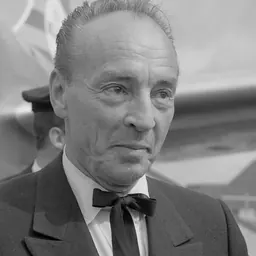
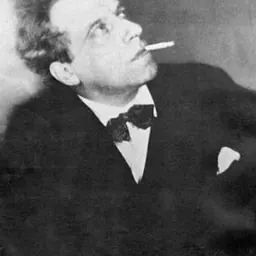
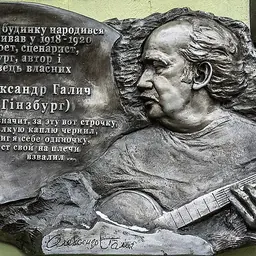

Related people
Same field, nearest in time

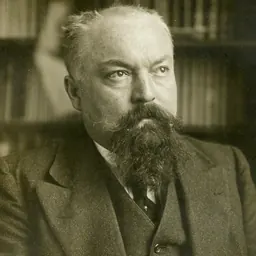

Contemporaries
People whose lives overlapped Mikhail Savoyarov's

Frequently asked questions
Who was Mikhail Savoyarov?
Russian actor and singer (1876-1941)
When was Mikhail Savoyarov born?
Mikhail Savoyarov was born on 30 November 1876 in Moscow.
When did Mikhail Savoyarov die?
Mikhail Savoyarov died on 4 August 1941 in Moscow.
What was Mikhail Savoyarov's occupation?
Mikhail Savoyarov was a chansonnier, poet, singer, composer, actor and songwriter.
What nationality was Mikhail Savoyarov?
Mikhail Savoyarov was Russian.
Sources & further reading
· Wikipedia: Mikhail Savoyarov
Cite this page
APA: Biography.guide. (2026). Mikhail Savoyarov. https://biography.guide/mikhail-savoyarov/
MLA: "Mikhail Savoyarov." Biography.guide, https://biography.guide/mikhail-savoyarov/.
Chicago: "Mikhail Savoyarov." Biography.guide. https://biography.guide/mikhail-savoyarov/.
Data last updated: 2026-09-20 · Spot an error? Report a correction.
Page generated 2026-09-27 05:17 UTC