
About Mike Rinder
Lived 1955 – 2025 (aged 69). Mike Rinder was an American television presenter and youTuber, known for Office of Special Affairs.
Joining Sea Org After finishing high school, at age 18 Rinder joined Sea Org on the ship Apollo, then headquarters for Sea Org and for Scientology. He became an early member of the Commodore's Messenger Organization and rapidly rose in rank to head of the Office of Special Affairs.
Office of Special Affairs As executive director of the Office of Special Affairs (OSA), Rinder was the chief spokesperson and representative of Scientology to the media for 25 years until he was replaced by Tommy Davis as spokesperson in 2005 under orders from David Miscavige. This office is responsible for overseeing public relations and legal issues for the church, as well as handling "internal investigations into members' behavior." He defended Scientology leader David Miscavige, but Miscavige was unhappy that Rinder was unable to stop the documentary from being shown.
Criticism of Scientology After leaving Scientology, Rinder relocated to Denver, Colorado, and initially did not intend to speak out against the organization; in 2009, when the St. Petersburg Times first asked him for an interview, he declined. However, a month later, two Washington-based Scientology lawyers went to his home unannounced, informed Rinder that they knew about the newspaper's visit and asked what he had revealed. In 2015, he appeared in the HBO documentary entitled Going Clear: Scientology and the Prison of Belief by Alex Gibney which is based on the book by Lawrence Wright. Along with Leah Remini, Rinder co-hosted the A&E documentary series Leah Remini: Scientology and the Aftermath. He published a memoir in September 2022 titled A Billion Years: My Escape From a Life in the Highest Ranks of Scientology.
His intimate knowledge about the organization, both as a Sea Org member for 46 years and as head of OSA for 25 years, was a revelation about the organization to the world. Rinder discussed how OSA responds to critics of Scientology and stated that several events in the history of Scientology rocked the organization: the death of L. Ron Hubbard in 1986, the discovery of Operation Snow White, the rise of the Internet in the 1990s, the mobile revolution of the 2000s and the rise of social media in the 2010s. These events made it difficult for Scientology to attract new followers and retain current adherents and resulted in the Church of Scientology taking increasingly more draconian measures to ensure its survival. and initially were forms of spiritual counseling. That changed due to the reaction by many early Scientologists to the Xenu origin of man story found in OT III. They balked at it and began leaving Scientology and encouraged others to do so as well. According to Rinder, this is where the term "suppressive person" originated from.
Disconnection
According to Rinder, new enrollments in Scientology declined beginning in the 1970s, and total membership started declining in the 1980s as departures outstripped new followers. Without new Scientologists entering the organization, it became increasingly dependent on retaining the followers they already had. The organization's disconnection policy is the primary way it discourages Scientologists from departing and is a mechanism of emotional blackmail. This policy led to what Rinder stated are "captive" Scientologists – members who stay not because they are faithful to the tenets but because they fear disconnection – and cites Leah Remini's mother as an example of this because she stated she wanted to leave Scientology prior to Remini's departure but delayed doing so because she did not want to be disconnected from the rest of her family. Rinder stated his biggest regrets in life is having two children that were born into Scientology and having enforced the disconnection policy (to which he was being subjected) when he was director of OSA.
Both have said the policy was backfiring because victims, such as John Sweeney, reported their experiences with Fair Game and this led to more negative publicity and thus produced more critics than they were silencing. Rinder's own decision to speak out against Scientology is an example of this as well because he decided to speak out against Scientology after being victimized by Fair Game despite not criticizing Scientology after leaving. According to Rinder, Scientology never recovered from the FBI raid, because it provided documentary evidence to support critics' claims. This was also the primary source of information used in the article, The Thriving Cult of Greed and Power published by Time magazine in 1991.
Vexatious litigation
After the FBI raid, Rinder said that Fair Game tactics had to be changed. Intimidation tactics were still used, but took the form of vexatious litigation. Rinder stated this was effective at silencing organizations from disseminating information critical of Scientology, and kept the public relatively unaware of information seized during the FBI raid. However, the 1991 Time magazine article, "The Thriving Cult of Greed and Power", and the litigation that followed it ended this secrecy. The year before Scientology sued Time magazine for defamation, the Church was successful at shutting down the Cult Awareness Network (CAN) by suing the group.
However, unlike CAN, the Time Warner Corporation had the resources to defend itself, as well as the documents obtained from the earlier FBI raid. Time Warner was able to successfully prove that Scientology's lawsuit was vexatious in nature, and that it was meant to financially drain critics into submission rather than to resolve any actual dispute. Additionally, the discovery process allowed for the subpoena of Church documents, which exposed the Church's litigation policies. As a result, the Church lost its lawsuit against Time Warner. In the aftermath of the lawsuit, courts were less receptive to litigation brought by the Church because its abuse of the legal system was well documented.
In the decade that followed, criticism of Scientology became bolder, more public and consistently negative. In the early 1990s, when the Internet was in its infancy, internet startups could be intimidated by the threat of litigation by the Church. But a decade later, those same companies were now large corporations with the resources to defend themselves. They successfully lobbied for legislation that shielded them with "loser pays" laws that would indemnify the Church if it lost a lawsuit, and anti-SLAPP laws that prohibited the Church from using lawsuits to financially drain a critic into submission. Although Scientology continued to sue individual critics, defendants began using discovery to introduce documents of secret doctrine into evidence, making them part of the public record, and thus viewable by anyone. An example of this was the 1993 case Church of Scientology International v. Fishman and Geertz.
Awards and charitable work In 2018, Rinder co-founded The Aftermath Foundation, a nonprofit which helps people escape from Scientology, and connects former Sea Org members with housing, work and other support upon leaving the Church. He was a board member of the Foundation. After his death, the board unanimously agreed to change the name in his honor to The Michael J. Rinder Aftermath Foundation.
Rinder was co-executive producer of the show Leah Remini: Scientology and the Aftermath in 2019 and 2020 when the show was nominated for the Emmy Awards, winning an Emmy for Outstanding Hosted Nonfiction Series Or Special – 2020.
In 2019, CHILD USA awarded Rinder and Leah Remini the Barbara Blaine Trailblazer Award for having "taken a brave, public stand for justice and given voice to many of Scientology's victims." Rinder sat on the CHILD USA board of directors where he helped to "[change] the laws in numerous states across the US with legislation enacted to make it possible for victims to pursue their day in court."
Personal life and death Rinder had two children with his first wife, Cathy; daughter Taryn and son Benjamin.
In June 2023, it was announced that Rinder had developed advanced esophageal cancer. He died from cancer at a Palm Harbor hospice facility, on January 5, 2025, at the age of 69. Tracey McManus, who covered Scientology for the Tampa Bay Times (2015–2024), said that Rinder was "an invaluable resource for journalists" and that "with Mike's death, the world lost institutional knowledge about a secretive organization that continues to impact people's lives. But he leaves a legacy that will continue to play a role in the understanding of Scientology for decades to come."
Books
Don’t just read it —
keep it.
Full-length biographies made to live with: read them, listen on the way to work, watch them tonight.
- E-book
- Audio
- Video
Instant download · yours to keep · every purchase keeps this site free
Important facts
People in Mike Rinder's life
Named in this biography and alive at the same time







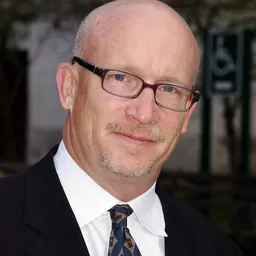
Related people
Same field, nearest in time


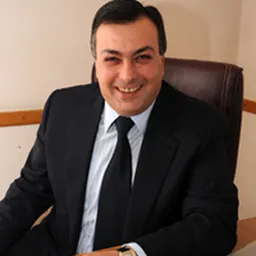
Contemporaries
People whose lives overlapped Mike Rinder's
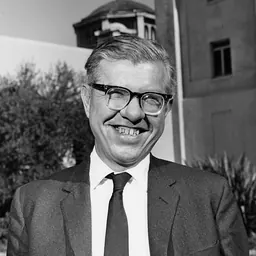
Frequently asked questions
Who was Mike Rinder?
American critic of Scientology (1955–2025)
When was Mike Rinder born?
Mike Rinder was born on 10 April 1955 in Adelaide.
When did Mike Rinder die?
Mike Rinder died on 5 January 2025 in Palm Harbor.
What was Mike Rinder's occupation?
Mike Rinder was a television presenter and youTuber.
What was Mike Rinder known for?
Mike Rinder was known for Office of Special Affairs.
What nationality was Mike Rinder?
Mike Rinder was American.
Sources & further reading
Cite this page
APA: Biography.guide. (2026). Mike Rinder. https://biography.guide/mike-rinder/
MLA: "Mike Rinder." Biography.guide, https://biography.guide/mike-rinder/.
Chicago: "Mike Rinder." Biography.guide. https://biography.guide/mike-rinder/.
Data last updated: 2026-09-26 · Spot an error? Report a correction.
Page generated 2026-09-27 05:16 UTC