
About Mike Curtis
Lived 1943 – 2020 (aged 77). Mike Curtis was an American american football player.
James Michael Curtis (March 27, 1943 – April 20, 2020), nicknamed "Mad Dog" or "the Animal," was an American professional football player for the Baltimore Colts, Seattle Seahawks, and Washington Redskins. He played a total of 14 seasons in the National Football League (NFL), running from 1965 to 1978.
Curtis was a four-time Pro Bowler, named to the squad in 1968, 1970, 1971, and 1974. Although sacks were not official during the time he played, Curtis was a good blitzer, recording 22½ sacks, and pass defender, picking off 25 passes. He was named the American Football Conference (AFC) Defensive Player of the Year in 1970 by a panel of 101 sportswriters.
Early life
Mike Curtis was born March 27, 1943, in Washington D. C. and grew up in Rockville, Maryland. He attended Richard Montgomery High School in Rockville, where he played football, weighing 195 pounds (88.5 kg) and playing fullback as a junior in 1959, and a senior in 1960. He was named All Metro by the Washington Post in 1960. During a game in September 1960, Curtis ran for three touchdowns in a single quarter, while also kicking three of four extra points, blocking a punt, recovering a fumble, kicking off and punting in the same game.
College career
Curtis was offered a number of athletic scholarships to play college football, ultimately deciding to accept the offer from Duke University, located in Durham, North Carolina. He later recalled that he had enormous trouble with the adjustment, unhappy and homesick, and nearly flunked out of school due to a failure to apply himself academically. Moreover, he was injured playing freshman football, hurting his knee and breaking a bone in his hand.
Curtis declined to fill his spring schedule with easy physical education classes, as suggested by the Duke athletic department, instead taking classes that put him on a degree track and attending summer school after his freshman year. He changed his academic major from business to history to ease his path in the classroom. Curtis played both sides of the ball — fullback on offense and middle linebacker on defense. He was First-Team All-Atlantic Coast Conference (ACC) twice (including as a sophomore in 1962), as a fullback and a linebacker.
He suffered four knee injuries during the course of his college football career, but became a member of Duke’s Athletic Hall of Fame, and was selected an All-ACC Academic in 1963, an Academic All- American, and an honorable mention All-American in 1964. Players had significant financial leverage in this period, with two teams competing for their services, and Curtis received a healthy two-year contract to play for the Colts. The deal paid him $15,000 for the 1965 season and $17,000 for 1966, plus a signing bonus of $22,000 — a total of $54,000 (about $535,000 in 2024) for two years.
During his rookie season with the Colts, Curtis was listed third on the depth chart at fullback, playing behind Tony Lorick and Jerry Hill. He was moved to outside linebacker by future hall of fame head coach Don Shula in 1966. After being named first-team All-Pro in 1968 — a year in which the Colts led the NFL in scoring defense en route to winning the NFL Championship — he was moved to middle linebacker in 1969 where he was named second-team All-Pro behind Dick Butkus, The Kansas City Chiefs' Committee of 101 named Curtis the AFC Defensive Player of the Year. United Press International (UPI) named Curtis second-team All-AFC middle linebacker behind future Kansas City Chief Hall of Fame linebacker Willie Lanier.
Many have said he should have been the Super Bowl V Most Valuable Player (MVP) for his last-minute interception, but the voting was already in on that award by that point in the game.
Curtis was named the Colts' Most Valuable Player in 1974, an honor he twice received from his Colt teammates. Despite the objections of head coach Ted Marchibroda, Curtis was left unprotected for the 1976 NFL expansion draft due to a personality conflict with general manager Joe Thomas. "I heard indirectly that I was in the expansion draft because Joe Thomas hated my guts," he said. "Thomas could have had a first-round draft choice or better for me if he had wanted it."
Curtis was selected by the Seattle Seahawks on March 30, 1976. He started all 14 regular-season games during the Seahawks' inaugural campaign and was the team's first defensive captain. The Seahawks returned him to right outside linebacker for the season and Curtis responded like a professional, finishing the year second on the team in tackles, with 107. He started 11 games in place of the injured Chris Hanburger in 1977, but only two of the 13 contests in which he played the following year. His intention to retire after the 1979 season was expedited before the campaign began when he was released by the Redskins on August 7.
Curtis finished his career with 25 interceptions, 22 quarterback sacks, 10 fumble recoveries and scored four touchdowns; and was one of the most feared players of his era. He also owned a house in Rockville, Maryland, and invested a good part of his football income buying and selling real estate.
Death and legacy
Curtis struggled with memory loss late in life, a condition associated with damage due to chronic traumatic encephalopathy (CTE), a neurodegenerative disease caused by repeated head injuries. He died peacefully, surrounded by loved ones on April 20, 2020, in St. Petersburg, Florida.
He is also remembered more positively for his game-changing interception and return with little more than one minute left in Super Bowl V, setting up Colts kicker Jim O'Brien for the game-winning field goal.
His friend and teammate, Colts center Bill Curry recalled of Curtis: "You really missed the thrill of getting to see a great NFL linebacker if you didn't see him play.... It was like watching the guy with the muscularity of a defensive tackle who could run like a corner. It was incredible to see him run people down. How could he do that? But he did it every day." Curtis once ran the forty-yard dash in 4.3 seconds.
There have been many who have asserted the position that Curtis should be in the Pro Football Hall of Fame, such as hall of famers Ted Hendricks, Joe Namath, Roger Staubach, Don Shula and others like Larry Brown.
Don’t just read it —
keep it.
Full-length biographies made to live with: read them, listen on the way to work, watch them tonight.
- E-book
- Audio
- Video
Instant download · yours to keep · every purchase keeps this site free
Important facts
People in Mike Curtis's life
Named in this biography and alive at the same time



Related people
Same field, nearest in time


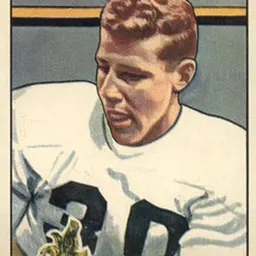
Contemporaries
People whose lives overlapped Mike Curtis's



Frequently asked questions
Who was Mike Curtis?
American football player (1943-2020)
When was Mike Curtis born?
Mike Curtis was born on 27 March 1943 in Rockville.
When did Mike Curtis die?
Mike Curtis died on 20 April 2020 in St. Petersburg.
What was Mike Curtis's occupation?
Mike Curtis was an american football player.
What nationality was Mike Curtis?
Mike Curtis was American.
Sources & further reading
· DBpedia: Mike Curtis (American football)
Cite this page
APA: Biography.guide. (2026). Mike Curtis. https://biography.guide/mike-curtis-american-football-player/
MLA: "Mike Curtis." Biography.guide, https://biography.guide/mike-curtis-american-football-player/.
Chicago: "Mike Curtis." Biography.guide. https://biography.guide/mike-curtis-american-football-player/.
Data last updated: 2026-09-20 · Spot an error? Report a correction.
Page generated 2026-09-27 05:20 UTC