
About Mike Colandro
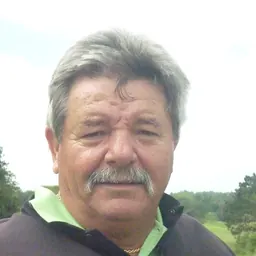
Lived 1953 – 2015 (aged 61–62). Mike Colandro was an American golfer.
Michael Violette Colandro (May 27, 1953 was an American professional golfer. Colandro played briefly on the PGA Tour in 1979 and 1980 but did not have much success. In 1981, he started to play on the PGA Tour of Australia. Despite multiple personal tragedies, a rancorous relationship with rules officials, and a precarious exemption status he was able to play 16 consecutive seasons on the Australian tour, culminating with his only official tour victory, the 1987 Air New Zealand Shell Open. In 1995, he largely retired as a touring professional. He still worked in the golf industry, however, as a swing instructor, creator of golf-related DVDs-CDs, and charity fundraiser, while also working on a self-published autobiography, Almost an Aussie.
Early life Colandro was born in 1953. He was of Italian descent. Colandro was from Hartford, Connecticut. He also had a brother, Albert, and a sister, Maryann. Colandro was afflicted with Diabetes type II throughout his life. In general, however, Colandro largely honed his skills at Goodwin Park Golf Course in Hartford. During the 1968–69 school year, as a freshman at Newington High School, Colandro began playing for the golf team. He immediately began as a "starter." During his sophomore year, however, Colandro could not play on the golf team due to "double sessions at school."
In the summer of 1970, Colandro received media attention for the first time. In July, he played the Connecticut State Golf Association Junior Championship at Watertown Golf Club in Watertown, Connecticut. Colandro won his first two matches of the event and reached the quarterfinals. In the quarterfinals he played William Reklaitis of Rockledge Golf Club. Colandro was 2 up at the turn and remained two holes up with two to play. However, Reklaitis won the 17th and 18th holes, including a birdie at the last, to send it to extra holes. Colandro, though, birdied the first extra hole to win the match. In the semifinals he played "tournament medalist" Paul Maloney. Colandro quickly fell behind, 3 down at the turn. Colandro birdied the 10th hole to get closer but Maloney won a number of holes in the middle of the back nine to assure the win. Later in the year, in September, Colandro played the Hartford District Amateur. He was believed to be the youngest-ever winner of the event. Colandro shot a one-under-par 70 in the second round to win medalist honors. As a team, Goodwin Park finished in second place, two back of the host team, Hubbard Heights. In August he played the Hartford District Amateur, the event he won five years previous. Colandro was considered one of the favorites. In June, he played the finals at Pinehurst No. 6 in North Carolina. Over the course of the 72 hole tournament, Colandro shot 295 to earn rights to play on the PGA Tour. Two weeks he played the Greater Milwaukee Open. He opened with a 68 to put him within two of the lead. However, he shot an 80 to miss the cut by a wide margin. A month later Colandro missed the cut at his hometown event, the Greater Hartford Open, by one stroke. However, he shot a second round 79 to miss the cut. Colandro formed a company, the MC Company, to help fund his tour of Australia. In October, he played the New South Wales PGA Championship. He finished in solo ninth place. Two weeks later he played the West Lakes Classic. He opened with a 72 to put himself near the top ten. He finished in a tie for 14th. The following week he played the New South Wales Open. He opened with even-par rounds of 73 to put himself near the lead. However, on the weekend he followed with rounds of 76 to finish outside of the top ten. By early November, Colandro had played in six events and made the cut in all of them. In February 1982, Colandro played the Australian Masters. He shot three-under-par for the first two days to put him in joint second place, three back of Bob Shearer's lead. However, in the third round he shot a 78 and "dropped out of the reckoning." He finished in a tie for 21st. Later in the year he started playing some events on the Asia Golf Circuit.
Shortly thereafter, Colandro returned to the United States. In late June 1982, Colandro played the Massachusetts Open. The event was held at Longmeadow Country Club in Longmeadow, Massachusetts. In the second round he shot an even-par 70 to become a "challenger" to leader Dana Quigley, finishing the round in solo second place. However, he "soared" to a two-over-par 72 in the third round to "slip into a second place tie" with Bob Menne. In late July, Colandro began play at the Miller High Life-Greater Bangor Open. After two rounds Colandro was at 142 (+2), three back of leader Jeff Sluman. However, he was unable to break par in the final round, shooting a 72 (+2), to finish at 214 (+4), in a tie for fifth place. He won $700. In August, Colandro attempted to qualify for his hometown event, Sammy Davis Jr. - Greater Hartford Open. However, he was not successful. However, Colandro shot a third round 75 to shoot himself out of contention. However, he shot a final round 71 (−1) for solo third place. In October 1983, he had much success at the National Panasonic New South Wales Open. He did not play particularly well at the beginning of the tournament, however, opening with rounds of 72 (+1) and 78 (+7). However, in the third round he shot a 67 (−4). In the final round he shot a 72 (+1) to finish in a tie for 8th. In early November, Colandro played in a pro-am at Royal Melbourne Golf Club, shooting a 69, finishing in a tie for fourth. The next week Colandro played the Victorian PGA Championship. After two rounds he was at 143 (−1). On Friday night of the tournament, he learned his father died. He continued to play, however, stating that "his father would have wanted him to play." On Saturday, during the third round, he shot a 68 (−4) to put him only three shots off of the lead. Colandro ultimately finished in solo fourth place, four back of champion Vaughan Somers.
As of February 1984, Colandro had returned to the United States. During this era, Colandro was a teaching pro at Laurel View Golf Club in Hamden, Connecticut. Early in the year, he played the PGA Club Pro Series at Plantation Club Resort in Crystal River, Florida. Colandro finished at six-under-par 138, in a tie for sixth place, four back of champion Kirk Hanefeld. In early June, he attempted to qualify for the 1984 U.S. Open. The event proper was going to held at Winged Foot Golf Club at Mamaroneck, New York. The final qualifying event was held in New Jersey. Colandro played well for most of the event and was on the mark to qualify. However, he shot a 40 on the final nine to miss qualifying by a shot. The following week, Colandro played the Miller High Life-Greater Bangor Open again. The event was held at Bangor Municipal Golf Course. At the par-70 course, Colandro shot rounds of 67 and 70 to put him in a tie for second, four back of the lead held by Fran Marrello. In the final round, Colandro played in the final group with Marrello and Chip Hall. Over the course of the front nine, however, he shot two-over-par to fall into a tie for third. He ultimately shot a 74 (+4) to finish in a tie for 5th place.
In late 1984, Colandro returned to Australia. Early in the 1984–85 season he recorded a number of top finishes that put him at the edge of the top ten. In late October, he played the New South Wales Open. He shot a third round 71 (−2) to move near the top ten. He shot an even-par 73 the following day to finish T-7. In the first week of November he played the Australian PGA Championship. He shot three rounds in the low 70s to put himself in the top ten entering the final round. He finished in a tie for 11th. Four days later he opened with a 69 at the Victorian PGA Championship to put himself in the top ten. He finished in a tie for 10th. The following week he matched "par figures" at the Australian Open to finish in solo 10th place. The following week he was considered among the favorites at the Honeywell Classic. He followed with a 70 (−3) to stay on the leaderboard. He finished in a tie for 11th at 284 (−8).
Late in season he seriously contested to win several tournaments. In mid-December, Colandro received much media attention for his play at the Queensland PGA Championship. He opened with a 71 (−1), scoring six birdies. He "continued his run of birdies" with four more in the second round. With a 70 (−2) he took the lead. Colandro had a chance to maintain to lead on Saturday. However, he "threw away his chance," missing an "easy" putt on the 16th and then bogeying the 17th hole. He was two behind leaders Peter Fowler and Ossie Moore. On Sunday, Colandro played in the final group. He was two-over-par through the first 16 holes but was still "in the running" for the championship, one behind leader Ian Baker-Finch. However, he bogeyed the par-4 17th to lose any hope. He finished in third place. In February, Colandro played well at the Victorian Open. After two rounds he was at 141, in a tie for 5th place. After three rounds he was at 213 (−3), in a tie for third place, only behind leader Baker-Finch and second place holder David Graham. He shot an even-par round of 72 on Sunday to finish in solo fifth place. The following week he played the Australian Masters. After three rounds he was at 221, in a tie for ninth. However, he played poorly in the final round, shooting a 77, to finish in a tie for 18th. In April, Colandro played the three-round Ansett Yarra Yarra Easter Classic. He opened with rounds of 68 and 74 to put him near the lead. In the final round he shot a 72 to finish tied with Robert Stephens at the end of regulation. They finished one ahead of Mark Nash, Bob Shearer, and amateur Tim Elliiot. Colandro and Stephens played a sudden-death playoff to decide the championship. The playoff would begin on the 10th hole. On the first playoff hole, Colandro's drive "landed in the trees" and his approach went into a bunker. Stephens, meanwhile, "comfortably" made the green in regulation. Colandro had an 11-metre bunker shot. He stated later, "It was a very hard shot with a capital V-E-R-Y." However, Colandro holed the shot for birdie. Stephens could not match him and Colandro won the tournament. Afterwards Colandro stated, "I didn't expect to hole the ball, I was just hoping to get it up there so I could get it in for par. You just don't get bunker shots like that in. But as soon as I hit it I thought it had a chance." Later in the month, he also won the Bendigo pro-am.
Colandro returned to the United States. In the summer, he told the Bangor Daily News, "This is a big year for me. I have to be realistic. I've been guilty about not thinking about the future the last few years. I've set a lot of short-term goals, but I've never set long-term goals. I'm at the point where I'm saying you've either got to start winning now, or start looking for other things to do in your life." In early August he played the three-round Miller High Life-Greater Bangor Open. Colandro had an up and down day but birdied the final hole to finish at one-under-par, near the lead.
As of mid-October 1985, Colandro had returned to Australia. In November, he played the Victorian PGA Championship at Warrnambool Golf Club Warrnambool, Australia. Colandro was one-over-par at the midway point of the tournament. However, in the third round he played excellently, shooting a "scintillating" nine-under-par 63, breaking the course record. He moved into a tie for third place. Colandro stated it was his "best-ever round in competition." He finished in a tie for fourth place. For the remainder of the year, Colandro had much success at minor tournaments. A few days later after his success at Warrnambool, Colandro began preparations to play the Australian Open. In the event's pro-am he shot a one-over-par 73 at the "demanding" Royal Melbourne course, only behind medalists Tom Watson and Mike Cahill and third place holders Terry Gale and Ian Stanley. Two weeks later, in late November, he played well at the U-Bix Classic pro-am, shooting a three-under-par 70, finishing in a tie for third place. In December, he played the two-round Eastwood pro-am at Eastwood Golf Club in Kilsyth, Victoria. With consecutive rounds of even-par 72 he won the event by two strokes over Rob McNaughton.
In early 1986 he had some success at more significant events. In February, he opened with rounds of 71 at the Victorian Open to put himself near the top ten. He closed with rounds of 73 and 69 to finish in a tie for fifth, four back of champion Ossie Moore. In early March he played the Rich River Golf Classic. In the third round he opened with a "stunning run" of four consecutive birdies. He ultimately shot a 68 (−3) finished the round tied with Rodger Davis for second place. He closed with an even-par 71 to finish solo third. Colandro was "devastated" by her death. In early June, Colandro began his qualifying attempt for the 1986 U.S. Open. The two-round sectional qualify event was held at two different golf courses in Purchase, New York. The event proper was held at Shinnecock Hills Golf Club in Southampton, New York. Colandro opened poorly in the first round with an 80 (+10), including double bogeys on the 10th and 12th holes. Colandro's poor play was due to, in his words, "lost concentration and a couple of poor swings. You can shoot a high number when that happens." He responded with a 76 (+6) and missed the cut by a wide margin. Colandro was not particularly discouraged by the result, however. "It wasn't a bad effort considering that for a few months I didn't really know what my life was about," he said later, referencing the recent death of his fiancée. He shot an opening round 69 (−2) to take the solo lead. Colandro shot over-par in the second round but maintained the lead. In the final round, Colandro played better and expanded his lead to six strokes. However, he played poorly down the stretch, bogeying four of the last six holes, opening doors to "fast closing amateur Cary Sciorra." However, Colandro was able to hold on and defeat Sciorra by one. In the final round, Colandro was one-over-par through the first 15 holes, with one bogey and 14 pars. He fell into tie for the lead with clubhouse leader Charles Smith. However, Colandro birdied the 16th hole to take the solo lead. He parred in from there to win by one.
Colandro intended to leave for Australia on September 28 for "his sixth season on the Australian PGA Tour." In late October, he began play at the Australian PGA Championship at Castle Hill Country Club. On his front nine − played on the back nine − Colandro "was nowhere to be seen," shooting one-over-par. However, on his back nine he recorded six birdies in a row on the way to a 66 (−7). In the second round, however, "he struck trouble early." The morning dew caused "his glasses to fog up" and he could not see well for the first four holes. He closed with an even-par 73 and finished in a tie for 10th place. In early December he played the New Zealand Open. He opened with a 67 (−3) to put him near the lead. After three rounds he was still in the top ten. He ultimately finished in a tie for 13th place. Shortly thereafter, Colandro went on a "three-week skiing holiday to analyse and overhaul his game."
Colandro "took advantage" of this vacation, playing well in early 1987. In the third round, Colandro had to negotiate "wild winds" which reached up to "60 kilometers per hour." He shot a 77 (+5) but maintained the lead, this time tied with Roger Mackay and Ian Baker-Finch. After the round he stated, "I've seen worse but it's not often that you shoot 77 and still have the lead." In the final round Colandro had a "patchy day" fell behind Baker-Finch on the front nine. However, Baker-Finch "blew it" with bogeys on the 14th and 15th holes leaving the championship up to Colandro and Brian Jones. Jones held a one-stroke lead over Colandro but was in trouble on the 15th hole. However, he negotiated a "treacherous" pitch to make par and maintain the lead. He following week he played Victorian Open. He was near the lead at the midway point of the tournament but shot a third round 80 to fall out of contention. The next week he played the Rich River Classic. Like the previous week he was near the lead in the middle of the tournament − in a tie for third after three rounds − but faded with a Sunday 74 (+2). Largely due to his high finish in Tasmania, however, he finished the beginning of the 1987 year ranked in ninth place on the PGA Tour of Australia's Order of Merit. Colandro briefly worked as the head pro at Goodwin Park Golf Course, the course where he learned to play golf. However, he quickly decided it "wasn't for him." "I knew I had the tournament won if I hit good shots coming in, and I did that," he said after the round. "But I just got crazy with the putter." Despite the loss, Colandro earned the $4,000 first prize money as Giancola was an amateur. The second round was much more erratic. Colandro hit his approach into the water on the first hole leading to a double-bogey. He then bogeyed the next two holes. He made three consecutive birdies near the end of the front nine to get back in it. He ultimately shot a one-under-par 71 to hold a one-stroke lead over a number of players. "What a struggle today was!" he said after the round. In the final round Colandro birdied the first two holes "to put some distance between himself and the field right away." However, he bogeyed the 5th hole opening the doors once more. He eagled the par-5 13th, though, to create separation once again. He then birdied the 16th hole to assure the win. In the third round, Colandro scored a birdie on the final hole to maintain the one-stroke lead, this time over David Graham. However, Colandro "staggered home" with a 77 (+5) in the final round. He finished in a tie for fourth, ten back of champion Graham. Later in the month he began play at the Australian PGA Championship. He opened with rounds of 70 (−3) and 72 (−1) to put him in 10th place. He shot a third round 74 but moved into solo 8th. In the final round, Colandro shot a 69 (−4), the day's best round, to take the clubhouse lead. However, leader Roger Mackay parred the last two holes to secure the win. Colandro finished solo second, one back. He earned A$18,360. It was the largest cheque of his career. Colandro was especially proud of the way he played under pressure. "I wasn't really in the position to win this time until the final run, but the way I finished gave me a lot of confidence."
During the first week of December, Colandro played the Air New Zealand Shell Open. The event was held at Titirangi Golf Course in Auckland, New Zealand. After two rounds, Colandro was at five-under-par 135, in a tie for third with Sandy Lyle and Rodger Davis and two other players, one back of leaders Vaughan Somers and Wayne Grady. In the third round he shot a 68 (−2) but fell into solo fourth place, three behind leader Lyle and one back of second place holders Grady and Davis. In the final round's first nine holes Colandro scored one birdie against no bogeys to get into contention. Colandro then birdied the 12th hole to briefly take the solo lead. However, all other serious contenders ultimately birdied the hole too. At this point, Colandro was tied for the lead with Lyle and Davis at ten-under-par. Grady and Somers were one shot back. However, "Colandro kept it going to the end, while the others faltered." Colandro, however, made "crucial pars" at the 14th and 16th holes to maintain the lead. He ultimately finished 1987 in 5th place on the Order of Merit. He then shot a two-under-par 70 in the third round to move into joint second, two behind leader Peter McWhinney. Colandro remained two back of the lead entering the final nine. However, a "disastrous" triple-bogey on the par-5 14th hole ended his chances. With a 76 (+4), he finished in a tie for fifth. The following week he played the Australian Masters. After three rounds he was near the lead, in a tie for 8th place. However, he played poorly in the final round and finished in 31st place. He had fallen to 8th place on the Order of Merit at this point. The following week he played the ESP Open at Royal Canberra Golf Club. Colandro opened with a 68 (−4) to put himself in a tie for 4th place. He "advanced strongly" in the second round, with a 69 (−3), to move closer to Greg Norman's lead. In the third round he was paired with Norman and Bernhard Langer. Colandro was ranked #145. Colandro later described the experience to the Hartford Courant. "I played with Greg Norman and Bernhard Langer, and it was like being in the final group of a PGA Tour event," he said. "There were 10,000−12,000 people following us, and 50 people with every other group. I was a bit in awe and shot a 74, but it's the kind of thing you have to use as a positive experience." Shortly after the event, Colandro completed his eighth season in Australia. Despite opening well at the Indonesia Open, he finished in a tie for 41st. He also contracted a stomach virus while in Asia.
Shortly thereafter, Colandro returned to the United States. During this era, he lived in Newington, Connecticut. In the summer, Colandro hoped to receive sponsors exemption into PGA Tour events like the Kemper Open and Westchester Classic. However, he did not get into either the Kemper event or Westchester event or many other PGA Tour events. However, Colandro earned entry into a number of European Tour events. In May, he earned a sponsor's exemption into the Italian Open. It was his first trip to the country of his ancestors. However, he followed with a 76 to miss the cut. However, he missed the cut again. Shortly thereafter, Colandro attempted to qualify for the 1988 British Open. However, he failed at the qualifying rounds. In late July, however, he did manage to get into a PGA Tour event, his hometown event, the Canon-Sammy Davis Jr.-Greater Hartford Open. Shortly after the summer ended, Colandro stated, "I've had a rough year but I'm looking forward to getting back into some form and some money."
During the first week of October, Colandro returned to Australia. However, he shot a second round 75 to fall behind and faded from there. The following week he played the Tasmanian Open. Colandro opened with three consecutive over-par rounds but shot a 70 in the final round to finish in the top ten. The following week he played the New South Wales Open. After two rounds he was just outside of the top ten. However, he shot over-par on the weekend and did not seriously contend for the championship. In early December he played the Bicentennial Classic. At the star-studded field, he opened with a 67 (−5) to end the first round in a tie for second place with Jumbo Ozaki, one behind leader Fred Couples. However, in the second round Colandro triple-bogeyed the 8th hole to fall from contention. He ultimately finished in the bottom half of the field. The following week he played the Air New Zealand Shell Open in defense of his championship. However, he missed the cut. Despite the poor finish to the year, Colandro finished in 8th place on the PGA Tour of Australia's Order of Merit. In March, though, he began to have more success. Colandro recorded consecutive top-15 performances at the Nedlands Masters and Joondalup Classic. In May, he then recorded a top ten at the two-round South Australian PGA Championship. At the end of the first half of the 1989 season, Colandro was in 38th place on the PGA Tour of Australia's Order of Merit. He had earned roughly $22,000 so far. However, he played poorly thereafter and finished in a tie for 40th. However, like his experience in Holland, he fell back on the weekend and finished in a tie for 37th. He was the highest ranked player in the field. In the opening round he shot a 70 to put himself in a tie of 12th place, three back. He finished in a tie for 7th place. In early November he seriously contended for the New Zealand Open. He was one back of Frank Nobilo's lead entering the final round. However, he played very poorly on Sunday, ultimately finishing in a tie for 17th place. The following week he played the Australian PGA Championship. He was considered one of the favorites alongside Wayne Grady, Rodger Davis, David Graham, and Brett Ogle. He opened with a 70 to put him two shots back. However, he ended up in a tie for 54th place. After the third round he was "still in contention at five under." In final round he had an "undulating" performance, scoring four birdies against four bogeys, but "a late charge" gave him solo third place. For the remainder of the 1989–90 season, however, Colandro did not have much success at regular events on the Australian tour. He did win two minor tournaments, however. In late December, Colandro played the two-round Jack Newton Celebrity Classic. The event was held at Twantin-Noosa Golf Club in Noosa Heads, Queensland. He shot an opening round 68 (−4) to put him two shots behind leader Jeff Woodland. Early in the second round, at the par-3 3rd hole, he "provided the best shot of the day," a 6-iron tee shot that went into the cup. It was only the second hole-in-one of his career. This helped him take the lead. However, he bogeyed the par-4 15th hole to fall into a tie with Woodland. He ultimately finished in a tie with Woodland to share the championship. Also, late in 1989–90 season he won the Western Australian PGA Championship.
In August 1990, Colandro played the Tunxis Invitational Pro-am at Chippanee Golf Club in Bristol, Connecticut. In the final round, Colandro was at five-under-par for the tournament after 15 holes. On the 16th hole he made a 20-foot birdie putt. He said later, "After the 16th hole, I thought I was two shots ahead. It was that putt that made me think I was going to win." However, playing ahead, competitor Don Robertson holed out an 8-iron from the rough on the 18th hole. With the eagle, he was now tied with Colandro. Colandro "almost avoided the playoff" but narrowly missed birdie putts on the 17th and 18th holes. The sudden-death playoff began on the first hole. Colandro hit his drive in the rough tree a grove of trees while his competitor hit his drive in the middle of the fairway. "With no way out," Colandro somehow "floated an 8-iron over a wall of pine trees and onto the green." Robertson, who missed the green, made bogey and Colandro two-putted for the win.
In late 1990, he returned to Australia. It was his "10th consecutive annual appearance on the Australian circuit." The remainder of the season would be far more up and down, however. Two weeks later he played the New South Wales Open. He was near the top ten after the second round and but failed to seriously contend on the weekend, finishing in tie for 17th place. He made the cut in three of his next four events but failed to place inside the top 25 in any of them. At the end of the year, at the Coolum Classic, he was in the top ten after two rounds but finished in a tie for 14th place. In early 1991 his play was similarly erratic. He missed the cut in two of his first three events though recorded a top-25 at the Sanctuary Cove Classic. Later in February he played the Tasmanian Open at Royal Hobart Golf Club. He took the lead with an opening round 65. However, he fell back significantly with rounds of 75 and 79. In the final round, though, he shot a 68 to finish in a tie for 8th. Two weeks later he played the New Zealand Open at Paraparaumu Beach Golf Course. In the first round he opened with a 68 to put him near the lead. However, he shot a 74 in the second round to fall into a tie for 14th. He closed well, however, with a third round 71 to move into a tie for 11th place and ultimately finished the tournament in the top ten. A few days later, Colandro played the Bridge pro-am, another event in New Zealand. Colandro shot rounds of 67 and 71 to win the event by one over Simon Owen and Ken Dukes. During this era, Colandro started seeing a sports psychologist in Melbourne, Australia "to help control his temper." Colandro finally felt he had his temper under control "giving credit to 15 minutes of daily meditation."
Shortly thereafter, Colandro returned to the United States. During this era, he lived in Canton, Massachusetts. During the final week of July he went on a winning streak. On July 24, Colandro began play at the two-round Tunxis Invitational Pro-Am, the event he won the previous year. He successfully defended his championship. A few days later, Colandro began play at the Greater Bangor Open. The event was three-rounds long and held at the Bangor Municipal Golf Course. At the par-69 course, Colandro shot even-par rounds the first two rounds to position himself in a tie for fourth place, three back of the lead. In the final round, the leaders struggled early while Colandro birdied four of the first 12 holes to take the lead. With his 67 (−2), he would go on to win it by two. The following Monday, he started play at the three-round Connecticut Open. The event was held at Brooklawn Country Club in Fairfield, Connecticut. Colandro opened two shots behind the lead. The second and third rounds were played over the course of one day, July 30. In the second round, Colandro recorded a bogey-free 68 (−3) to move two strokes in front. In the final round he continued with flawless play, failing to make a bogey during the first 15 holes. With a final round 71 (E), he ended up winning the tournament by seven shots. During the 1991–92 season, he received most of his media attention for his performance at the Daikyo Palm Meadows Cup held in January. Colandro played excellently in the first round and "battled for the lead" before settling for joint third place, one back. He outplayed a number of star golfers in the first round, including Greg Norman, Chip Beck, and Isao Aoki. In the second round he shot an even-par 72 to remain near the lead, two back of leader Roger Mackay, in joint fourth place. By the 7th hole of the third round, he was in the lead. Two holes later, on the 9th green, Colandro missed a birdie putt. Frustrated about the missed putt, Colandro "bent his putter in anger" and then tapped in. Colandro "immediately told a PGA official, asking him if he would be allowed to continue." However, the rules official, Trevor Herden, told him that he was disqualified. However, Colandro also had much success a pro-ams late in the season. In March, he began play in the Toshiba-Prime series, a notable pro-am circuit in Australia. He was considered one of the top draws along with Kel Nagle. In April, he played the L.J. Hooker Pro-am golf event. He finished in joint third place at 144 (−2), four behind champion Brad Andrews. In 1992, he also won the Postsea pro-am, sharing the title with Australia's Bradley Hughes and England's Ben Jackson.
He soon returned to North America. In late May, he began play at the Payless Open on the Canadian Tour. It was a four-round event at Royal Colwood Golf Club in Victoria, British Columbia. In the pro-am's second round he a 65, the best round among professionals that day. Soon thereafter, Colandro played the tournament proper. After three rounds, he was in 12th place, five shots behind leader Pat Bates. In the final round, Colandro shot a 65 (−5) to tie Bates and Canada's Mike Pero for the lead at the end of regulation. They played a sudden-death playoff to determine the champion. Pero bogeyed the second playoff hole to eliminate himself. On the fifth playoff hole, Bates hit his drive out of bounds which led to double-bogey. Colando won it with a par. It was his first victory in a four-round tournament since 1988. Roughly a month later he began play the Canadian PGA Championship. He finished in a tie for fourth place. Near the end of the season, after eight events, Colandro was in sixth place on the Canadian Order of Merit. He had earned roughly $28,000 so far.
As of October 1992, Colandro had returned to Australia. In November, he played the Australian PGA Championship. The event was held at Concord Golf Course in Sydney. Aided by "perfect scoring conditions," Colandro was seven-under-par over the first 16 holes. He was on track to equal or break Concord's course record of 64. However, Colandro "collapsed spectacularly with a bogey and a triple bogey on the last two holes." Despite this setback, after three rounds Colandro was still in contention, in a tie for third. However, he played poorly during the final day and ultimately finished in a tie for 14th. In late April, Colandro began play at the three-round South Australian PGA Championship. Colandro finished at 204, in solo second place, two behind champion Mark Officer.
In June 1993, attempted to defend his Payless Open championship in Canada. However, he missed the cut. Later in the month, he played the 1993 U.S. Open. The event was at Baltusrol Golf Club in Springfield, New Jersey. Although the course was playing relatively easy, Colandro shot an opening round 78 (+8). Colandro had five three-putts. It was his 12th straight season on the PGA Tour of Australasia. Early in the season, he again seriously speculated about moving permanently to Australia. "I'm a bloody Aussie now," he said. "I might as well live here." He was in a tie for fifth place, now three back of the lead. In the third round he shot an even-par 72 to remain in contention, two behind the leaders. Herden told the media, "For the last six holes he had to putt on the toe of his putter. He told his caddie he had flattened it. He admitted that he had flattened it but he didn't think it was enough to warrant any penalty." Colandro protested the decision. "It looks as though someone is out to get me," he said. The situation was remarkable similar to his disqualification from the Daikyo Palm Meadows Cup the previous year. In each example, Colandro violated the exact same rule, was near the lead in the tournament, and was disqualified by the same rules official, Herden.
On January 6 it was announced that an "independent committee" would hold a "tribunal" about the matter to debate "possible disciplinary action" against Colandro. The hearing was held on January 17 at Kingston Heath Golf Club. The hearing specifically concerned Colandro potentially "breaching the players' code of conduct." Colandro's caddy, Gerry Meares, stated that Colandro "knew the putter was altered and asked him not to say anything." It was a "marathon" session lasting more than five hours. At the end of the hearing, chairman of the committee, Grant Hattam, a partner with Corrs, Chambers, and Westgarth, stated that Colandro was "cleared" of misconduct. The Canberra Times reported that "there was not enough evidence to convict Colandro." "Mr. Colandro has received the benefit of the doubt," Hattam said after the event. Colandro also spoke after the decision. "It hasn't been easy to live with and it was a tough time over Christmas," he said. "I feel good at being cleared and I have emerged out of this with my reputation intact. I bear no grudges against anybody." In late 1994, Colandro returned to Australia. For most of the 1994–95 season, he did not record many high results. At the end of the season, at the Canon Challenge, he briefly received attention for his play, positioning himself in 6th place at the end of the first round. However, he faded over the remainder of the tournament and finished T-38. He played on the tour for 16 years. However, around the year 2000, he retired as a touring professional. During this era, he also was working on an autobiography. It was self-published in 2012 with the title Almost an Aussie.
According to the Hartford Courant, Colandro won more than 50 professional tournaments across the world. Many local pros stated he was one of the best golfers ever from the area. Local club professional Jim Becker stated, "He was the best chipper and bunker player I've ever seen." Goodwin Park Golf Course club professional Jim Goshdigian said that Colandro "accomplished more worldwide than any other player in Goodwin Park GC history."
Personal life In 1988, Colandro was engaged to Evelyn Fitzpatrick of Boston, Massachusetts. For his golfing attire, he wore old-fashioned knickers and plus fours. He emulated Payne Stewart who also wore the outfit.
Death By 2013, Colandro had serious health issues. He told the Hartford Courant, "I'm legally blind, on dialysis three times a week and have neuropathy in my feet."
In 2020, Jim Becker won the Connecticut Senior Open. He dedicated the win to his "longtime friend" Colandro.
Amateur wins 1970 Hartford District Amateur 1975 Hartford District Amateur
Professional wins (11) PGA Tour of Australia wins (1) No.DateTournamentWinning scoreMargin ofvictoryRunner-up1Dec 6, 1987(1988 season)Air New Zealand Shell Open−10 (70-65-68-67=270)1 stroke Rodger Davis
Canadian Tour wins (1)
Other wins (9) 1975 Victor Riccio Tournament 1985 Ansett Yarra Yarra Easter Classic 1986 Connecticut Open, Hancock-Lumber Maine Open 1987 Hancock-Lumber Maine Open 1989 Jack Newton Celebrity Classic (tie with Jeff Woodland) 1990 Western Australia PGA Championship 1991 Connecticut Open, Greater Bangor Open
Results in major championships Note: Colandro did not play in the Masters Tournament or the PGA Championship. CUT = missed the half-way cut
Source:
Don’t just read it —
keep it.
Full-length biographies made to live with: read them, listen on the way to work, watch them tonight.
- E-book
- Audio
- Video
Instant download · yours to keep · every purchase keeps this site free
Important facts
People in Mike Colandro's life
Named in this biography and alive at the same time

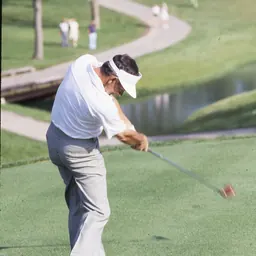




Related people
Same field, nearest in time


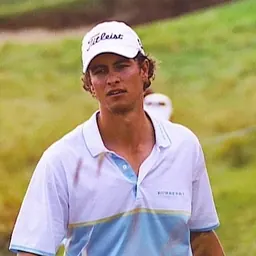
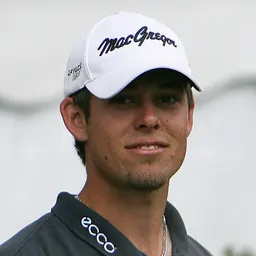
Contemporaries
People whose lives overlapped Mike Colandro's

Frequently asked questions
Who was Mike Colandro?
American golfer
When was Mike Colandro born?
Mike Colandro was born in 1953.
When did Mike Colandro die?
Mike Colandro died on 9 August 2015.
What was Mike Colandro's occupation?
Mike Colandro was a golfer.
What nationality was Mike Colandro?
Mike Colandro was American.
Sources & further reading
Cite this page
APA: Biography.guide. (2026). Mike Colandro. https://biography.guide/mike-colandro/
MLA: "Mike Colandro." Biography.guide, https://biography.guide/mike-colandro/.
Chicago: "Mike Colandro." Biography.guide. https://biography.guide/mike-colandro/.
Data last updated: 2026-09-20 · Spot an error? Report a correction.
Page generated 2026-09-27 05:10 UTC