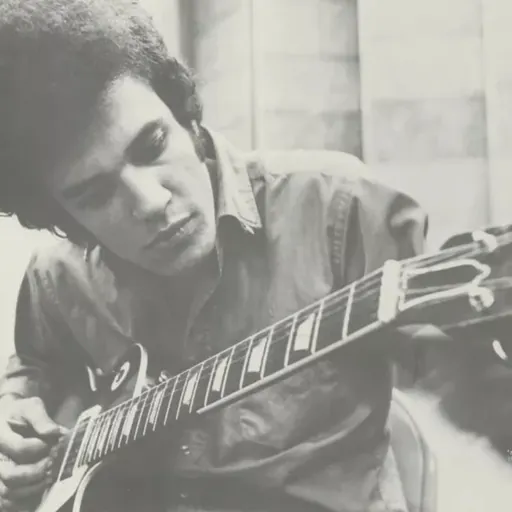
About Mike Bloomfield
Lived 1943 – 1981 (aged 37). Mike Bloomfield was an American guitarist, pianist, singer and blues musician.
Early years Bloomfield was born in Chicago into a wealthy Jewish family. Bloomfield's father, Harold, was born there in 1914. Harold's father, Samuel Bloomfield, started Bloomfield Industries in the early 1930s. After Samuel's death, Harold and his brother, Daniel, inherited the company. Bloomfield's mother, Dorothy Klein, was born in Chicago in 1918 and married Harold in 1940. She came from an artistic, musical family, and worked as an actress and model before marrying.
Bloomfield's family lived in various locations around Chicago before settling at 424 West Melrose Street on the North Side. When he was twelve his family moved to suburban Glencoe, where he attended New Trier High School for two years. During this time, he began playing in local bands, then put together one called the Hurricanes, named after Ohio rock band Johnny and the Hurricanes. New Trier expelled Bloomfield after his band performed a raucous rock and roll song at a 1959 school gathering. He attended Cornwall Academy in Massachusetts for one year and then returned to Chicago, where he spent his last year of education at a local Central YMCA High School.
Bloomfield had attended a 1957 Chicago performance by blues singer Josh White, and began spending time in Chicago's South Side blues clubs and playing guitar with such black bluesmen as Sleepy John Estes, Yank Rachell, and Little Brother Montgomery. He first sat in with a black blues band in 1959, when he performed with Luther "Guitar Junior" Johnson at a Chicago club called the Place. He performed with Howlin' Wolf, Muddy Waters, and many other Chicago blues performers during the early 1960s. In 1962 he married Susan Smith.
The Butterfield Blues Band (1965–1967) In the early 1960s he met harmonica player and singer Paul Butterfield and guitarist Elvin Bishop, with whom he would later play in the Paul Butterfield Blues Band.
He recorded his second solo album, Try It Before You Buy It, in 1973. Columbia rejected it; the complete version of the record would not appear until 1990. Also in 1973, he cut Triumvirate with Dr. John and guitarist and singer John Hammond Jr. (also known as BAD). An unreleased single, "Andy's Bad", was also produced for the project. During 1979–1981 he performed often with the King Perkoff Band, sometimes introducing them as the "Michael Bloomfield and Friends" outfit. Bloomfield recorded "Hustlin' Queen", written by John Isabeau and Perkoff in 1979. He toured Italy and Sweden with guitarist Woody Harris and cellist Maggie Edmondson in the summer of 1980. He sat in with Bob Dylan at San Francisco's Warfield Theatre on November 15, 1980. Bloomfield played on Dylan's "Like a Rolling Stone" and "The Groom's Still Waiting at the Altar". He continued to play live dates, with his performance at San Francisco State College on February 7, 1981, being his penultimate appearance. His final performance was at Mission Ranch, Carmel, CA, approximately 48 hours before his death.
Bloomfield came from a wealthy family, and received annual income from a trust created by his paternal grandfather, which gave him $50,000 each year.
Death Bloomfield died in San Francisco on February 15, 1981. He was found seated behind the wheel of his car, with all four doors locked. According to police, an empty Valium bottle was found on the car seat, but no suicide note was found. The medical examiner who performed the autopsy ruled the death accidental overdose, due to cocaine and methamphetamine poisoning. Bloomfield's last album, Cruisin' for a Bruisin''', was released the day his death was announced.
Bloomfield originally used a Fender Telecaster, though he had also used a Fender Duo-Sonic while recording for Columbia following his 1964 signing to the label. During his tenure with the Butterfield Blues Band, he used that Telecaster on the first Butterfield album and on their earliest tours in the fall of 1965. By November he had swapped that guitar for International Submarine Band guitarist John Nuese’s 1954 Gibson Les Paul Goldtop, acquired in Boston and used for some of the East-West sessions.
In 1967, Bloomfield swapped the Goldtop for guitar repairman/musician Dan Erlewine's 1959 Les Paul Standard and $100. The Standard had proven unpopular in the late 1950s because it was deemed too heavy and expensive by rock and roll guitarists. Gibson discontinued manufacturing the model in 1960. Bloomfield used the Standard in the Electric Flag and on the Super Session album and concerts. He later switched between it and the Telecaster, but his use of the Les Paul inspired other guitarists to use the model and spurred Gibson to reintroduce the Standard in 1968.
Bloomfield eventually lost the guitar in Canada when a club owner kept two he had left behind as partial compensation after Bloomfield cut short a round of appearances. He had been booked at the Cave in Vancouver, from Tue. Nov. 12th, 1974, for five days, until Sat. the 16th. The band played the first night but the next day Bloomfield boarded a plane and flew home to San Francisco with virtually no notice to the club, hotel, or band members; his friend Mark Naftalin found a note on a torn piece of paper in the hotel room that read, "bye bye, sorry".
Unlike contemporaries such as Jimi Hendrix and Jeff Beck, Bloomfield rarely experimented with feedback and distortion, preferring a loud yet clean, almost chiming sound, with a healthy amount of reverb and vibrato; this approach would strongly influence Jerry Garcia, who segued from a career in acoustic-based music to electric rock at the height of the Butterfield Band's influence in 1965. One of his amplifiers of choice was a 1965 Fender Twin Reverb. His solos, like those of most blues guitarists, were based in the minor pentatonic scale and the blues scale. However, he liberally used chromatic notes within the pentatonic framework, and integrated Indian and Eastern influences in his solos.
Gibson has since released a Michael Bloomfield Les Paul, replicating his 1959 Standard—in recognition of his impact on the electric blues, his role in the revived production of the guitar, and his influence on many other guitarists. Because the actual guitar had been unaccounted for so many years, Gibson relied on hundreds of photographs provided by Bloomfield's family to reproduce it. The model comes in two configurations—a Vintage Original Specifications (VOS), modified by Bloomfield's mismatched volume and tone control knobs, missing toggle switch cover, and kidney-shaped tuners replacing the Gibson original, and a faithful process-aged reproduction of the guitar as it was when Bloomfield last played it, complete with the finish smudge below the bridge and various nicks and smudges elsewhere on the body.
Selected discography
The Paul Butterfield Blues BandThe Paul Butterfield Blues Band (1965)East-West (1966)The Original Lost Elektra Sessions (unreleased recordings from 1965)East–West Live (three live versions of the track "East–West", recorded 1966–1967)
The Electric FlagThe Trip (1967)A Long Time Comin' (1968) The Band Kept Playing (1974) Groovin' Is Easy (Released 2002)
SoloIt's Not Killing Me (1969)Try It Before You Buy It (1973) (Not released until 1990. Additional recordings from these sessions were released on "Bloomfield: A Retrospective" in 1983)If You Love These Blues, Play 'Em as You Please (1976; reissued on CD with Bloomfield-Harris)Andy's Bad (1977; unreleased title soundtrack to Andy Warhol's Bad)Analine (1977)I'm with You Always (Recorded 1977)Michael Bloomfield (1978)Count Talent and the Originals (1978)Between a Hard Place and the Ground (1979)Bloomfield-Harris (1979)Cruisin' for a Bruisin (1981)
CollaborationsBlueskvarter (recorded 1964, released 2007), many Swedish CDs, recordings on Swedish radio. Bloomfield plays guitar with Little Brother Montgomery, Sunnyland Slim, Yank Rachell, Eddie Boyd and others.Super Session, Bloomfield, Kooper and Stills (1968). This album has been remastered, with new editions featuring several Bloomfield performances not included on the original album, including "Blues for Nothing" and "Fat Gray Cloud".The Live Adventures of Mike Bloomfield and Al Kooper (1968)Fillmore East: Al Kooper and Mike Bloomfield – The Lost Concert Tapes 12/13/68 (recorded 1968, released 2003)Two Jews Blues (1969), with Barry Goldberg (uncredited because of contractual constraints)Fathers and Sons (1969), with Muddy Waters, Otis Spann, Paul Butterfield, Donald Dunn, Sam Lay, Paul Asbell, Buddy Miles, Jeff Carp, & Phil Upchurch. Part live, part studio recordings. My Labors (1969), with Nick GravenitesLive at Bill Graham's Fillmore West (1969), with Nick Gravenites, Taj Mahal, Mark Naftalin. Some of the performances at the same concerts that yielded this album were included on My Labors. Those performances, except for "Winter Country Blues", are now part Live at Bill Graham's Fillmore West 1969, released in 2009 and credited to Michael Bloomfield with Nick Gravenites and Friends.Medium Cool (1969), original film soundtrack featuring Bloomfield and othersSteelyard Blues (1973), original film soundtrack, with Nick Gravenites and othersMill Valley Bunch – Casting Pearls (1973), with Bill Vitt, Nick Gravenites and othersTriumvirate (1973), with John Hammond and Dr. JohnKGB (1976), Ray Kennedy (vocals), Barry Goldberg (keyboards), Mike Bloomfield (guitar), Ric Grech (bass), Carmine Appice (drums)
Selected session workSo Many Roads – John P. Hammond (1965)Highway 61 Revisited – Bob Dylan (1965)The Peter, Paul and Mary Album – Peter, Paul and Mary (1965)Fresh Berry's – Chuck Berry (1965)Chicago Loop (1966)Cherry Red – Eddie "Cleanhead" Vinson (BluesWay, 1967) "Carry On"/"Ronnie Siegel from Avenue L" [45rpm single] – Barry Goldberg, with Frank Zappa – guitar, produced by Tom WilsonGrape Jam – Moby Grape (1968) – played pianoLiving with the Animals – Mother Earth (1968) (credited as "Makal Blumfeld" due to contractual constraints)Dues to Pay – Wayne Talbert & the Melting Pot (1968)Lord Have Mercy on My Funky Soul – Wayne Talbert (1969)Fathers and Sons – Muddy Waters (1969)I Got Dem Ol' Kozmic Blues Again Mama! – Janis Joplin (1969)Weeds – Brewer & Shipley (1969)Moogie Woogie – The Zeet Band (1970) (credited as "Fastfingers" Finkelstein)Sam Lay in Bluesland – Sam Lay (1970)Gandharva – Beaver & Krause (1971)Brand New – Woody Herman and His Orchestra (1971)
Posthumous releasesLiving in the Fast Lane (1981)Bloomfield: A Retrospective (1983)I'm with You Always (Live 1977 recordings from McCabe's Guitar Shop, Santa Monica, CA)Between the Hard Place and the Ground (Different from the original 1970s LP; containing further selections from McCabe's Guitar Shop)Don't Say That I Ain't Your Man: Essential Blues, 1964–1969, an anthology that includes five songs from Bloomfield's original 1964 Columbia sessions.Live at the Old Waldorf (Recorded live in 1976 and 1977 by producer Norman Dayron at the Old Waldorf nightclub)Barry Goldberg & Friends – Live (Features Bloomfield on guitar on most tracks)Michael Bloomfield, Harvey Mandel, Barry Goldberg & Friends (with Eddie Hoh on drums) – Solid Blues (1995, St.Clair Entertainment Group)The Holy Kingdom: Music of the Gospel (1998) Bloomfield performed two songs: "Wings of an Angel" and "You Must Have Seen Jesus". Other artists on the album included the Five Blind Boys of Alabama, The Cavaliers, and The Swan Silvertones. If You Love These Blues by Wolkin & Keenom (Miller Freeman Books, 2000) contains a CD of 1964 recordings made by Norman DayronFrom His Head to His Heart to His Hands: An Audio-Visual Scrapbook (2013); a Columbia Legacy career retrospective, produced by Al Kooper, including tapes from Bloomfield's original audition for John Hammond at Columbia Records in 1964, previously unissued live performances, and a DVD that includes the documentary film Sweet Blues: A Film About Mike Bloomfield, directed by Bob Sarles and produced and edited by Bob Sarles and Christina Keating. The film premiered at the Mill Valley Film Festival in October 2013.
Don’t just read it —
keep it.
Full-length biographies made to live with: read them, listen on the way to work, watch them tonight.
- E-book
- Audio
- Video
Instant download · yours to keep · every purchase keeps this site free
Important facts
People in Mike Bloomfield's life
Named in this biography and alive at the same time



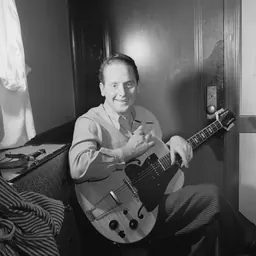

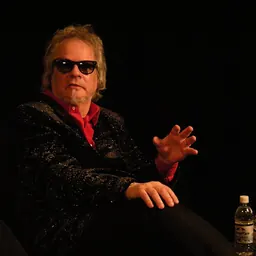

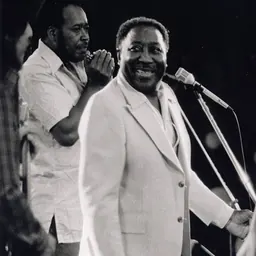
Related people
Same field, nearest in time
Contemporaries
People whose lives overlapped Mike Bloomfield's



Frequently asked questions
Who was Mike Bloomfield?
American blues guitarist (1943-1981)
When was Mike Bloomfield born?
Mike Bloomfield was born on 28 July 1943 in Chicago.
When did Mike Bloomfield die?
Mike Bloomfield died on 15 February 1981 in San Francisco.
What was Mike Bloomfield's occupation?
Mike Bloomfield was a guitarist, pianist, singer and blues musician.
What nationality was Mike Bloomfield?
Mike Bloomfield was American.
Sources & further reading
Cite this page
APA: Biography.guide. (2026). Mike Bloomfield. https://biography.guide/mike-bloomfield/
MLA: "Mike Bloomfield." Biography.guide, https://biography.guide/mike-bloomfield/.
Chicago: "Mike Bloomfield." Biography.guide. https://biography.guide/mike-bloomfield/.
Data last updated: 2026-09-22 · Spot an error? Report a correction.
Portrait: Wikimedia Commons · author & licence
Page generated 2026-09-27 05:02 UTC