
About Mihir Chowdhury
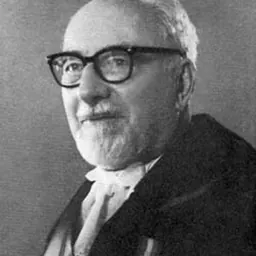
Lived 1937 – 2017 (aged 79). Mihir Chowdhury was a Bangladeshi, Indian and Pakistani scientist.
Mihir Chowdhury FNA, FASc (15 July 1937 – 28 March 2017) was an Indian physical chemist and Professor and Head of Department of Chemistry at Presidency College, Kolkata and at the Department of Physical Chemistry of the Indian Association for the Cultivation of Science (IACS). He is known for his studies on the electronic structure of molecules using optical, magneto-optical and quantum-mechanical methods. He was an elected fellow of the Indian National Science Academy and the Indian Academy of Sciences. The Council of Scientific and Industrial Research, the apex agency of the Government of India for scientific research, awarded him the Shanti Swarup Bhatnagar Prize for Science and Technology, one of the highest Indian science awards, in 1977, for his contributions to chemical sciences. Three of his research students were also Shanti Swarup Bhatnager awardees.
Biography
Chowdhury was born in Dhaka of British India (presently in Bangladesh) to Prof. Jogendra Kumar Chowdhury, a chemistry professor at Dacca University and Indira Chowdhury (nee' Guhathakurta), graduated in chemistry from Calcutta University in 1955 and completed his master's degree in 1957 from the Rajabazar Science College, Calcutta University. He served the college for over a decade as a professor of chemistry. The incident resulted in his absence from the college for almost a year and subsequent resignation from the college. He was the head of the department of chemistry at Presidency College when he left the institution to return to Indian Association for the Cultivation of Science as a professor in 1966 and when he superannuated in 1998, he had served IACS as the head of the department of physical chemistry since 1976. Post retirement, he served as a senior scientist of the Indian National Science Academy, a position he held till 2006. He also continued his association with the post graduate teaching programs of Calcutta University and Presidency College on honorary basis. He developed facilities to carry out his spectroscopic and fast kinetic experiments and studied various fields of spectroscopy such as laser, time-resolved and non-linear optics, and elucidated role of spin and magnetic field in the radical pair recombination process, circular dichroism of crystal field split components in cooled single crystals, and laser-induced fluorescence of jet-cooled large organic molecules and their hydrated clusters. His work on the Robert S. Mulliken's conjecture is reported to have assisted him to ratify for the first time that the CT band is polarised along the intermolecular axis. His involvement in the efforts to popularise science included a series of lectures on topics such as LASER- the wonderful toy, Hundred years of electron discovery, and Symmetry in Chemistry and Physics
Awards and honours The Council of Scientific and Industrial Research awarded Chowdhury the Shanti Swarup Bhatnagar Prize, one of the highest Indian science awards, in 1977. He received the Silver Medal of the Chemical Research Society of India as well as the Lifetime Achievement Award and the life membership of the Indian Society for Radiation and Photochemical Sciences in 2000. In 2005, Calcutta University awarded him the Eminent Teacher Award and the next year, he received the Lifetime Achievement Award of the Indian Chemical Society, followed by the Gold Medal of the Chemical Research Society of India, a year later.
Chowdhury was a recipient of honoris causa degrees of Doctor of Science of the Vidyasagar University (2007) and Presidency University (2013). He was a National Lecturer of the University Grants Commission of India in 1980 and the award orations he has delivered include Mitra Memorial Lecture of Delhi University (1988), K. Rangadhama Rao Memorial Lecture of Indian National Science Academy (1989), J. C. Ghosh Memorial Lecture of Indian Chemical Society (1997), Morris Travers Memorial Lecture of the Indian Institute of Science (1998), Baba Kartar Singh Memorial Lecture of Panjab University (1999), Sadhan Basu Memorial Lecture of Indian National Science Academy (2002) and the Mizushima-Raman Lectures in Japan (2003). The Indian Academy of Sciences elected him as a fellow in 1977 before he became a fellow of the Indian National Science Academy in 1980.
Selected bibliography
Don’t just read it —
keep it.
Full-length biographies made to live with: read them, listen on the way to work, watch them tonight.
- E-book
- Audio
- Video
Instant download · yours to keep · every purchase keeps this site free
Important facts
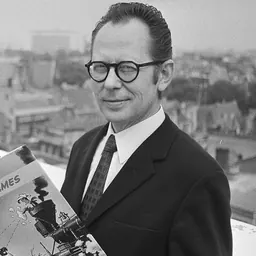
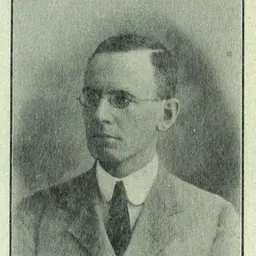
People in Mihir Chowdhury's life
Named in this biography and alive at the same time


Related people
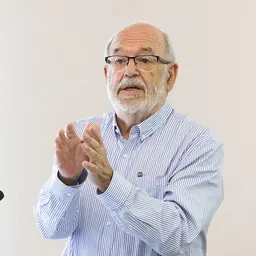
Same field, nearest in time



Contemporaries
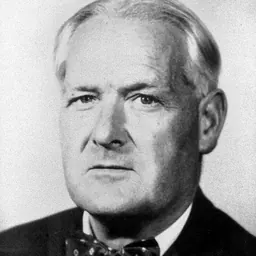
People whose lives overlapped Mihir Chowdhury's




Frequently asked questions
Who was Mihir Chowdhury?
Indian scientist
When was Mihir Chowdhury born?
Mihir Chowdhury was born on 15 July 1937 in Dhaka.
When did Mihir Chowdhury die?
Mihir Chowdhury died on 28 March 2017 in Kolkata.
What was Mihir Chowdhury's occupation?
Mihir Chowdhury was a scientist.
What nationality was Mihir Chowdhury?
Mihir Chowdhury was Bangladeshi, Indian and Pakistani.
Sources & further reading
Cite this page
APA: Biography.guide. (2026). Mihir Chowdhury. https://biography.guide/mihir-chowdhury/
MLA: "Mihir Chowdhury." Biography.guide, https://biography.guide/mihir-chowdhury/.
Chicago: "Mihir Chowdhury." Biography.guide. https://biography.guide/mihir-chowdhury/.
Data last updated: 2026-09-20 · Spot an error? Report a correction.
Page generated 2026-09-27 05:02 UTC