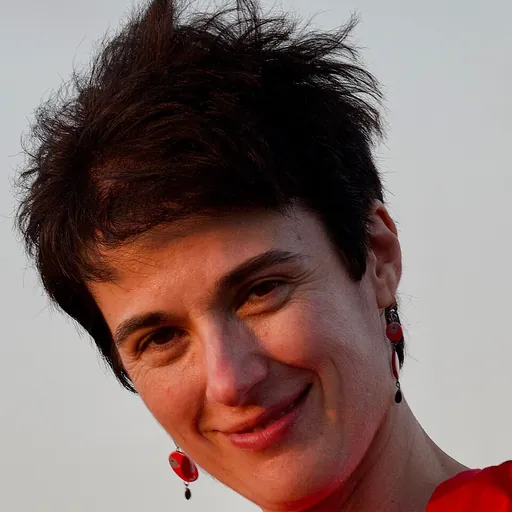
About Mihaela van der Schaar
Born 1971. Mihaela van der Schaar is a researcher.
Mihaela van der Schaar is the John Humphrey Plummer Professor of Machine Learning, AI, and Medicine at the University of Cambridge, where she is director of the Cambridge Centre for AI in Medicine (CCAIM), and a Chancellor's Professor of Electrical and Computer Engineering at the University of California, Los Angeles.
Her research involves topics in signal and image processing, communication networks, network science, multimedia, game theory, distributed systems, machine learning, and AI. van der Schaar focuses on medical applications of computer engineering, including AI-enabled personalized medicine. She completed her PhD while simultaneously working as a researcher at Philips Research Laboratories.
At Philips, van der Schaar helped develop the first algorithm for video streaming and, as their representative to the International Organization for Standardization from 1999 to 2003, led working groups which determined early standards for streaming.
van der Schaar joined the faculty at the University of Cambridge in 2018. In November 2020, van der Schaar was named the director of the new Cambridge Centre for AI in Medicine, a research collaboration between the University of Cambridge, GlaxoSmithKline and AstraZeneca to study applications of machine learning to the medical profession.
In response to the COVID-19 pandemic in April 2020, van der Schaar's research group was part of a collaboration with the UK National Health Service, which used machine learning to predict shortages of ICU beds and ventilators in English hospitals.
As of 2020, van der Schaar has published over 250 academic journal articles and submitted over 275 conference papers, and her work has resulted in 35 US patents and contributed to over 45 international standards.
As of 2022, van der Schaar's work has been cited over 23,000 times.
Honours and awards van der Schaar was elected as a Fellow of the IEEE in 2009, and she has held a fellowship with the Alan Turing Institute since 2016.
She has also received a National Science Foundation CAREER Award (2004), the IEEE Darlington Award (2011), and the Oon Prize on Preventative Medicine from the University of Cambridge (2018).
In 2019, a Nesta report determined that van der Schaar was the most-cited female AI researcher in the UK.
Don’t just read it —
keep it.
Full-length biographies made to live with: read them, listen on the way to work, watch them tonight.
- E-book
- Audio
- Video
Instant download · yours to keep · every purchase keeps this site free
Important facts
People in Mihaela van der Schaar's life
Named in this biography and alive at the same time

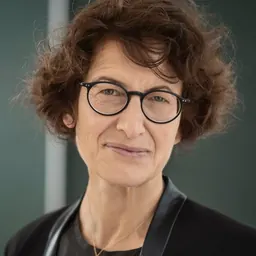
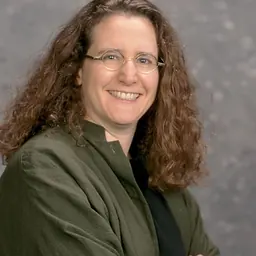
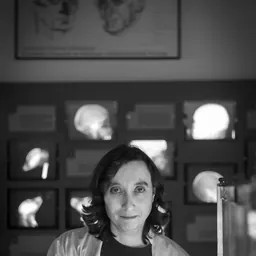
Related people
Same field, nearest in time



Contemporaries
People whose lives overlapped Mihaela van der Schaar's




Frequently asked questions
Who is Mihaela van der Schaar?
Dutch AI scientist
When was Mihaela van der Schaar born?
Mihaela van der Schaar was born in 1971.
What is Mihaela van der Schaar's occupation?
Mihaela van der Schaar is a researcher.
Sources & further reading
· Wikipedia: Mihaela van der Schaar
· DBpedia: Mihaela van der Schaar
Cite this page
APA: Biography.guide. (2026). Mihaela van der Schaar. https://biography.guide/mihaela-van-der-schaar/
MLA: "Mihaela van der Schaar." Biography.guide, https://biography.guide/mihaela-van-der-schaar/.
Chicago: "Mihaela van der Schaar." Biography.guide. https://biography.guide/mihaela-van-der-schaar/.
Data last updated: 2026-09-22 · Spot an error? Report a correction.
Portrait: Wikimedia Commons · author & licence
Page generated 2026-09-27 05:02 UTC