
About Miguel Otero Silva
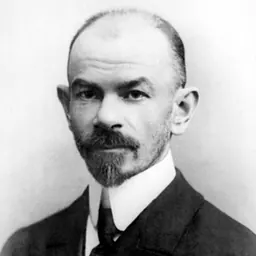
Lived 1908 – 1985 (aged 76). Miguel Otero Silva was a Venezuelan poet, novelist, writer, journalist and politician.
Miguel Otero Silva (October 26, 1908 – August 28, 1985), was a Venezuelan writer, journalist, humorist and politician. A figure of great relevance in Venezuelan literature, his literary and journalistic works related strictly to the socio-political history of Venezuela. Throughout his life he was repeatedly forced into exile. Later on, after the establishment of a democratic state in 1958, he was elected to the Venezuelan Senate.
Early career Born in Barcelona, Anzoátegui, Otero Silva moved to Caracas at very young age to attend high school at the Liceo Caracas. He later studied civil engineering at the Universidad Central de Venezuela. During this time he engaged in early literary activities, writing for magazines and newspapers such as Élite and Fantoches, as well as other university publications. He also started dabbling in journalism. Fort Amsterdam of Willemstad which was taken by Venezuelan revolutionaries in 1929. During the country's Student’s Week in 1928, Otero Silva formed part in a series of protests against the rule of dictator Juan Vicente Gómez (see Generation of 1928 ). He also became involved in a military plot to overthrow the government, which forced him into exile, in Curaçao.I n Willemstad, along with Gustavo Machado, Rafael Urbina López and other Venezuelan expatriates he participated in the assault of Fort Amsterdam on June 29 of the same year, in another attempt to overthrow president Gómez. The plot, supported by 250 men, in addition to notable communists and hauled governor Fruytier back to Venezuela on board the stolen American ship Maracaibo.
Once back in Venezuela, he co-founded the humorous weekly newspaper El Morrocoy Azul (The Blue Tortoise), along with Francisco José Delgado and Claudio Cedeño. He also founded a leftist weekly paper called, ¡Aquí Está! (Here It Is! ).
In 1943 Otero Silva's father, Henrique Otero Vizcarrondo, founded the daily newspaper El Nacional. He appointed his son head of press, which coincided with Otero Silva's resolution to study journalism at Universidad Central de Venezuela. In 1946, he married María Teresa Castillo, a fellow journalist, graduating from university in 1949. Two years later, Otero left the Communist Party of Venezuela, claiming that he wasn't ready for political discipline. Instead, he chose to dedicate himself to his writing. He spent a year in Guárico, investigating the history of the village of Ortiz, since its initial foundation to its abandonment due to malaria breakout. The village served as inspiration for his next novel, Casas Muertas, published in 1955. The novel was awarded with the Premio Nacional de Literatura, and the Premio de Novela Arístides Rojas that same year.
His newspaper, El Nacional, was suspended twice during the military rule of Marcos Pérez Jiménez. Towards the end of the dictatorship, Otero Silva was arrested for editing and publishing the Manifiesto de los Intelectuales (Intellectuals Manifesto), a text attacking Pérez Jiménez' administration.
1958–1985 After Marcos Pérez Jiménez was overthrown in 1958, Otero was awarded with the National Prize for Journalism, and elected to the Venezuelan Senate, representing the state of Aragua. However, no long after, El Nacional was once more criticized for espousing communist and leftist ideals, this time by the new government of Rómulo Betancourt. The Government's discontent with the newspaper caused Otero Silva to resign from active journalism.
His fictional works from the period include Oficina N° 1, in 1961, and La Muerte de Honorio in 1963, along with Las Celestiales in 1965, a book of couplets with humorous references to politics, ideologies, and religion, which he signed as "Iñaki de Errandonea", a fictional jesuit priest invented by Otero himself.
In 1967, Otero Silva was made a full member of the Academia Venezolana de la Lengua. As a senator, he promoted the creation of the Instituto Nacional de Cultura y Bellas Artes (INCIBA) in the 1970s, and participated in the founding of the Galería de Arte Nacional. In 1979, Otero was awarded with the Lenin Peace Prize.
In 1985, shortly after publishing La Piedra que era Cristo, Otero Silva died in Caracas on August 28.
Honours Premio Nacional de Literatura (1955, for the novel Casas Muertas) National Prize of Journalism Member of the Academia Venezolana de la Lengua (1967) Lenin Peace Prize (1979)
Don’t just read it —
keep it.
Full-length biographies made to live with: read them, listen on the way to work, watch them tonight.
- E-book
- Audio
- Video
Instant download · yours to keep · every purchase keeps this site free
Important facts
People in Miguel Otero Silva's life
Named in this biography and alive at the same time
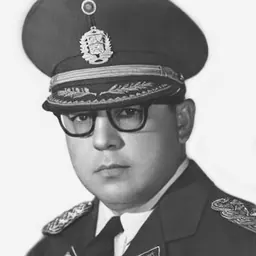



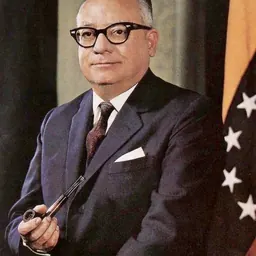
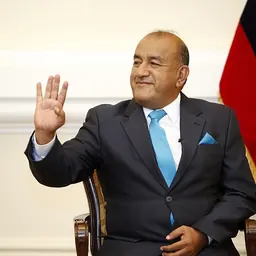

Related people
Same field, nearest in time

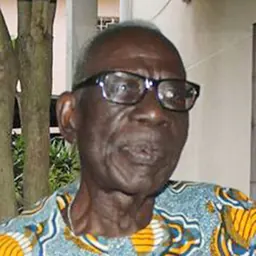

Contemporaries
People whose lives overlapped Miguel Otero Silva's


Frequently asked questions
Who was Miguel Otero Silva?
Venezuelan politician and writer (1908–1985)
When was Miguel Otero Silva born?
Miguel Otero Silva was born on 26 October 1908 in Barcelona (Venezuela).
When did Miguel Otero Silva die?
Miguel Otero Silva died on 28 August 1985 in Caracas.
What was Miguel Otero Silva's occupation?
Miguel Otero Silva was a poet, novelist, writer, journalist and politician.
What nationality was Miguel Otero Silva?
Miguel Otero Silva was Venezuelan.
Sources & further reading
· Wikipedia: Miguel Otero Silva
Cite this page
APA: Biography.guide. (2026). Miguel Otero Silva. https://biography.guide/miguel-otero-silva/
MLA: "Miguel Otero Silva." Biography.guide, https://biography.guide/miguel-otero-silva/.
Chicago: "Miguel Otero Silva." Biography.guide. https://biography.guide/miguel-otero-silva/.
Data last updated: 2026-09-20 · Spot an error? Report a correction.
Page generated 2026-09-27 05:31 UTC