
About Mifflin Wistar Gibbs
Lived 1823 – 1915 (aged 92). Mifflin Wistar Gibbs was an American lawyer, banker, diplomat, judge and politician.
Mifflin Wistar Gibbs (April 17, 1823 – July 11, 1915) was an American-born politician, businessman, newspaper publisher, and advocate for black rights in both the United States and Canada. He moved to California as a young man, during the Gold Rush, and was an early black pioneer in San Francisco. Gibbs co-founded the first black newspaper in California and was an active leader in the early California State Convention of Colored Citizens.
Angered by discriminatory laws passed in California in 1858, he led a migration of African Americans that year to Victoria, British Columbia, Canada during the Fraser Canyon Gold Rush, and he worked in Victoria for ten years. Gibbs became the first black person elected to public office in British Columbia on November 16, 1866, upon winning a seat on the Victoria City Council.
After the American Civil War, Gibbs and many of the other black settlers returned to the United States. In the late 1860s, he settled in Arkansas's capital city of Little Rock, and he became an attorney. He was active in Reconstruction politics. In 1873, Gibbs became the first black judge elected in the United States. He was also involved in the Philomathean Society of Philadelphia, a literary organization which included Douglass, Charles Burleigh Purvis, William Whipper, and Izaiah Weir. Philadelphia had long had a flourishing free black community, as people had found work there even before the revolution and slavery was abolished after the American Revolutionary War.
San Francisco, California Like tens of thousands of other men, Gibbs joined the California Gold Rush, He was later a proprietor, publisher, and contributor to the Mirror of the Times, "the state's only African-American newspaper." Angered by these developments, Gibbs and two other African-American men went to British Columbia to meet with Sir James Douglas, governor of the province, to learn about the treatment of blacks in Canada. Douglas assured the men that they would be treated like other residents in this frontier area.
Immigration to Canada Starting in 1858, Gibbs led an estimated six hundred to eight hundred African Americans, Gibbs became a naturalized British citizen in 1861, together with 52 other American blacks from the emigrant group.
In the 1860 Vancouver Island Legislative election, the vote of the black community in the election for the Vancouver Island Legislative Assembly defeated Amor De Cosmos.
Victoria City Council Gibbs ran in 1862 in the first race for a Victoria City Council seat; he placed seventh in this race, missing winning a council seat by only four votes. He was elected to Victoria City Council in 1867 and served in that body until 1869.
Confederation Movement In 1868, Gibbs was the Salt Spring Island delegate to the Yale Convention, an important step toward British Columbia's decision to join Canada in the confederation. In 1872, he was a delegate to the National Convention of Colored men in New Orleans, Louisiana.
In 1876, he was elected president of the National Convention of Colored Men at Nashville, Tennessee, and, in June of that year, he was appointed register of the United States Land Office at Little Rock. He was a delegate to the 1876, 1880 Republican National Convention, and 1884 Republican National Conventions, and was a member of the "immortal 306" who supported Ulysses S. Grant's failed candidacy for a third nomination at the 1880 convention in Chicago, Illinois. In 1882, Gibbs was elected to the Little Rock Bar Association.
In 1902, Gibbs purchased a property at 902 T Street, NW in Washington, D.C., at which his daughter, Harriet Gibbs Marshall, ran the Washington Conservatory of Music, one of the most successful female-owned businesses in the United States at the turn of the 20th century.
Gibbs died at 92 in Little Rock, Arkansas on July 11, 1915. Additionally, the M. W. Gibbs Nursing Home, which was located at 2916 Center Street in Little Rock, was named in his honor. In 2019, a plaque was unveiled in his honor at Irving Park in Victoria, as well as a study room called the 'Mifflin Wistar Gibbs Study Room' in the city's public library.
Publications
Don’t just read it —
keep it.
Full-length biographies made to live with: read them, listen on the way to work, watch them tonight.
- E-book
- Audio
- Video
Instant download · yours to keep · every purchase keeps this site free
Important facts
Family & relationships
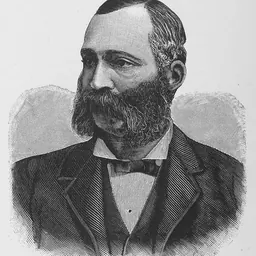
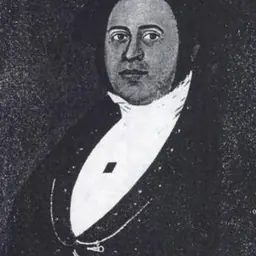
People in Mifflin Wistar Gibbs's life
Named in this biography and alive at the same time




Related people
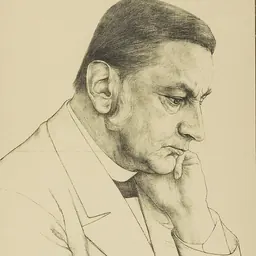
Same field, nearest in time


Contemporaries
People whose lives overlapped Mifflin Wistar Gibbs's




Frequently asked questions
Who was Mifflin Wistar Gibbs?
American judge
When was Mifflin Wistar Gibbs born?
Mifflin Wistar Gibbs was born on 17 April 1823 in Philadelphia.
When did Mifflin Wistar Gibbs die?
Mifflin Wistar Gibbs died on 11 July 1915 in Little Rock, Arkansas.
What was Mifflin Wistar Gibbs's occupation?
Mifflin Wistar Gibbs was a lawyer, banker, diplomat, judge and politician.
What nationality was Mifflin Wistar Gibbs?
Mifflin Wistar Gibbs was American.
Sources & further reading
· Wikipedia: Mifflin Wistar Gibbs
· DBpedia: Mifflin Wistar Gibbs
Cite this page
APA: Biography.guide. (2026). Mifflin Wistar Gibbs. https://biography.guide/mifflin-wistar-gibbs/
MLA: "Mifflin Wistar Gibbs." Biography.guide, https://biography.guide/mifflin-wistar-gibbs/.
Chicago: "Mifflin Wistar Gibbs." Biography.guide. https://biography.guide/mifflin-wistar-gibbs/.
Data last updated: 2026-09-22 · Spot an error? Report a correction.
Page generated 2026-09-27 05:21 UTC