
About Mieczysław Hertz
Lived 1870 – 1943 (aged 73). Mieczysław Hertz was a Polish merchant, historian, adult educator, judge, statistician and local politician.
Mieczysław Hertz (born 2 January 1870 in Warsaw, died 18 January 1943 in the same city) was a Polish merchant, historian, writer, and economic, social, and municipal activist tied to Łódź. From 1890, he studied at the Riga Technical University's Commercial Faculty, graduating in 1894. He joined the Arkonia academic corporation in 1890 (registration number 461).
Early years in Łódź Hertz settled in Łódź in 1892 after his studies, establishing a trading office. Paweł Spodenkiewicz, a sociologist from the Łódź branch of the Institute of National Remembrance, suggests family ties influenced this move – Hertz was related to Leonia Poznańska née Hertz, wife of cotton magnate Izrael Poznański, and her son-in-law Jakub Hertz.
Beyond commerce, Hertz pursued artistic interests. In 1901, he entered his dramatic fairy tale Ananke in the Henryk Sienkiewicz Drama Competition, announced by between September and October to mark the Old Grand Theater's opening by . Henryk Sienkiewicz, the patron, judged entries and donated 100 rubles for prizes. From 1905, with Paweł, he supported the Uczelnia Society, opening Łódź's first state Polish secondary school in 1906 (now Mikołaj Kopernik First High School). He joined Society for Education Promotion on 1906, expanding free libraries, later becoming vice-president.
He joined the militia established on 10 August 1914 as the Central Citizens' Militia Committee. On 13 August 1914, representing the militia, he delivered a funeral oration at the new Jewish cemetery for Tanchy Weingarten, a militiaman fatally wounded on 11 August 1914 during an arrest on Aleksandrowska Street (now Limanowski Street), dying at the Poznań Hospital (now Sterling University Hospital). Later, in October 1914, he led the militia's Pass Department.
After German forces occupied Łódź on 6 December 1914, Hertz inspected the Battle of Łódź sites for the authorities, noting: Trips to the battlefields began. People collected shrapnel fragments, cartridge cases, broken bayonets, and soldiers' letters – German and Russian. I held a letter from deep Russia, hard to read due to its clumsy handwriting. It reported all were well, wishing the recipient health, noting a neighbor's cow had calved, and Matriona had married... This life's prose was jarring against the tragedy of a soldier dying far from home. [...] They slaughtered each other on this land, stripped of freedom by Catherine the Great and Frederick the Great.On 7 July 1915, Hertz joined the 36-member City Council, appointed by German occupiers, equally split among Poles, Germans, and Jews. Refusal risked penalties. In August 1916, he joined Emil Hirszberg's Municipal Appraisal Commission at 90 Piotrkowska Street, under the War Losses Registration Department of Warsaw's Main Welfare Council, advocating for health damage claims from forced labor, data later used in his post-war writings.
Hertz was among 73 Łódź signatories of the Łódź Communiqué on 22 November 1916, an open letter urging the immediate creation of a Provisional Council of State. The council began on 23 May 1917 at 17 Średnia Street (now 21 Pomorska Street), ending in February 1919.
With and , he proposed a Municipal Statistical Office, He served on the boards of Strem Chemical Works
On 1 September 1920, he became a lay judge at Łódź District Court. After weeks, he was deported to the General Government, possibly Kraków, then reached Warsaw, joining his daughter Aniela
In 1901, he married Maria Maybaum. They had two children: Zygmunt and Aniela (later Olszewska). The marriage ended in 1918
Don’t just read it —
keep it.
Full-length biographies made to live with: read them, listen on the way to work, watch them tonight.
- E-book
- Audio
- Video
Instant download · yours to keep · every purchase keeps this site free
Important facts
People in Mieczysław Hertz's life
Named in this biography and alive at the same time


Related people
Same field, nearest in time

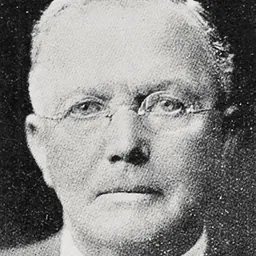
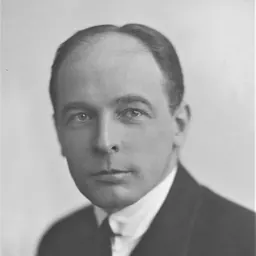
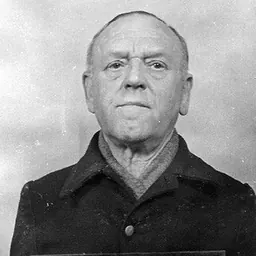

Contemporaries
People whose lives overlapped Mieczysław Hertz's

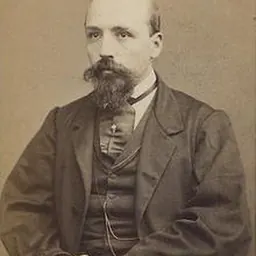

Frequently asked questions
Who was Mieczysław Hertz?
Polish merchant, historian, writer
When was Mieczysław Hertz born?
Mieczysław Hertz was born on 2 January 1870 in Warsaw.
When did Mieczysław Hertz die?
Mieczysław Hertz died on 18 January 1943 in Warsaw.
What was Mieczysław Hertz's occupation?
Mieczysław Hertz was a merchant, historian, adult educator, judge, statistician and local politician.
What nationality was Mieczysław Hertz?
Mieczysław Hertz was Polish.
Sources & further reading
Cite this page
APA: Biography.guide. (2026). Mieczysław Hertz. https://biography.guide/mieczyslaw-hertz/
MLA: "Mieczysław Hertz." Biography.guide, https://biography.guide/mieczyslaw-hertz/.
Chicago: "Mieczysław Hertz." Biography.guide. https://biography.guide/mieczyslaw-hertz/.
Data last updated: 2026-09-20 · Spot an error? Report a correction.
Page generated 2026-09-27 05:17 UTC