
About Mieczysław Boruta-Spiechowicz
Lived 1894 – 1985 (aged 91). Mieczysław Boruta-Spiechowicz was a Polish military officer.
Mieczysław Ludwik Boruta-Spiechowicz (20 February 1894, in Rzeszów – 13 October 1985, in Zakopane) was a Polish military officer, a general of the Polish Army and a notable member of the post-war anti-communist opposition in Poland.
He joined the army in 1914 and served at various posts within the Polish Legions. After Poland regained her independence in 1918 he remained in active service and took part in both the Polish-Ukrainian War and the Battle of Lwów, in which he commanded a separate defence line, and later a Lwów Infantry Regiment formed out of local volunteers. Dispatched to France, he became the commander of two regiments of the Blue Army, with which he returned to Poland in 1919. During the Polish-Bolshevik War he distinguished himself as a skilled commander of the Polish mountain infantry units, of which he formed a regiment and commanded it on various fronts of the conflict.
After the war he was sent to the Higher War School in Warsaw and received professional military training. He served at various commanding posts in a number of Polish infantry units, both standard and mountain. He was also a notable military theorist and writer of several books on the history and practice of warfare. During the Invasion of Poland he served as the commanding officer of the Boruta Operational Group, a part of the Kraków Army. Taken prisoner by the USSR, he was held in various Gulags and NKVD prisons until set free by the Sikorski-Mayski Agreement of 1941. He then joined the Anders' Polish Army in the East and became the commanding officer of the newly formed Polish 5th Infantry Division. He spent the rest of World War II as the commander of the Polish 1st Armoured Corps, combining the Polish 1st Armoured Division and the Polish Independent Parachute Brigade.
As one of the very few Polish pre-war generals to return to Communist-held Poland in 1945, he was initially accepted into the Polish People's Army. However, following a conflict with Karol Świerczewski he was demobilized and retired. He settled in Zakopane, where he became a farmer. He also remained an active member of the anti-communist opposition in Poland and in 1977 became one of the founding members of the ROPCiO movement.
Honours and awards Silver Cross of the Order of Virtuti Militari Officer's Cross of the Order of Polonia Restituta Cross of Independence with Swords Cross of Valour (seven times) Gold Cross of Merit
Don’t just read it —
keep it.
Full-length biographies made to live with: read them, listen on the way to work, watch them tonight.
- E-book
- Audio
- Video
Instant download · yours to keep · every purchase keeps this site free
Important facts
People in Mieczysław Boruta-Spiechowicz's life
Named in this biography and alive at the same time
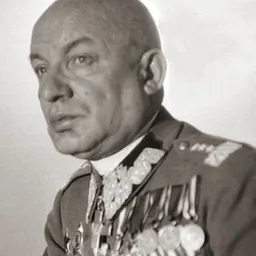
Related people
Same field, nearest in time


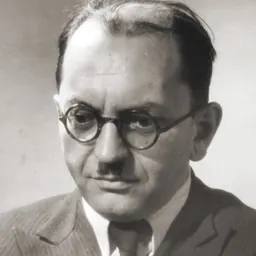
Contemporaries
People whose lives overlapped Mieczysław Boruta-Spiechowicz's
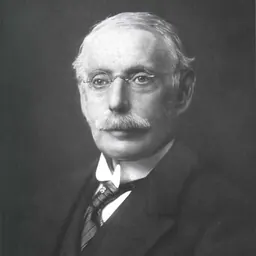

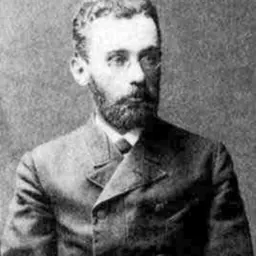
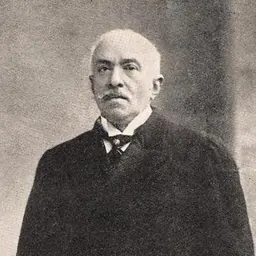

Frequently asked questions
Who was Mieczysław Boruta-Spiechowicz?
Polish general (1894–1985)
When was Mieczysław Boruta-Spiechowicz born?
Mieczysław Boruta-Spiechowicz was born on 20 February 1894 in Rzeszów.
When did Mieczysław Boruta-Spiechowicz die?
Mieczysław Boruta-Spiechowicz died on 13 October 1985 in Zakopane.
What was Mieczysław Boruta-Spiechowicz's occupation?
Mieczysław Boruta-Spiechowicz was a military officer.
What nationality was Mieczysław Boruta-Spiechowicz?
Mieczysław Boruta-Spiechowicz was Polish.
Sources & further reading
· Wikipedia: Mieczysław Boruta-Spiechowicz
· DBpedia: Mieczysław Boruta-Spiechowicz
Cite this page
APA: Biography.guide. (2026). Mieczysław Boruta-Spiechowicz. https://biography.guide/mieczyslaw-boruta-spiechowicz/
MLA: "Mieczysław Boruta-Spiechowicz." Biography.guide, https://biography.guide/mieczyslaw-boruta-spiechowicz/.
Chicago: "Mieczysław Boruta-Spiechowicz." Biography.guide. https://biography.guide/mieczyslaw-boruta-spiechowicz/.
Data last updated: 2026-09-20 · Spot an error? Report a correction.
Page generated 2026-09-27 05:33 UTC