
Michèle Bennett
First Lady of Haiti
About Michèle Bennett
Born 1950. Michèle Bennett is a Haitian first Lady.
Michèle Bennett (born 15 January 1950) is the former First Lady of Haiti and the ex‑wife of former President of Haiti, Jean‑Claude Duvalier. They fled to France together when he resigned in 1986; Her father owned more than of land, growing mostly coffee, and employing 1,600 estate workers in addition to 900 more in his business. Her uncle was Haiti's Roman Catholic Archbishop, François-Wolff Ligondé. At 15, Bennett moved to New York, where she was educated at St. Mary's School in Peekskill. She went on to work as a secretary at a slipper company in New York City's Garment District. After her 1978 divorce from Pasquet, she had a career in public relations for Habitation LeClerc, an upscale hotel in Port‑au‑Prince.
Marriage Although Bennett met Jean‑Claude Duvalier in high school, the pair did not become romantically engaged until ten years later. She was first married to Alix Pasquet Jr. in 1973, whom she divorced in 1978. In 1980, Bennett married President Duvalier. Their wedding, Haiti's social event of the decade, cost an unprecedented US $2million and was reported to be received enthusiastically by the majority of Haitians. With Jean‑Claude, Michèle had her third and fourth children: Francois-Nicolas and Anya.
The marriage represented a symbolic alliance with the mulatto elite, the families Jean‑Claude's father had opposed. This resulted in her husband's mother, Simone Duvalier, who opposed the match, being sidelined politically, which in turn created new factional alliances within the ruling group since the Duvalierist Old Guard opined that the new First Lady's power appeared to exceed her husband's. While Jean‑Claude often dozed through Cabinet meetings, his wife, frustrated at his political ineptitude, reprimanded ministers herself.
First lady Accusations of or associations with corruption plagued the Duvalier–Bennett marriage. Michèle's father, Ernest Bennett, took advantage of his presidential connection to extend interests into his businesses, from his BMW dealership, to his coffee and cocoa export concerns, to Air Haiti, in whose planes Bennett was rumored to be transporting drugs. In 1982, Frantz Bennett, Michèle's brother, was arrested in Puerto Rico for drug trafficking, and began a three‑year jail term. Popular uprising against the regime began soon after that. Duvalier responded with a 10%reduction in staple food prices, the closing of independent radio stations, a cabinet reshuffle, and a crackdown by police and army units, but these moves failed to dampen the momentum of the popular uprising.
His wife and advisers urged him to put down the rebellion in order to remain in office. In response to widening opposition to 28 years of Duvalier rule, on 7 February 1986, the Duvaliers fled the rioting country in an American C-141 plane accompanied by 19 other people.
Exile The governments of Greece, Spain, Switzerland, Gabon and Morocco all refused the Duvalier family's requests for asylum. France agreed to give the Duvaliers temporary entry but also denied them asylum. Soon after their arrival in France, their home was raided as part of an investigation into pillaging Haiti's treasury. Bennett was found trying to flush documentation down a toilet. Her papers documented recent spending including US $168,780 for Givenchy clothing, US $270,200 for Boucheron jewelry and US $9,752 for two children's horse saddles at Hermès. In 1987, a French civil court dismissed Haiti's lawsuit against the Duvaliers, which sought to have the Duvaliers held responsible to repay money to Haiti.
In 1990, Jean‑Claude Duvalier filed for divorce from Bennett in the Dominican Republic, accusing her of immoral acts. Bennett, who was living with another man in Cannes at the time, contested the decision, flying to the Dominican Republic to obtain a reversal before her husband prevailed in a third court. Bennett returned to Haiti for Jean‑Claude Duvalier's funeral on 11 October 2014. She organized and attended the service with her children from their marriage, at a chapel on the grounds of the Institution Saint-Louis de Gonzague school in the Delmas district of Port‑au‑Prince after then-president Michel Martelly promised, then refused, a state funeral for the former head of state.
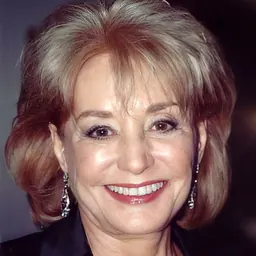
In 2021, she gave an interview to Polo Lifestyles magazine, her first interview since Barbara Walters flew to Mougins in 1986 to interview her. In the interview, she spoke openly about her upbringing, her faith, her wedding, her marriage, the events leading to exile and life in France.
Don’t just read it —
keep it.
Full-length biographies made to live with: read them, listen on the way to work, watch them tonight.
- E-book
- Audio
- Video
Instant download · yours to keep · every purchase keeps this site free
Important facts
Family & relationships
People in Michèle Bennett's life
Named in this biography and alive at the same time


Related people
Same field, nearest in time



Contemporaries
People whose lives overlapped Michèle Bennett's


Frequently asked questions
Who is Michèle Bennett?
First Lady of Haiti
When was Michèle Bennett born?
Michèle Bennett was born on 15 January 1950 in Port-au-Prince.
What is Michèle Bennett's occupation?
Michèle Bennett is a first Lady.
What nationality is Michèle Bennett?
Michèle Bennett is Haitian.
Sources & further reading
Cite this page
APA: Biography.guide. (2026). Michèle Bennett. https://biography.guide/michele-bennett/
MLA: "Michèle Bennett." Biography.guide, https://biography.guide/michele-bennett/.
Chicago: "Michèle Bennett." Biography.guide. https://biography.guide/michele-bennett/.
Data last updated: 2026-09-20 · Spot an error? Report a correction.
Page generated 2026-09-27 05:21 UTC