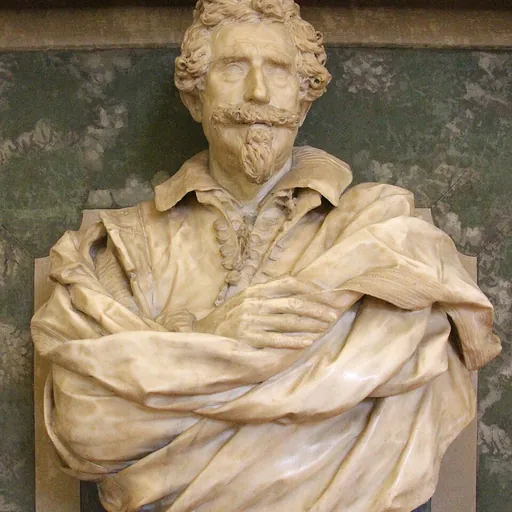
About Michelangelo Buonarroti
Lived 1568 – 1646 (aged 77). Michelangelo Buonarroti was a writer and poet.
Michelangelo Buonarroti il Giovane the Younger (baptized 4 November 1568 – 11 January 1646) was a Florentine poet, librettist and man of letters, known as "the Younger" to distinguish him from his granduncle, Michelangelo.
Education
From 1588 to 1591 he studied mathematics at the University of Pisa, where he became friends with Galileo Galilei and Maffeo Barberini, the future Pope Urban VIII.
Career Buonarroti was elected to the Accademia Fiorentina in 1585 and the Accademia della Crusca in 1589, and was one of the editors of first Italian dictionary, Vocabolario degli Accademici della Crusca (1612).
After the wedding of Marie de' Medici and Henry IV of France in 1600, Buonarroti published a Description of the banquet and was soon commissioned to write court entertainments: Il natal d'Ercole (1605), Il giudizio di Paride (for the wedding of Cosimo II and Maria Maddalena, 1608, music by Jacopo Peri), La Tancia (1611) and Balletto della Cortesia (1614).
In 1612, Buonarroti began construction of a gallery (now the Casa Buonarroti) on the Via Ghibellino dedicated to his famous relative and commissioned numerous artists to paint murals, including Artemisia Gentileschi (WP Commons gallery). During this period his name became linked with Francesca Caccini, who composed the music for La Tancia, the Balletto and La Fiera.
Buonarroti's career as a courtier took a turn for the worse when the Grand Duchess Christina of Lorraine took offense at salacious language in Fiera (1619). In 1623 he dedicated the publication of verse by the Elder Michelangelo to his friend Maffeo Barberini, newly installed as Pope Urban VIII, and sought patronage from other members of the Barberini family. The last of his theatre pieces was La Siringa, performed at the Palazzo Vecchio in 1634. In 1640 he lost his fortune in a bank failure at a time when the Wars of Castro (in which Rome and Florence took opposite sides) complicated relations with the Barberinis. His final years were spent writing the Satires. He is buried in Santa Croce.
Legacy Buonarroti's lyrics are found among many 17-century composers' musiche as well as in Luigi Dallapiccola's Sei Cori di Michelangelo Buonarroti il Giovane (1933).
Don’t just read it —
keep it.
Full-length biographies made to live with: read them, listen on the way to work, watch them tonight.
- E-book
- Audio
- Video
Instant download · yours to keep · every purchase keeps this site free
Important facts
more
Michelangelo Buonarroti II, Michelangiolo, Michelangelo Buonarroti il GiovanePeople in Michelangelo Buonarroti's life
Named in this biography and alive at the same time
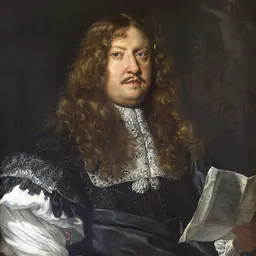

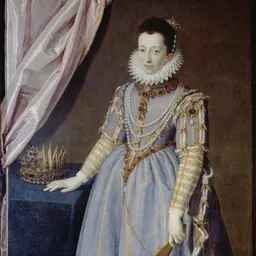


Related people
Same field, nearest in time
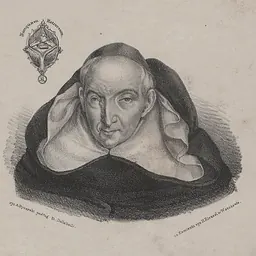
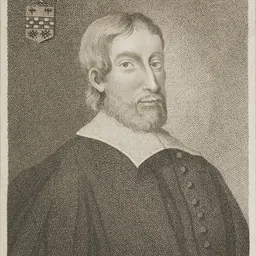
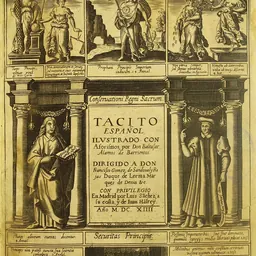
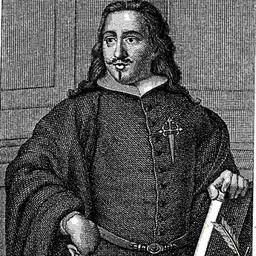
Contemporaries
People whose lives overlapped Michelangelo Buonarroti's




Frequently asked questions
Who was Michelangelo Buonarroti?
Italian writer
When was Michelangelo Buonarroti born?
Michelangelo Buonarroti was born on 4 November 1568 in Florence.
When did Michelangelo Buonarroti die?
Michelangelo Buonarroti died on 11 January 1646 in Florence.
What was Michelangelo Buonarroti's occupation?
Michelangelo Buonarroti was a writer and poet.
Sources & further reading
· Wikipedia: Michelangelo Buonarroti
· DBpedia: Michelangelo Buonarroti the Younger
Cite this page
APA: Biography.guide. (2026). Michelangelo Buonarroti. https://biography.guide/michelangelo-buonarroti/
MLA: "Michelangelo Buonarroti." Biography.guide, https://biography.guide/michelangelo-buonarroti/.
Chicago: "Michelangelo Buonarroti." Biography.guide. https://biography.guide/michelangelo-buonarroti/.
Data last updated: 2026-09-20 · Spot an error? Report a correction.
Portrait: Wikimedia Commons · author & licence
Page generated 2026-09-27 04:58 UTC