
About Michel Waisvisz
Lived 1949 – 2008 (aged 58). Michel Waisvisz was a Dutch composer, sound artist, performance artist, musician, researcher and installation artist.
Michel Waisvisz ( ; 8 July 1949, Leiden – 18 June 2008, Amsterdam) was a Dutch composer, performer and inventor of experimental electronic musical instruments. He was the artistic director of STEIM in Amsterdam from 1981, where he collaborated with musicians and artists from all over the world.
Biography His involvement with STEIM goes back to 1969, performing intensively and raising critical voices against the upcoming high-tech culture. He co-founded and organised the first sound festival in the Netherlands:The Claxon Sound Festival.
Waisvisz had a passionate dedication to a physical, bodily approach to electronic music which he expressed in the use and presentation of his many developments of hardware and software instruments. From his point of view, electronic music is created in direct musical interaction with individual technology, allowing for instant travels into sound through improvisation. This multidimensionality in electronic musical practice has been summed up in the expression of touch in a 1998 essay written together with Joel Ryan and Sally Jane Norman.
Discography 1974 Lumps (with Steve Lacy (saxophonist), Han Bennick, Maarten Van Regteren Altena) 1978 Crackle 2005 In Tune 2008 Shortwave (with Christine Sehnanoui)
Appears On 1974 Steve Lacy (saxophonist) - Saxophone Special 1987 New Computer Music (WERGO)
Musical instruments Hardware Instruments: TapePuller (1970): an instrument to play seated, pulling a tape with both feet over the tapehead, thus using the recording medium in a performative manner.
CrackleBox (1974): a portable instrument with batteries and a built-in speaker. The oscillator is played by the direct touch of the fingers on the exposed contacts of the circuit. The player's skin becomes part of the circuit.
CrackleSynth (1974): Michel Waisvisz' individual synthesizer. After bending a VCS3 Synth (the "Putney") in the early 70s to play it with a touchable "crackle" surface, this three voiced instrument became Michel Waisvisz' synthesizer development. It has 12 keys with tuning knobs combined with three crackle-patches.
The Hands (1984): One year after the MIDI standard had been introduced, Waisvisz built the first experimental interface making use of sensor data converted into MIDI. The two wooden frames attached to both hands let him play music with hand and arm movements, tilting gestures, and fingered playing. Converting analog sensor data into digital musical data has become a major issue at STEIM in the 1990s, introducing the mini computer The SensorLab.
Software instruments He has also worked on the creation of software instruments, developed with STEIM's programmer Frank Baldé: LiSa (Live-Sampling Instrument, since 1995) Software for the Mac, processing live audio input, or data from the memory in a most versatile way. JunXion (Sensor-to-Midi Matrix, since 2002): Converting sensor data into musical data today can be done by every laptop computer.
The Energetica Project (since 2005) "Energetica" is Waisvisz' vision of electricity provided for electronic instruments by the effort of the player him/ herself, theoretically developed in the last years of his life. As he has always fought pre-configurations and built-in directions in technology, the subjection to the communal power supplies.
Collaborations
Michel Waisvisz' collaborations include performances with Maarten Altena, Laurie Anderson, Tarek Atoui, Frank Baldé, Lodewijk de Boer, Willem Breuker, Peter Brötzmann, Najib Cheradi, John Cameron (Claw Boys Claw), Truus de Groot, Gunter Hampel, Paul Hubweber, Shelley Hirsch, Mazen Kerbaj, Steve Lacy, Misha Mengelberg, Patrizia van Roessel, Joel Ryan, Christine Sehnoaui, Fausto Senese, Shusaku, Laetitia Sonami, DJ sniff, DJ Spooky, Richard Teitelbaum, Moniek Toebosch, Jan St. Werner, Frans Zwartjes.
Don’t just read it —
keep it.
Full-length biographies made to live with: read them, listen on the way to work, watch them tonight.
- E-book
- Audio
- Video
Instant download · yours to keep · every purchase keeps this site free
Important facts
People in Michel Waisvisz's life
Named in this biography and alive at the same time
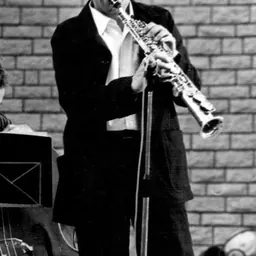






Related people
Same field, nearest in time



Contemporaries
People whose lives overlapped Michel Waisvisz's

Frequently asked questions
Who was Michel Waisvisz?
Dutch sound artist (1949–2008)
When was Michel Waisvisz born?
Michel Waisvisz was born on 8 July 1949 in Leiden.
When did Michel Waisvisz die?
Michel Waisvisz died on 18 June 2008 in Amsterdam.
What was Michel Waisvisz's occupation?
Michel Waisvisz was a composer, sound artist, performance artist, musician, researcher and installation artist.
What nationality was Michel Waisvisz?
Michel Waisvisz was Dutch.
Sources & further reading
Cite this page
APA: Biography.guide. (2026). Michel Waisvisz. https://biography.guide/michel-waisvisz/
MLA: "Michel Waisvisz." Biography.guide, https://biography.guide/michel-waisvisz/.
Chicago: "Michel Waisvisz." Biography.guide. https://biography.guide/michel-waisvisz/.
Data last updated: 2026-09-20 · Spot an error? Report a correction.
Page generated 2026-09-27 05:19 UTC