
About Michel Écochard
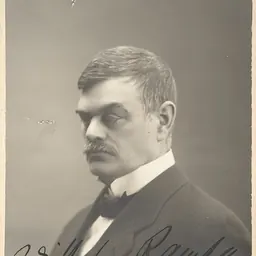
Lived 1905 – 1985 (aged 80). Michel Écochard was a French architect and urban planner.
Michel Écochard (11 March 1905 – 24 May 1985) was a French architect and urban planner. He played a large part in the urban planning of Casablanca from 1946 to 1952 during the French Protectorate, then in the French redevelopment of Damascus during its occupation of Syria. He was also trained as an archeologist.
Career
Syria Écochard began his career at a fairly young age. In 1930, when he was only in his twenties, he began his first public works restoring historic buildings in Damascus, which was then under French colonial rule. He a member of the French reconstruction team that restored the Temple of Bel in Palmyra, the Mosque of Bosra, and the Azm Palace, the last having become a property of the French.
Beirut In 1943 he worked on the first master plan for Beirut. There was a focus on managing the city's rapid, rural exodus-driven urbanization through the development of social housing projects.
1953 CIAM At the 1953 Congrès Internationaux d'Architecture Moderne (CIAM), Écochard presented, along with Georges Candilis, the work of ATBAT-Afrique—the Africa branch of founded in 1947 by figures including Le Corbusier, Vladimir Bodiansky, and André Wogenscky. It was a study of Casablanca's bidonvilles entitled "Habitat for the Greatest Number." It argued against doctrine, arguing that architects must consider local culture and climate in their designs. This generated great debate among modernist architects around the world and eventually provoked a schism.
GAMMA Écochard's collective of Modernist architects was called Groupe des Architectes Modernes Marocains (GAMMA), and initially included the architects George Candillis, Alexis Josic and Shadrach Woods. In the early 1950s, Écochard commissioned GAMMA to design housing that provided a "culturally specific living tissue" for laborers and migrants from the countryside. Sémiramis, (Honeycomb), and Carrières Centrales were some of the first examples of this Vernacular Modernism. The Moroccan GAMMA architect Elie Azagury, with whom he clashed on whether Moroccans could live in high-rises, was critical of Écochard as "an active instrument of the French colonial power." Écochard's 8x8 meter model, designed to address Casablanca's issues with overpopulation and rural exodus, was pioneering in the architecture of collective housing. From 1960 to 1964, he conducted various studies of Lebanon.
Other places Throughout his career, Écochard also made plans for Pakistan, Martigues, Dakar, Martinique, Damascus, Tabriz, Corsica, Mashhad, Muscat, and Tehran.
Works Carrières Centrales, (late 1940s - early 1950s) Casablanca, Morocco Kuwait National Museum, Completed 1986
Publications
Casablanca: le roman d'une ville. 1954. Editions de Paris. 20, Avenue Rapp. Paris, VIIe.
Don’t just read it —
keep it.
Full-length biographies made to live with: read them, listen on the way to work, watch them tonight.
- E-book
- Audio
- Video
Instant download · yours to keep · every purchase keeps this site free
Important facts
People in Michel Écochard's life
Named in this biography and alive at the same time




Related people
Same field, nearest in time
Contemporaries
People whose lives overlapped Michel Écochard's




Frequently asked questions
Who was Michel Écochard?
architect and urban planner (1905–1985)
When was Michel Écochard born?
Michel Écochard was born on 11 March 1905 in 6th arrondissement of Paris.
When did Michel Écochard die?
Michel Écochard died on 24 May 1985 in 16th arrondissement of Paris.
What was Michel Écochard's occupation?
Michel Écochard was an architect and urban planner.
What nationality was Michel Écochard?
Michel Écochard was French.
Sources & further reading
Cite this page
APA: Biography.guide. (2026). Michel Écochard. https://biography.guide/michel-ecochard/
MLA: "Michel Écochard." Biography.guide, https://biography.guide/michel-ecochard/.
Chicago: "Michel Écochard." Biography.guide. https://biography.guide/michel-ecochard/.
Data last updated: 2026-09-20 · Spot an error? Report a correction.
Page generated 2026-09-27 05:29 UTC