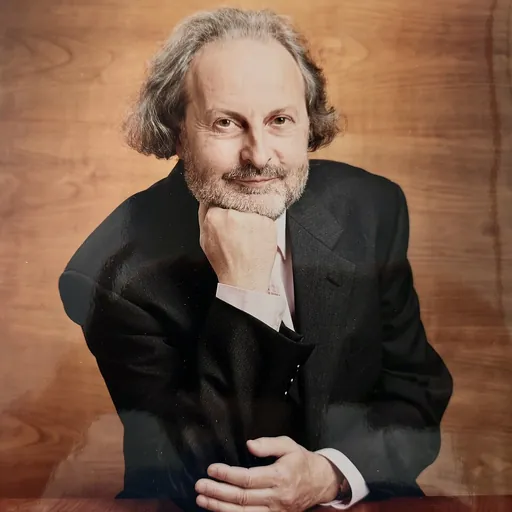
Michel Bénézech
French psychiatrist specialized in criminology and forensic psychiatry
About Michel Bénézech
Lived 1942 – 2025 (aged 82). Michel Bénézech was a French physician, psychiatrist, jurist and criminologist.
Michel Bénézech (1942–2025) was a French psychiatrist, Doctor of Laws, and professor at the University of Bordeaux. He was an expert of clinical criminology and forensic psychiatry. He promoted an approach to criminology based on scientific and multidisciplinary methods, and devoted most of his career to defending the rights and memory of people living with psychiatric disorders.
Biography Michel Bénézech was born on 1 October 1942 in Agen (Lot-et-Garonne) and died on 3 May 2025 in Bordeaux (Gironde). He was the son of René Bénézech, an optician from a Protestant family, and Marguerite Charles, who raised him in the Catholic faith. He prepared for his baccalaureate at the Lycée Saint Genès in Bordeaux. His school years were marked by numerous disciplinary measures and expulsions, which he attributed to his ‘rebellious, undisciplined, even provocative spirit, and his aversion to injustice’.
Academic and medical training Michel Bénézech had a triple background in medicine, law and criminology, which was exceptional for psychiatrists of his generation. On his mother's advice, he began his studies at the Faculty of Medicine in Bordeaux. He was a student of Jean-Didier Vincent, who was at this time senior lecturer in physiology. In 1969, he defended his doctoral thesis in medicine on follicular atrophoderma, a rare dermatological condition of genetic origin. He obtained the highest French academic degree (HDR, Habilitation à Diriger les Recherches) in 1992.
Career at Cadillac-sur-Garonne Forensic Psychiatric Hospital Michel Bénézech spent his entire hospital career in the public psychiatric hospitals of the Gironde. Persons with severe mental illnesses associated with dangerous behaviour are compulsory admitted in the UMD, based on the decision of the state's representative. Thanks to his forensic training, Michel Bénézech quickly settled into this forensic hospital, which was not particularly popular with the other registrars. After his internship, he remained a consultant at the forensic hospital until 1979.
As head of the prison psychiatric service, Michel Bénézech blew the whistle in 1985 on blood donation in prisons at the start of the acquired immunodeficiency syndrome (AIDS) epidemic. As early as 1984, he noticed that the international press was flagging up the high prevalence of human immunodeficiency virus (HIV) infection among prisoners in the US. In agreement with the health authorities, in early 1985 he introduced systematic HIV screening for intravenous drug users upon their admission to the prison. During a blood donation at the prison in July 1985, this screening identified six out of fourteen donors as HIV-positive. Several regional and national media outlets reported on the high prevalence of HIV infection in prison, triggering significant reactions among prison staff and the prison service. Pressure to halt the screening programme was exerted by the prefecture and the national prison service. Despite this warning, blood donations continued in French prisons until 1991. The letter denouncing the decision to carry out screening taken by Michel Bénézech, sent on 31 July 1985 by the Prefect of Gironde to the Ministries of Justice and Social Affairs, can be found in Appendix 138 of the November 1992 report on blood donation in prisons. Against a backdrop of previously strained relations between the psychiatric service and the prison administration, an administrative decision to withdraw Michel Bénézech's authorisation to practise within the prison system was taken on 6 February 2002. The decision was overturned on 15 April 2003 by the Bordeaux Administrative Court.
Academic career Throughout his career, Michel Bénézech held a dual academic role, serving as a lecturer and researcher in medicine and law.
Forensic expertise and consultancy in criminology Michel Bénézech was one of the most eminent French experts of his generation in criminology, forensic psychiatry, and in the assessment of the criminal responsibility of people living with psychiatric disorders.
Work and research Michel Bénézech authored and co-authored over 600 articles in French-language and international academic journals, and some fifty books.
Using the data collected from this cohort, Michel Bénézech carried out several studies that were published in the national and international scientific press. He demonstrated that the so-called ‘crime chromosome’ hypothesis is unfounded: although the frequency of the 47,XYY syndrome is slightly higher in a population of individuals who have committed violent acts, the vast majority of people with an extra Y chromosome have never come into contact with the law. These findings suggested that the systematic screening for such a chromosomal abnormality is not justified in the context of legal proceedings. This research was summarised in a book and an educational film, which was awarded an honorary diploma at the 36th Congress of the International Association of Scientific Cinema in 1983.
Together with Professor Marc-Louis Bourgeois, he conducted his first studies in clinical criminology at the forensic hospital of Cadillac, and was involved in the introduction of the DSM-III in France by conducting a standardised diagnostic assessment of inmates at Bordeaux Gradignan Prison.
Michel Bénézech developed an original method of criminal profiling based on crime scene analysis that comprised six fundamental components: violent, emotional, operational, sexual, relational, circumstantial, whose characteristics must be explored over time (pre-offence, offence and post-offence periods). Building on this standard protocol, Michel Bénézech developed a crime scene assessment technique specific to non-family sexual assaults that was based on the analysis of modus operandi, as well as relational and circumstantial components. Thanks to his expertise in criminal profiling, Michel Bénézech was regularly interviewed by the media in cases of violent crime, including those committed by serial killers.
The need for rigorous standardised forensic psychiatric assessments was central to Michel Bénézech’s thinking.
Michel Bénézech’s interest in criminology was also evident in the numerous studies of famous crimes he published in academic articles and in two of his books, La Chair de l’âme and A-t-on jugé Marie Besnard, le dossier de l’affaire. In these works, he analysed past and contemporary crimes, as well as those described in literary works.
His last contribution to criminology was focused on the links between radicalization and psychiatric disorders. He sought to demonstrate that organised terrorist acts are not attributable to severe psychiatric disorders, but that such disorders may be associated with the ‘lone wolf’ phenomenon. Michel Bénézech was consulted in 2017 as an expert for the report on Psychiatry and Radicalisation by the French Federation of Psychiatry.
Rights of people living with psychiatric disorders Michel Bénézech's commitment to promoting forensic psychiatry practice based on scientific methods is also reflected in his advocacy and work concerning the rights of people living with psychiatric disorders. In 1978, he co-authored a book on The Criminal Irresponsibility of the Mentally Disabled in which he compared various international laws. He defended the right of patients involved in forensic cases to undergo a standardised and rigorous assessment of their criminal responsibility and the risk of reoffending. He advocated the creation of a psychiatrist's post for the courts. He spent much time defending the rights of hospitalised patients and advocating legislation governing involuntary psychiatric hospitalisation. He co-authored books on medical confidentiality and user information in medicine.
Memorial work concerning the Cemetery of the Forgotten in Cadillac-sur-Garonne
Michel Bénézech made a significant contribution to preserving the memory of the living and dying conditions of those hospitalised at the psychiatric hospital in Cadillac-sur-Garonne. He conducted an in-depth study of the impact of the two world wars on the functioning and missions of the hospital. During World War I, Professor Emmanuel Régis (head of academic psychiatry at the Bordeaux Faculty of Medecine) organized the hospitalization of more than 500 soldiers with psychiatric disorders at the Cadillac lunatic asylum. One third of them died there, most often from tuberculosis. During World War II, those hospitalised at the asylum suffered from starvation due to very severe food restrictions, a problem that affected most psychiatric hospitals in France at the time.
Michel Bénézech's memorial work is exemplified by his campaign to restore the Cemetery of the Forgotten (Cimetière des Oubliés) at Cadillac hospital, so that the memory and dignity of those buried there should remain in people's minds. The cemetery was created on land purchased by the town in 1920, due to the high number of deaths at the asylum that the municipal cemetery could not deal with. Soldiers from the World War I who died at the asylum were buried there in the section known as the ‘brain-injured plot’, At the request of the residents of Cadillac, Michel Bénézech founded the Association called the Amis du Cimetière des Oubliés (Friends of the Cemetery of the Forgotten), of which he was president. His case for demonstrating the historical significance of this cemetery convinced the Regional Commission for Historical Heritage and Sites. The listing of part of the site and its walls on the Inventory of Historic Monuments put an end to the risk of the cemetery being destroyed to make way for a car park. This case also convinced the Nouvelle-Aquitaine Regional Council of the cemetery's historical and commemorative significance, leading to the listing of the entire site and the funding of its restoration, which was carried out between 2018 and 2020. Thanks to the survey carried out by Michel Bénézech, a ‘wall of remembrance’ was created bearing the names of those who had previously been ‘forgotten’. The Cimetière des Oubliés was inaugurated on 19 September 2020.
Don’t just read it —
keep it.
Full-length biographies made to live with: read them, listen on the way to work, watch them tonight.
- E-book
- Audio
- Video
Instant download · yours to keep · every purchase keeps this site free
Important facts
People in Michel Bénézech's life
Named in this biography and alive at the same time


Related people
Same field, nearest in time


Contemporaries
People whose lives overlapped Michel Bénézech's



Frequently asked questions
Who was Michel Bénézech?
French psychiatrist specialized in criminology and forensic psychiatry (1942-2025)
When was Michel Bénézech born?
Michel Bénézech was born on 1 October 1942 in Agen.
When did Michel Bénézech die?
Michel Bénézech died on 3 May 2025 in Bordeaux.
What was Michel Bénézech's occupation?
Michel Bénézech was a physician, psychiatrist, jurist and criminologist.
What nationality was Michel Bénézech?
Michel Bénézech was French.
Sources & further reading
Cite this page
APA: Biography.guide. (2026). Michel Bénézech. https://biography.guide/michel-benezech/
MLA: "Michel Bénézech." Biography.guide, https://biography.guide/michel-benezech/.
Chicago: "Michel Bénézech." Biography.guide. https://biography.guide/michel-benezech/.
Data last updated: 2026-09-21 · Spot an error? Report a correction.
Portrait: Wikimedia Commons · author & licence
Page generated 2026-09-27 04:59 UTC