
Michał Piekarski
Polish noble and failed assassin (died 1620)
About Michał Piekarski
Lived 1597 – 1620 (aged 22–23). Michał Piekarski was a Polish.
Michał Piekarski (; before 1597 – 27 November 1620), also known as Michael Piekarski, was a Polish petty nobleman and landowner, who attempted to assassinate King Sigismund III in 1620. He was often described as an impetuous melancholic and an eccentric man. As the illness systematically progressed, Piekarski was temporarily isolated and forbidden from rightfully managing his estates at Binkowice in southeastern Poland where he was most likely born.
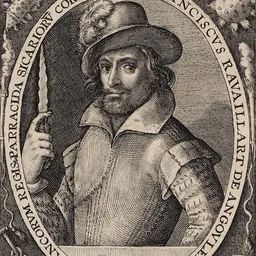
In May 1610, when king Henry IV of France was successfully assassinated by François Ravaillac, Piekarski, then still a young man, decided to kill Sigismund III of Poland. He eagerly waited and prepared for almost 10 years before attempting it. He was also drawn towards assassinating the monarch by the failed Zebrzydowski Rebellion, which was organised by the nobility against Sigismund.
Throughout his life Piekarski remained a pious Calvinist. All Protestants and Calvin followers became targeted by Sigismund and the Catholic Church during the Counter-Reformation in Poland. Some historians question the presence of any guards in the procession. The perpetrator was also hit in the skull with a sabre by Prince Władysław, which allowed him to be captured and held down.
Execution
On 20 November, the Sejm (Parliament) presented a verdict sentencing Piekarski to death without trial. The main charge was attempted regicide, which Piekarski did not deny. He was not fond of the king and blatantly offended the Court Marshal and the noble jury. The Parliament ordered the confiscation of his estates; the repugnance of the magnates towards Piekarski was so great that his native village of Binkowice was to be sacked and burned to the ground. Per sentence, Piekarski was driven around Warsaw and his body was slowly torn up with heated pliers while he was still alive on the cart. He was then placed on a platform situated in an area called Piekiełko (Devil's Den) near the Old Town where his right hand was cut off and incinerated. Towards the end of his tortures Piekarski was tied by his legs and arms and dismembered by horses.
Legacy A popular Polish saying "", roughly translated as 'to blather like Piekarski during torture', surfaced shortly before Piekarski's execution when he confessed his sins in an unorderly, confusing and lifeless manner. The expression is still used in modern Polish.
Don’t just read it —
keep it.
Full-length biographies made to live with: read them, listen on the way to work, watch them tonight.
- E-book
- Audio
- Video
Instant download · yours to keep · every purchase keeps this site free
Important facts
People in Michał Piekarski's life
Named in this biography and alive at the same time
Contemporaries
People whose lives overlapped Michał Piekarski's



Frequently asked questions
Who was Michał Piekarski?
Polish noble and failed assassin (died 1620)
When was Michał Piekarski born?
Michał Piekarski was born in 1597 in Gdańsk.
When did Michał Piekarski die?
Michał Piekarski died on 27 November 1620 in Warsaw.
What nationality was Michał Piekarski?
Michał Piekarski was Polish.
Sources & further reading
Cite this page
APA: Biography.guide. (2026). Michał Piekarski. https://biography.guide/michal-piekarski/
MLA: "Michał Piekarski." Biography.guide, https://biography.guide/michal-piekarski/.
Chicago: "Michał Piekarski." Biography.guide. https://biography.guide/michal-piekarski/.
Data last updated: 2026-09-20 · Spot an error? Report a correction.
Page generated 2026-09-27 05:27 UTC