
About Michael Weidt
Born 1946. Michael Weidt is a German actor, film actor and photographer, known for Berlin Wall.
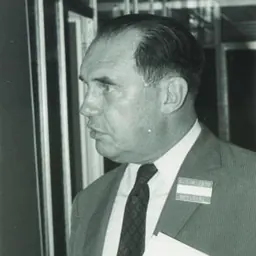
Michael Weidt (born 22 February 1946) is a German photographer. He is known, in particular, for his portraits of East German theatre and movie stars. His repertoire has also covered the worlds of music, dance and the visual arts more generally.
Life
Family provenance Weidt comes from an artistic family. His mother, Ursula Wendorff-Weidt (1919-2000) was an artist-illustrator. His step father was the dancer-choreographer Jean Weidt (1904-1988). The ceramicist Andreas Weidt is his half brother.
Eventful beginnings Michael Weidt was born at his grandmother's home into the chaotic winter aftermath of war at Berlin-Moabit, a district on the western side of inner Berlin. A midwife attended the birth, but it was his grandmother who spotted that his umbilical cord had not been properly cut and secured; it was his uncle who rushed the infant to the local hospital. The baby barely survived the loss of blood. For the first six years of Weidt's life his grandmother undertook much of the necessary childcare, while during the daytime his mother studied painting and graphic arts at the Weißensee Arts Academy. His mother married the choreographer Jean Weidt when he was 6 and he was taken with his parents to live in Schwerin in the northern part of what had become, in October 1949, the German Democratic Republic (East Germany). His stepfather worked as the Ballet master in Schwerin between 1952 and 1955. The rest of Michael Weidt's childhood and adolescence were in several important ways defined by enduring unhappiness over the separation from his grandmother who had looked after him during the crucial early years. Between 1955 and 1958 Weidt lived with his parents in Karl-Marx-Stadt (as Chemnitz was called at that time), after which the family returned to the Berlin area, now living in Rangsdorf, directly to the south of the city. Weidt published his first professional photograph in 1967; it was a panorama shot of the Karl-Marx-Allee in East Berlin, published as a double-page spread in "Das Magazin". and more work from "Das Magazin".
In 1978 Weidt had his first exhibition at Berlin's "Kunst in Heim" gallery. From 1978 he was working with a Nikon FM 35 mm camera, fitted with an "Objektiv" 35 mm or 85 mm lens.
In 1989 and 1990 Weidt undertook two "semi-secret" photo-trips to Paris, from which his exhibition "Pictures of Paris" ("Pariser Bilder") resulted, though he has not yet fulfilled an ambition to published a collected volume featuring those Paris images. and it was in any case not designed to accommodate the needs of a photographer from East Berlin who simply wished to see his grandmother in West Berlin. The position changed following a slight political thaw in relations between the two German states. In October 1972 a new so-called "Verkehrsvertrag" (literally "Traffic agreement") between the East and West German governments came into force. The agreement included various provisions to reduce the trade restrictions. His grandmother made herself a special bag in which she used to smuggle Rolling Stones and Beatles albums not officially available in the German Democratic Republic. Weidt enjoyed the kudos among his comrades that comes from having a grandmother who smuggles banned music across the frontier. The albums always arrived undamaged.
During the later 1980s there was further relaxation in the tensions between the two Germanies, and Weidt wrote to the authorities begging to be allowed to cross the wall and visit his grandmother for her ninetieth birthday, since she had no other relatives to look after her. Permission was granted on condition that he told no one and in the end he was able to stay with his grandmother for three days on the occasion of her ninetieth birthday. Following a succession of further begging letters to the authorities, he was eventually permitted to visit his grandmother on several subsequent occasions, on at least one occasion remaining with her in West Berlin for ten or more days.
When, in November 1989, protesters broke through the Berlin wall Weidt was in West Berlin already, visiting his grandmother. With a suddenness that many found incomprehensible at the time, East Berliners were free to cross into West Berlin without having to battle for official permission. Having watched the television and explained to his grandmother that with effect from the next Monday he would be free to visit her at any time, Michael Weidt climbed into his car and became one of the first East Berliners to drive across the border from west to east, as bemused East Berliners crowded at the abandoned "Invalidenplatz" frontier post, soon to walk across cautiously in the other direction. He arrived home in Rangsdorf to tell his wife that the border was open. Pausing only to collect her papers his wife demanded the car keys and headed out of the house; Weidt never saw her again.
He sat down in front of the television only to see a recording of himself in his car, pausing at the abandoned frontier buildings as he wondered what to do, and then accelerating on across as the western television company's bus passed by in the other direction.
Political reunification The process of reunification has unfolded progressively, but is crystallised in the Reunification Treaty, signed on 12 September 1990, which set the date for formal reunification at 3 October 1990. Weidt continued to work as a freelance photographer, but was also increasingly active as an assistant movie producer, working on films such as Das Mambospiel (1997) by Michael Gwisdek, The Crossing (1999) by Nora Hoppe, Schussangst (2002) by Dito Tsintsadze, The Red Coloured Grey (2003) by Srdjan Koljevic, Jam Session (2004) by Izabela Plucinska, Erinnere Dich, wenn du kannst! (2004) by Sigi Rothemund and La Fine del Mare (2005), again directed by Nora Hoppe. Since the turn of the century he has also participated as an eye witness in two documentary films covering his life in the German Democratic Republic (1949-1989); with his friend, Ich will da sein – Jenny Gröllmann (2008) and, after her death, Ich wollte nur meine Großmutter besuchen – Ein Porträt über Michael Weidt und die DDR (2010), produced by Ingo Woelke.
A major exhibition of Weidt's photographs took place in Saarbrücken in January 2011. More recently, there was an exhibition entitled "Erzähl mir, Augenblick" (loosely: "explain to me in an instant") at the new gallery in Wünsdorf (a short distance to the south of his Rangsdorf home-base) in March/April 2016. The Wünsdorf exhibition, which was an intensely personal one, included pictures taken on his visits to Havana in 2010 and 2011.
Personal life Michael Weidt's three marriages all ended in divorce. (He insists that divorce was a relatively painless process in the German Democratic Republic. ) He currently (2016) lives with his partner, the documentary film-maker Petra Weisenburger, in the Pankow district of Berlin.
Don’t just read it —
keep it.
Full-length biographies made to live with: read them, listen on the way to work, watch them tonight.
- E-book
- Audio
- Video
Instant download · yours to keep · every purchase keeps this site free
Important facts
Family & relationships
People in Michael Weidt's life
Named in this biography and alive at the same time



Related people
Same field, nearest in time



Contemporaries
People whose lives overlapped Michael Weidt's


Frequently asked questions
Who is Michael Weidt?
German actor
When was Michael Weidt born?
Michael Weidt was born on 22 February 1946 in Moabit.
What is Michael Weidt's occupation?
Michael Weidt is an actor, film actor and photographer.
What is Michael Weidt known for?
Michael Weidt is known for Berlin Wall.
What nationality is Michael Weidt?
Michael Weidt is German.
Sources & further reading
Cite this page
APA: Biography.guide. (2026). Michael Weidt. https://biography.guide/michael-weidt/
MLA: "Michael Weidt." Biography.guide, https://biography.guide/michael-weidt/.
Chicago: "Michael Weidt." Biography.guide. https://biography.guide/michael-weidt/.
Data last updated: 2026-09-22 · Spot an error? Report a correction.
Page generated 2026-09-27 05:17 UTC