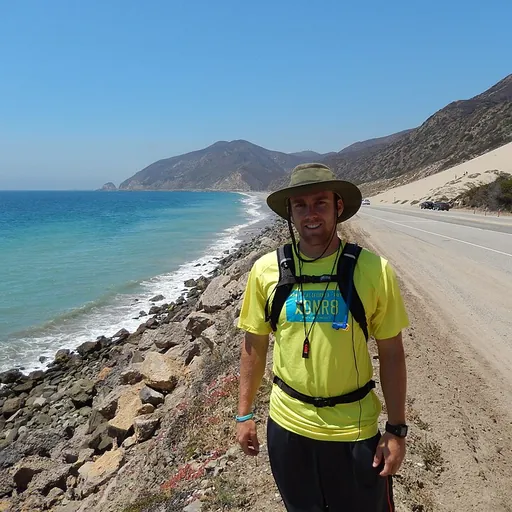
About Michael Semanchik
Born 2000. Michael Semanchik is an American lawyer.
Michael "Mike" Semanchik is the Executive Director of The Innocence Center (TIC) and former Managing Attorney at the California Innocence Project (CIP). As part of his work with CIP, he has been involved in many cases involving the exoneration of previously convicted prisoners, working closely with the organization's director, Justin Brooks, and also preparing petitions for many of CIP's clients. After working at CIP while still a law student at California Western School of Law, following graduation in 2010 he became an investigator and then a staff attorney there.
He was involved in the high-profile case of star linebacker Brian Banks, and was instrumental in Banks' exoneration in 2012 from a wrongful 2002 conviction as a sex offender, which had destroyed Banks' promising career as a high-school athlete. As a result of his work on this case, the (now defunct) California Lawyer Magazine named Semanchik Attorney of the Year in 2013.
In the Spring of 2013, Semanchik and two other CIP attorneys walked over 700 miles from San Diego to Sacramento in an event called The Innocence March, a public protest against the incarceration of twelve California inmates they considered innocent, which also served to bring awareness to the problem of wrongly convicted prisoners. They also presented twelve petitions to California Governor Jerry Brown, demanding clemency for the twelve. In 2014, the San Diego Daily Transcript recognized Semanchik in its list of "Top Attorneys."
Legal training In 2008, while still attending CWSL, he joined CIP as a clinic student, through which he investigated claims of innocence under staff supervision. Following his year as a clinic student, Semanchik assisted director Justin Brooks in drafting the first Wrongful Conviction Casebook. In 2010, Semanchik graduated cum laude from California Western School of Law.
After his release on probation, he arranged for a meeting with his accuser, Wanetta Gibson (who had contacted him through Facebook), at which she admitted on video that there had been no rape or kidnapping in 2002, and that their encounter had been completely consensual. The video evidence was not admissible in court, because the video had been made without Gibson's knowledge or consent and was not accompanied by a signed confession from the young woman. However, Semanchik was instrumental in putting together additional evidence supporting Banks' story, which led the district attorney to dismiss all charges against him and release him from sex-offender status, allowing him to resume his aborted sports career.
However, despite the fact that Miles had numerous witnesses to provide an alibi for his whereabouts at the time of the crime, and the fact that the two men indisputably guilty of the robbery confessed that Miles had had absolutely nothing to do with the crime, the judge in the case refused to exonerate Miles, maintaining that the eyewitness identifications were strong and rejecting the argument of California Innocence Project attorneys that they were not. Miles was finally freed in June 2017 after 18 years in prison, following a second hearing that reversed his earlier conviction.
However, the CIP provided forensic proof that the victim had been killed prior to the witness' alleged drop-off time for Long (that is, before the earliest possible time of her return to the apartment), and that, even if the victim had actually been killed after that point in time, Long would not have had enough time to murder her boyfriend and hide evidence of that fact from police. DNA from an unknown male was also recovered at the crime scene. The evidence of her innocence was so compelling that the very same judge who heard the original case reversed the conviction in June 2016.
When he was released, Richards, 67, was broke, homeless, without a job and suffering from prostate cancer. Wendy Koen, a student who had worked on Bill's case and subsequently became a lawyer, offered to give Bill a place to stay upon his release. Semanchik and CIP have since tried to obtain compensation from the state for the decades he spent wrongly incarcerated.
Reggie Cole In 1994, Reggie Cole was convicted of the shooting of Felipe Angeles after being misidentified by an eyewitness, a local brothel owner. The police allege that the killer was shot in the leg upon leaving the scene and, after finding a gunshot wound in Cole's leg, concluded that he was the perpetrator. However, despite the fact that medical records were produced that proved Cole had actually received his leg wound six years prior, he was convicted.
In 2010, due to the efforts of the California Innocence Project, Cole's conviction was thrown out due to ineffective assistance of counsel, and five years later he was found "factually innocent."
Michael Hanline In November 1978, the body of truck driver J.T. McGarry, who had been shot multiple times, was found over 25 miles from his Ventura County home. Michael Hanline was suspected of having murdered him, with the help of an accomplice, because he and McGarry had both been involved with the same woman. Largely on this woman's testimony, Hanline was sentenced to life without parole in 1980. CIP eventually discovered that a since-deceased attorney named Bruce Robertson had attempted to implicate Hanline in order to direct suspicion away from his own clients, and had intimidated potential witnesses. A witness had even placed Robertson at McGarry's home on the night of his murder.
Scott McMahon Scott McMahon is a United States citizen who was wrongfully imprisoned in the Philippines from April, 2011 to August, 2016. Dolores San Pablo Vermeulen, the wife of an acquaintance, had previously called in the police to raid McMahon's home in search of her husband, an action that had an extremely traumatic effect on McMahon's son. McMahon then brought a lawsuit against Vermeulen for child abuse. Vermeulen in turn accused McMahon of having raped her in February 2010, though she had brought no charges until six months after the alleged rape. A medical examination of Vermeulen showed no sign of rape, and McMahon could prove that he was on vacation hundreds of miles away with his family at the time of the alleged assault. However, McMahon could not leave the country, because the Filipino Bureau of Immigration demanded that he pay them $1000 for every year since his visa expired, despite the fact that the only reason he let it expire was because he had been imprisoned for a crime he didn't commit. Due to heavy U.S. government pressure, McMahon was allowed to return home to Seattle on September 4, 2016. The victim herself had been married to Googie Harris, Sr., who knew about the affair, had filed a restraining order against Cheek and had demanded custody of their daughters. The evidence that had swayed the jury at the third trial was the presence, about a mile from the murder scene, of Roberts’ truck (which Cheek had frequently borrowed), the fact that he had initially lied about the affair with Cheek to police and, above all, the presence near the body of a watch that Roberts had mistakenly identified as his. (Roberts’ watch was later found at his home.)
"In this case," said Semanchik, "what stood out was it didn't make sense why somebody that would have committed the crime would have then just left their perfectly operable truck at the scene. Why not get in your truck and drive away?" Roberts also had an alibi: on the day of the murder, he had placed multiple calls to Cheek from a pay phone near his home. Meanwhile, the CIP lobbied the legislature, in line with other states, to reduce the legal evidentiary standard, which would make the original 2014 DNA evidence to the judge sufficient to exonerate Roberts. The legislature passed this reform in September 2016. Because of the DNA match, Leal and Harris then became the focus of a new probe. The marchers usually began each day's trek at about 5:30 am and covered about 20 miles by the end of each day, often in inclement weather and sometimes walking along railroad tracks and even through forests. Adam Riojas, a CIP client freed after 14 years in prison, accompanied the marchers from San Diego to Oceanside, where he is now the pastor of a local chapel. Five of the twelve prisoners named in the petition (including Miles, Long, Richards and Hanline) have subsequently been freed through CIP's efforts.
In an article about flaws in the science of DNA testing, an incident was described in which CIP asked a large private lab to test evidence that they believed could exonerate a man convicted of murder. After that lab reported that the DNA test was inconclusive, they took the same data to another analyst, who said that the DNA evidence proved the convict was innocent. Semanchik claimed that he had no hesitation about asking more than one analyst to examine the same data, but was troubled by the implications. "How can two labs get entirely different answers from the same DNA tests?" he was quoted as saying.
The CIP has supported efforts to modify or repeal California's so-called Three Strikes Law. In 2012, California referendum Proposition (Prop) 36 – which modified the law so that minor felony crimes (such as drug possession) wouldn't count as the third "strike" if a two-time felon gets convicted for the third time – passed by an overwhelming majority of voters. CIP accepted the case under the Institute for Criminal Defense Advocacy (ICDA), an organization that helped found CIP. In November 2012, Kenneth Corley, became the first person, after he petitioned the court, to be released under the new law, after 16 years in prison. Semanchik said, "It just didn't make sense for him to be serving any more time… I was really confident that Kenny was going to make it [after being released from prison]." His confidence stemmed in part from Corley's exemplary record as a prisoner.
Semanchik has stated in a video interview that one of his toughest personal challenges as a member of the California Innocence Project occurs when, following a review of the case of a person he believes was wrongfully convicted, he is forced to close that case because he knows that the evidence of innocence would not be considered sufficient by a judge to reverse the incarcerated person's conviction.
He currently lives in San Diego with his wife, Nikki Semanchik, and two children.
Don’t just read it —
keep it.
Full-length biographies made to live with: read them, listen on the way to work, watch them tonight.
- E-book
- Audio
- Video
Instant download · yours to keep · every purchase keeps this site free
Important facts
People in Michael Semanchik's life
Named in this biography and alive at the same time





Related people
Same field, nearest in time



Contemporaries
People whose lives overlapped Michael Semanchik's



Frequently asked questions
Who is Michael Semanchik?
American wrongful conviction advocate
When was Michael Semanchik born?
Michael Semanchik was born in 2000 in Pittsburgh.
What is Michael Semanchik's occupation?
Michael Semanchik is a lawyer.
What nationality is Michael Semanchik?
Michael Semanchik is American.
Sources & further reading
· Wikipedia: Michael Semanchik
Cite this page
APA: Biography.guide. (2026). Michael Semanchik. https://biography.guide/michael-semanchik/
MLA: "Michael Semanchik." Biography.guide, https://biography.guide/michael-semanchik/.
Chicago: "Michael Semanchik." Biography.guide. https://biography.guide/michael-semanchik/.
Data last updated: 2026-09-24 · Spot an error? Report a correction.
Portrait: Wikimedia Commons · author & licence
Page generated 2026-09-27 05:09 UTC