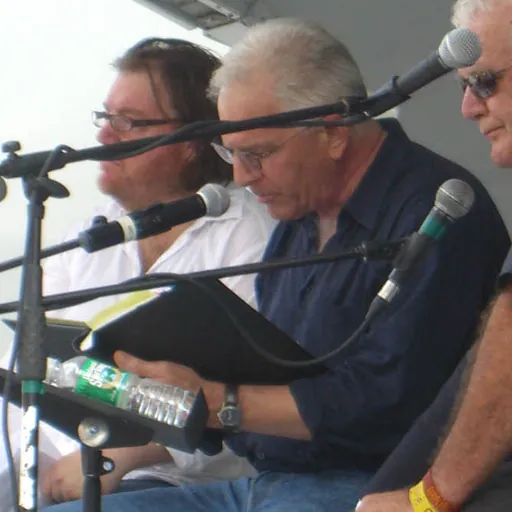
About Michael Palmer
Born 1943. Michael Palmer is an American translator and poet.
Michael Palmer (born May 11, 1943) is an American poet and translator. He attended Harvard University, where he earned a BA in French and an MA in Comparative Literature. He has worked extensively with Contemporary dance since the 1970s and has collaborated with many composers and visual artists. Palmer has lived in San Francisco since 1969.
Palmer is the 2006 recipient of the Wallace Stevens Award from the Academy of American Poets.
Beginnings Michael Palmer began actively pursuing a career in poetry during the 1960s. Two events in the early sixties seem decisive to his development as a poet.
First, Palmer attended the Vancouver Poetry Conference in 1963. This July–August 1963 Poetry Conference in Vancouver, British Columbia spanned three weeks and involved about sixty people who had registered for a program of discussions, workshops, lectures, and readings designed by Warren Tallman and Robert Creeley as a summer course at the University of B.C. There Palmer met writers and artists who would leave a mark on his own developing sense of a poetics, especially Robert Duncan, Robert Creeley, and Clark Coolidge, with whom he formed lifelong friendships. It was a landmark moment as Robert Creeley observed: “The Vancouver Poetry Conference brought together for the first time, a decisive company of then disregarded poets such as Denise Levertov, Charles Olson, Allen Ginsberg, Robert Duncan, Margaret Avison, Philip Whalen... together with as yet unrecognised younger poets of that time, Michael Palmer, Clark Coolidge and many more.”
The second decisive event in Palmer’s early career as a poet began with the editing of the journal Joglars alongside fellow poet Clark Coolidge. Joglars (Providence, Rhode Island) numbered just three issues in all, published between 1964 and 1966, but it extended Palmer’s correspondence with fellow poets begun in Vancouver. The first issue appeared in Spring 1964 and included poems by Gary Snyder, Michael McClure, Fielding Dawson, Jonathan Williams, Lorine Niedecker, Robert Kelly, and Louis Zukofsky. Palmer published five of his own poems in the second number of Joglars, an issue that included work by Larry Eigner, Stan Brakhage, Russell Edson, and Jackson Mac Low.
For those who attended the Vancouver Conference or learned about it later on, it was apparent that second-generation modernist poet Charles Olson was exerting a significant influence on the emerging generation of artists and poets (the so-called third-generation modernists) who came to prominence in the 1950s and 1960s, and included the New American poets. The latter poets, such as Robert Creeley, Robert Duncan, and Denise Levertov would have an impact on the new generation of artists emerging in the 1970s, which included Palmer. Says Palmer:
Work and recognition Palmer is the author of fourteen full-length books of poetry, beginning in 1972 with Blake's Newton and most recently in 2021 with Little Elegies for Sister Satan. Other notable collections include Company of Moths (2005) (shortlisted for the 2006 Canadian Griffin Poetry Prize), The Promises of Glass (2000), At Passages (1996), Sun (1988), and Notes for Echo Lake (1981).
A prose work, The Danish Notebook, was published in 1999. In the spring of 2007, a chapbook, The Counter-Sky (with translations by Koichiro Yamauchi), was published by Meltemia Press of Japan, to coincide with the Tokyo Poetry and Dance Festival. Palmer’s work has appeared in literary magazines such as Boundary 2, Berkeley Poetry Review, Sulfur, Conjunctions, Grand Street and O-blek.
Besides the 2006 Wallace Stevens Award, Michael Palmer's honors include two grants from the Literature Program of the National Endowment for the Arts. In 1989-90 he was a Guggenheim Fellow. During the years 1992–1994 he held a Lila Wallace-Reader's Digest Fund Writer's Award. From 1999 to 2004, he served as a Chancellor of the Academy of American Poets.
Themes and writing style Introducing Palmer for a reading in 1996, Brighde Mullins noted that his poetics is both “situated yet active.” Likewise, Palmer himself speaks of the poem on the page as signaling a "site of passages":
Elsewhere, Palmer observes that "in our reading we have to rediscover the radical nature of the poem" and search for "the essential place of lyric poetry" as we delve "beneath it to its relationship with language".
If poetry and literature is, as Ezra Pound observed, "news that stays news," in his own work Palmer also wants to account for a subterranean or “counter-tradition”. He invokes the latter as a way to “think against” the prevailing doxa, and to have access to an 'alternative tradition' that slips under the radar of the Academy but exerts an underground influence.
And the poem, from its homeless home, writes of blindsight and silence from the poem "Night Gardening", Company of Moths (2005)
Palmer has repeatedly stated, in interviews and talks over the years, that the situation for the poet and/or the poem is parodoxical: a seeing which is blind, a "nothing you can see", an "active waiting", "purposive, sometimes a music", or a "nowhere" that is "now / here". For Palmer, poetry can "interrogate the radical and violent instability of our moment, asking where is the location of culture, where the site of self, selves, among others" (as Palmer has characterized the poetry of Myung Mi Kim).
Critical reception Michael Palmer's poetry has been described variously as abstract, intimate, elegant, hermetic, allusive, personal, political, speculative, and inaccessible.
"How does the human break down so completely that the only alternative we have is to impose massive destruction and then...massive suffering among civilian populations?" Michael Palmer some criticize Palmer's work as discordant: an interruption of our composure (to invoke Robert Duncan's phrase).
As for the modernist project, its legacy is something Palmer both resists and embraces. Palmer is candid about the towering figures of early modernism, the great inventors of the period, with opinions similar to Yeats, Eliot and Pound. Contrarily, Palmer clearly states that there remains “something quite harrowing inscribed at the heart of modernism.” The poet must suffer 'loss', embrace disturbance and paradox, agonizing over what cannot be accounted for. Palmer will admit into his work that "essential errancy of discovery in the poem" that would not be a “unified narrative explanation of the self,” but would allow for “cloaked meaning and necessary semantic indirection.”
Dance Since the 1970s, Palmer has collaborated on over a dozen dance works with Margaret Jenkins and her Dance Company. Early dance scenarios in which Palmer participated include Interferences, 1975; Equal Time, 1976; No One but Whitington, 1978; Red, Yellow, Blue, 1980, Straight Words, 1980; Versions by Turns, 1980; Cortland Set, 1982; and First Figure, 1984.
Painters and visual artists Similar to his friendship with Robert Duncan and the painter Jess Collins, Palmer's work with painter Irving Petlin is important.
Palmer has also worked with painter and visual artist Augusta Talbot, and curated her exhibition at the CUE Art Foundation (March 17 -April 23, 2005) Talbot, in turn, provided the cover art for Palmer’s collection The Company of Moths (2005) and for Thread (2006). When asked how collaboration has pushed or shaped the boundaries of his work, Palmer responded:
quote|“One was that, when I was using language — but even when I wasn't, when I was simply envisioning a structure, for example — I was working with the idea of actual space. Over time, my own language took on a certain physicality or gestural character that it hadn't had as strongly in the earliest work. Margy (Margaret Jenkins) and I would often work with language as gesture and gesture as language---we would cross these two media, have them join at some nexus. And inevitably then, as I brought certain characteristics of my work to dance, and to dance structure and gesture, it started crossing over into my work. It added space to the poems. (With Jan Lauwereyns) Truths of Stone, Druksel (Ghent, Belgium), 2010. Thread, New Directions (New York, New York), 2011. The Laughter of the Sphinx, New Directions (New York, New York), 2016. Little Elegies for Sister Satan. New Directions (New York, New York), 2021.
Other Idem 1-4 (radio plays), 1979. (Editor) Code of Signals: Recent Writings in Poetics, North Atlantic Books (Berkeley, California), 1983. The Danish Notebook, Avec Books (Penngrove, California), 1999 — prose/memoir Active Boundaries: Selected Essays and Talks, New Directions (New York, New York), 2008.
Palmer sites and exhibits Exhibit at The Academy of American Poets includes links to on-line poems by Palmer not listed below Modern American Poetry site Author Page at Internationales Literatufestival Berlin site (in English) Palmer was a guest of the ILB (Internationales Literatufestival Berlin/ Germany) in 2001 and 2005. An internet bibliography for Michael Palmer from LiteraryHistory.com
Poems "Dream of a Language That Speaks" a poem from Company of Moths (2005) @ Jacket Magazine site "Scale" first published in Richter 858 (ed. David Breskin, The Shifting Foundation, SF MOMA: San Francisco Museum of Modern Art); included in Company of Moths "Autobiography 3" & Autobiography 5" two poems from Conjunctions magazine's on-line archive; included in The Promises of Glass (2000) To the Title (Are there titles?) included in Jacket Magazine 33 four poems from Thread from Boston Review's March/April 2010 issue Video of Palmer at the 2010 Sydney (Australia) Writers Festival. Video of Palmer reading a poem from Mahmoud Darwish's collection Unfortunately, It Was Paradise: Selected Poems Michael Palmer, Paul Hoover with the poetry of Maria Baranda - September 27, 2015 – Palmer reads from his book Thread and from his forthcoming collection The Laughter of the Sphinx. He also reads a single poem from his collection The Company of Moths.
Selected essays and talks Period (senses of duration) this is a version of a talk Palmer gave in San Francisco in February 1982. Scroll down to "Table of Contents" to find the Palmer selection. Here it appears in an e-book representation of Code of Signals (which Palmer edited in 1983, with the subtitle "Recent Writings in Poetics"). On Robert Duncan reprint of Palmer's essay "Robert Duncan and Romantic Synthesis" Michael Palmer audio-files at PENNsound "On the Sustaining of Culture in Dark Times" text of Palmer's keynote address given at the 3rd Annual Sustainable Living Conference at Evergreen State College in February 2004 "Ground Work: On Robert Duncan" Michael Palmer's "Introduction" to a combined edition of Ground Work: Before the War, and Ground Work II: In the Dark, published by New Directions in April 2006. Lunch Poems reading by Michael Palmer: Webcast Held on October 5, 2006, in the Morrison Library, University of California at Berkeley: webcast online "In Company: On Artistic Collaboration and Solitude" This is the title of the lecture/talk that Palmer gave, along with a poetry reading, at the University of Chicago in October 2006. (In audio & video format) Bad to the bone: What I learned outside Lecture & Talk given in June 2002, when Palmer taught for a brief stint at the Jack Kerouac School of Disembodied Poetics at Naropa in Boulder, Colorado Poetic Obligations (Talking about Nothing at Temple) This is a talk Palmer gave at Temple University in February 1999, and was originally published in Fulcrum: An annual of poetry and aesthetics (Issue 2, 2003). essay/talk originally published in the Chicago Review (June, 2003)
Interviews with Palmer The River City Interview conducted by Paul Naylor, Lindsay Hill, and J. P. Craig; appeared in 1994. An Interview with Michael Palmer by Robert Hicks in 2006 Interview at Berkeley Daily Planet: April 7, 2006 discusses a reading Palmer & Douglas Blazek gave together at Moe's, a bookstore in Berkeley, California; includes interviews Interview with Michael Palmer an interview conducted at Washington University in St. Louis in 2008 by the student editors of "Arch Literary Journal" in conjunction with a talk and reading Palmer gave at the school. Includes an introductory essay by one of the editors, Lawrence Revard, "'What Reading?': Play in Michael Palmer's Poetics"
Others on Palmer Margaret Jenkins Dance Company info on both Palmer & his collaborators in their on-going work with Dance Lauri Ramey:"Michael Palmer: The Lion Bridge" Ramey wrote a doctoral dissertation on Palmer, and here reviews his "Selected Poems" A Collision of "Possible Worlds" A 2002 review of The Promises of Glass by Michael Dowdy @Free Verse website A review of Company of Moths a book review of Palmer's 2005 collection Griffin Poetry Prize biography, including audio and video clips Palmer was shortlisted for this prize in 2006 Margaret Jenkins Dance Company's "A Slipping Glimpse" 2006 dance piece in collaboration with Tanushree Shankar Dance School & the text by Palmer Cultural camaraderie article from Hindustantimes.com on the dance performance A Slipping Glimpse. Article discusses Palmer's collaboration (includes quotes) Palmer is Spring 2007 Writer in Residence press release from California College of the Arts Michael Palmer (Six Introductions) a brief essay by Clayton Eshleman who edited Sulfur magazine, for which Palmer served as a contributing editor. Hands Across Many Seas: From San Francisco and India, a dance collaboration article by Deborah Jowitt on "A Slipping Glimpse", performed by the Margaret Jenkins Dance Company at the "Danspace Project" at Saint Mark's Church, October 4 through 6, 2007 Lyric Persuasions at Poets House Rae Armantrout and Zoketsu Norman Fischer discuss Michael Palmer's work as recorded by Vasiliki Katsarou at the Poet's House in the Spring of 2010
Don’t just read it —
keep it.
Full-length biographies made to live with: read them, listen on the way to work, watch them tonight.
- E-book
- Audio
- Video
Instant download · yours to keep · every purchase keeps this site free
Important facts
People in Michael Palmer's life
Named in this biography and alive at the same time





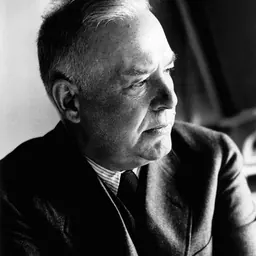

Related people
Same field, nearest in time



Contemporaries
People whose lives overlapped Michael Palmer's



Frequently asked questions
Who is Michael Palmer?
American poet and translator (born 1943)
When was Michael Palmer born?
Michael Palmer was born on 11 May 1943 in Manhattan.
What is Michael Palmer's occupation?
Michael Palmer is a translator and poet.
What nationality is Michael Palmer?
Michael Palmer is American.
Sources & further reading
· DBpedia: Michael Palmer (poet)
Cite this page
APA: Biography.guide. (2026). Michael Palmer. https://biography.guide/michael-palmer-translator/
MLA: "Michael Palmer." Biography.guide, https://biography.guide/michael-palmer-translator/.
Chicago: "Michael Palmer." Biography.guide. https://biography.guide/michael-palmer-translator/.
Data last updated: 2026-09-21 · Spot an error? Report a correction.
Portrait: Wikimedia Commons · author & licence
Page generated 2026-09-27 04:59 UTC