
About Michael Meadowcroft
Lived 1942 – 2026 (aged 84). Michael Meadowcroft was a British politician, writer and public affairs consultant.
Michael James Meadowcroft (6 March 1942 – 1 June 2026) was a British author, politician and political affairs consultant. He served as the Member of Parliament (MP) for Leeds West from 1983 to 1987.
Early life Meadowcroft was born in Halifax, West Riding, and grew up in Southport, Lancashire. He was educated at King George V Grammar School in Southport. His parents supported the Labour Party.
In 1968, he was elected as a Liberal member of Leeds City Council and served until 1983. Meadowcroft also led the Liberal Group on the council for a large part of his time as a city councillor. He also served as a member of West Yorkshire Metropolitan County Council from 1973 to 1976 and again from 1981 to 1983.
He held many roles within the party, including the chair of the Liberal Party Assembly committee responsible for organising the party's conferences. He also authored a number of influential pamphlets championing liberal philosophy and the principles of community politics.
Before being elected, he had already been known as an opponent of the SDP–Liberal Alliance given differing policies between the two parties. By the time of his election, the term "Meadowcroft Tendency" (a play on Labour's Militant Tendency) was being used for those in the Liberal Party who favoured alliances with the Campaign for Nuclear Disarmament and civil rights groups above the SDP. He wrote in an opinion piece in October 1986 that "my seniors in the party suspect that some of my opinions are quite unorthodox: indeed, are positively heretical".
In a reshuffle of July 1985, Meadowcroft was appointed the head of the Liberals' by-election unit. In 1986, he was the Liberal Party's spokesman on community relations and opposed the introduction of visas for Commonwealth migrants.
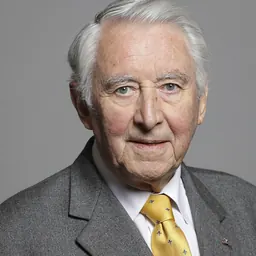
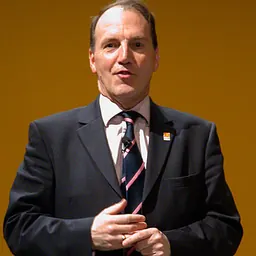
Meadowcroft was amongst those in the Liberal Party who criticised leader David Steel's compromises with the SDP over defence policy and favoured nuclear disarmament. He favoured a European defence policy, independent of both the United States and the Soviet Union, and without nuclear weapons. After publishing a paper on defence, together with Archy Kirkwood and Simon Hughes, named Across the divide, shortly before the Liberal Assembly voted for an amendment to Steel's defence strategy that required a non-nuclear system, he was jeered by other Liberal MPs and Peers at the 1986 Assembly, and accused of violating collective responsibility for the Liberal front bench. Meadowcroft said that they had been assured that the Alliance's joint report on defence would not be published around the same time as their paper and that this promise had not been kept.
Meadowcroft was defeated in the 1987 general election by Labour candidate John Battle. Some suggested that his approach had been less suited to parliamentary than to municipal politics.
He was on the team to discuss the Liberal Party's merger with the Social Democratic Party in 1988. He was the first of several Liberals to walk out of the negotiations, citing the commitment to NATO in the constitutional preamble for the merged party. He argued for a "No" vote to the merger at the special Liberal Assembly in Blackpool, He briefly stayed with the Social and Liberal Democrats (the name was later shortened to the 'Liberal Democrats') to support Alan Beith's candidacy for leader.
On 5 October 2007, it was announced that Meadowcroft had joined the Liberal Democrats, citing the party's opposition to the Iraq War, its rejection of the identity cards policy and their commitment to a united Europe. He defended the Conservative–Liberal Democrat coalition agreement in 2010, saying that Labour had refused to negotiate with them, and that the deal with the Conservatives won concessions on electoral reform and civil liberties.
Meadowcroft was one of the few senior Liberal Democrats to defend Bradford East MP David Ward, who was expelled from the party in 2017 over comments critical of Israel and Zionism.
IICSA investigation into Cyril Smith As Chair of the Liberal Party's Assembly between 1977 and 1981, Meadowcroft was questioned by the Independent Inquiry into Child Sexual Abuse, in relation to the Liberal MP Cyril Smith, who was arrested several times for sexual abuse but never charged. In his response to a request from the Inquiry under Rule 9 of the Inquiry Rules 2006, Meadowcroft asserted that he had no personal knowledge of the Lancashire Constabulary investigation into Cyril Smith or what the Liberal Party may have known about it.
In a 1984 interview with the newspaper Leeds Student, Meadowcroft described himself as "an anarchist at heart, but constitutionalist by conviction". His views on foreign policy at the time were described as "exceedingly radical" for a Liberal, as he opposed the deployment of troops to Northern Ireland, the Falklands War and membership of NATO. Meadowcroft was a member of the world citizenship movement and supported a democratically constituted world government. He supported open borders in principle, but wrote of border controls in 2001, "their removal overnight in a single operation would provoke immigration to Britain at an artificially high level".
Whilst a member of the post-1988 Liberal Party, he authored two editions of Focus on Freedom: the case for the Liberal Party, which explained the philosophy behind the party's manifesto. Political positions outlined in the book include support for the following: The Single Transferable Vote electoral system but opposition to the party list system. The UK's withdrawal from NATO and the establishment in turn of a European Security Force to contribute to missions of the United Nations. Meadowcroft stated that Liberals opposed both the Gulf War Support for an independent State of Palestine Membership of the European Union, including membership of Schengen, but with reform of the democratic deficit. Opposition to CCTV. Preventive healthcare. Legalisation of all drugs. A ban on private education. Nationalisation of the water industry. Opposition to identity cards, including a refusal to carry any cards that might be introduced.
Death Meadowcroft died after a short illness on 1 June 2026, aged 84.
Works
.
Don’t just read it —
keep it.
Full-length biographies made to live with: read them, listen on the way to work, watch them tonight.
- E-book
- Audio
- Video
Instant download · yours to keep · every purchase keeps this site free
Important facts
People in Michael Meadowcroft's life
Named in this biography and alive at the same time





Related people
Same field, nearest in time



Contemporaries
People whose lives overlapped Michael Meadowcroft's
Frequently asked questions
Who was Michael Meadowcroft?
British politician ( 1942-2026)
When was Michael Meadowcroft born?
Michael Meadowcroft was born on 6 March 1942 in Southport, Calder Valley.
When did Michael Meadowcroft die?
Michael Meadowcroft died on 1 June 2026.
What was Michael Meadowcroft's occupation?
Michael Meadowcroft was a politician, writer and public affairs consultant.
What nationality was Michael Meadowcroft?
Michael Meadowcroft was British.
Sources & further reading
· Wikipedia: Michael Meadowcroft
· DBpedia: Michael Meadowcroft
Cite this page
APA: Biography.guide. (2026). Michael Meadowcroft. https://biography.guide/michael-meadowcroft/
MLA: "Michael Meadowcroft." Biography.guide, https://biography.guide/michael-meadowcroft/.
Chicago: "Michael Meadowcroft." Biography.guide. https://biography.guide/michael-meadowcroft/.
Data last updated: 2026-09-20 · Spot an error? Report a correction.
Page generated 2026-09-27 05:30 UTC