
Michael Maestlin
German astronomer and mathematician
About Michael Maestlin
Lived 1550 – 1631 (aged 81). Michael Maestlin was a German mathematician, astronomer, university teacher and astrologer.
Michael Maestlin (; also Mästlin, Möstlin, or Moestlin; 30 September 1550 – 26 October 1631) was a German astronomer and mathematician, best known as the mentor of Johannes Kepler. A student of Philipp Apian, Maestlin is recognized as the teacher who had the greatest influence on Kepler. He is regarded as one of the most significant astronomers of the period between Copernicus and Kepler. Maestlin had an older sister named Elisabeth and a younger brother named Matthäus.
His family’s original surname was Leckher or Legecker, and they lived in the village of Boll, a few kilometers south of Göppingen. In his autobiography, Maestlin recounts how the family name Legecker was changed to Mästlin. After completing his education there, Maestlin enrolled at the University of Tübingen, matriculating on 3 December 1568.
Maestlin studied theology at the Tübinger Stift, an elite educational institution founded in 1536 by Duke Ulrich von Württemberg. He earned his Baccalaureate in 1569 and his master's degree in 1571. It is believed Apian taught topics such as Frisius's Arithmetic, Euclid's Elements, Proclus's Sphera, Peurbach's Theoricae Novae Planetarus, and the use of geodetic instruments. From 1577 to 1580, Maestlin also served as the chief scientific adviser to the Duke of Württemberg.
While Maestlin had diverse interests, including calendar reform and mathematics, he was, above all, an astronomer. He dedicated much of his research to studying the Sun, the Moon, and eclipses. His 1596 work, Disputatio de Eclipsibus, focuses almost entirely on the Sun and the Moon and is frequently referenced in Kepler's 1604 work, Astronomiae Pars Optica. Although Maestlin primarily taught the traditional geocentric Ptolemaic model of the Solar System, he was one of the earliest proponents of the heliocentric Copernican view and introduced it to his advanced students.
The first known calculation of the (inverse) golden ratio as a decimal, approximately 0.6180340, was made by Maestlin in 1597. He included this calculation in a letter to Kepler about the Kepler triangle.
Maestlin was one of the few astronomers of the 16th century to fully embrace the Copernican hypothesis, which proposed that the Earth was a planet that moved around the Sun. In 1570, he acquired a copy of Copernicus' seminal work, De revolutionibus orbium coelestium (Maestlin's personal copy, containing his handwritten notes in the margins, is preserved in the municipal library of Schaffhausen).
In his notes, Maestlin responded to the concept of distant stars revolving around a fixed Earth every 24 hours. He also shared everything he could about Copernicus' work with Kepler.
In accepting the Copernican view of the Solar System, Maestlin believed that the "movement of commutation" (or "parallactic motion") of the superior planets—those farther from the Sun than Earth—and the lack of parallactic motion in the supernova meant that the supernova must have occurred outside the planetary spheres, in the realm of fixed stars. This contradicted the previous understandings of the Ptolemaic and Aristotelian models.
Maestlin also concluded that the nova provided evidence for the heliocentric Solar System. He argued that unless people concede that comets can exist in the stellar orb, which has an immense altitude and an unknown extent, the distance between the Sun and the Earth, as described by Copernicus, remains incomparable. This Type Ia supernova, known as SN 1572, occurred in the constellation Cassiopeia and was the first galactic supernova to be observed in Europe.
Great comet of 1577 In accordance with the Copernican view of the heavens, Johannes Kepler calculated that there were empty spaces between the planetary orbits, and Maestlin suggested that these spaces might be where comets frequently occur. Role in Kepler's Mysterium Cosmographicum Tycho Brahe's depiction of the comet of 1577 traveling across the sky. leftMaestlin also supervised and made significant contributions to the tables and diagrams in Kepler's Mysterium Cosmographicum, published in 1596. Maestlin and Kepler communicated through letters about the book, and some of these letters formed the foundation of Maestlin's appendix to the publication. This appendix focused on Copernican planetary theory, using the values from Erasmus Reinhold's Prutenic Tables to determine a set of planetary distances.
The appendix was titled "On the Dimensions of the Heavenly Circles and Spheres, According to the Prutenic Tables After the Theory of Nicolaus Copernicus" and was intended to address "the needs of a hypothetical educated reader" while answering some of the questions Kepler had raised in the book.
In addition to his appendix, Maestlin also contributed his own understanding of Nicolaus Copernicus' geometry to Kepler's book. In their correspondence, they discussed topics such as the inaccuracies in the values that Copernicus used when calculating the spheres of the cosmos. However, these diagrams caused a misunderstanding that lasted for centuries, as Maestlin did not clarify whether the planets were meant to move along the lines of the circles representing his planetary system or within the spaces he had drawn.
Kepler's Supernova In 1604, Maestlin was one of the first astronomers to observe the 1604 Supernova (later known as Kepler's Supernova) on 9 October. He made his observations visually, without instruments, but did not immediately publish them. Instead, he began working on a treatise titled Consideratio Astronomica inusitatae Novae et prodigiosae Stellae, superiori 1604 anno, sub initium Octobris, iuxta Eclipticam in signo Sagittarii vesperi exortae, et adhuc nunc eodem loco lumine corusco lucentis (Astronomical Consideration of the Extraordinary and Prodigious New Star that Appeared Near the Ecliptic in the Sign of Sagittarius One Evening in Early October in the Preceding Year 1604, and Continues to Shine in the Same Place with a Tremulous Light). He intended to publish the treatise in the following years. Maestlin began working seriously on it in 1606; however, it was never fully completed.
Christianity During the time of Maestlin and Kepler, questioning God's responsibility for creating the world and all the creatures in it could be seen as dangerous, as one might be accused of blasphemy. However, Maestlin viewed things differently. As a follower of the Lutheran Church, he believed that studying the natural world and uncovering the laws that govern it would bring humanity closer to God. In Maestlin's view, understanding God's creations would help his children draw nearer to Him and His divine plan. He further believed that learning more about the natural world would enrich humanity's knowledge of God. At one point, Maestlin had even been a Lutheran pastor.
Maestlin used his notability to project his religious and political views. In 1582, Maestlin expressed his opinions in treatises on the new Gregorian calendar and its creation. His arguments focused on both mathematical and political perspectives. He agreed that the Julian calendar was inaccurate, as it calculated the year to be 365 days and 6 hours long, but as Maestlin pointed out, the year is actually "365 days, five hours, forty-nine minutes, and 46 seconds long." This reflected Maestlin's dislike of the Pope's position, as shown by his statement that the Pope did not direct "the movements of the sun and moon." He also witnessed the occultation of Mars by Venus on 13 October 1590 while at Heidelberg. Maestlin observed Kepler's Supernova on 9 October 1604 but did not begin publicly recording the observation until 1606.
Legacy Asteroid 11771 Maestlin, discovered in 1973 Lunar Crater: Maestlin Lunar Rille: Rimae Maestlin
In Jules Verne's Cinq semaines en ballon (Five Weeks in a Balloon), the character of Joe, the manservant, is described as having, "in common with Maestlin, Kepler's professor, the rare ability to distinguish the satellites of Jupiter with the naked eye, and to count fourteen of the stars in the Pleiades cluster, the remotest of which being only of the ninth magnitude."
Maestlin is commemorated by several works of art. The first is a woodcut portrait created specifically for him. The second is part of a monument dedicated to Johannes Kepler in Weil der Stadt, Kepler's hometown. Kepler's monument features four statues of individuals who profoundly influenced his work in astronomy, and one of them is of Michael Maestlin. The third artwork is a plaque on the same monument, depicting Maestlin teaching Kepler and his other students.
In 2000, a conference was held in Tübingen, where Maestlin had been a professor, to discuss his life and works. From this, Gerhard Betsch produced a collective volume summarizing their findings, which included a breakdown of Maestlin's works and an overview of his nachlass. Maestlin's nachlass had been preserved in various library archives in both Germany and Austria. Betsch discussed several aspects in his dissertation, including a treatise composed by Maestlin on the comet of 1618–1619, which was written entirely in German.
Don’t just read it —
keep it.
Full-length biographies made to live with: read them, listen on the way to work, watch them tonight.
- E-book
- Audio
- Video
Instant download · yours to keep · every purchase keeps this site free
Important facts
People in Michael Maestlin's life
Named in this biography and alive at the same time
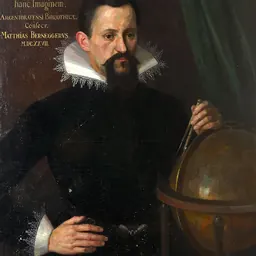



Related people
Same field, nearest in time


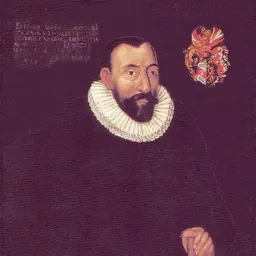

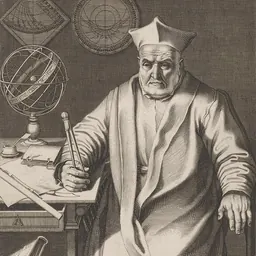

Contemporaries
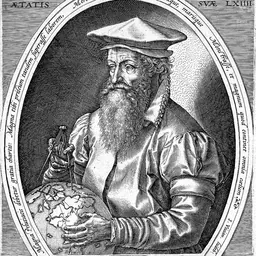
People whose lives overlapped Michael Maestlin's

Frequently asked questions
Who was Michael Maestlin?
German astronomer and mathematician (1550–1631)
When was Michael Maestlin born?
Michael Maestlin was born on 30 September 1550 in Göppingen.
When did Michael Maestlin die?
Michael Maestlin died on 20 October 1631 in Tübingen.
What was Michael Maestlin's occupation?
Michael Maestlin was a mathematician, astronomer, university teacher and astrologer.
What nationality was Michael Maestlin?
Michael Maestlin was German.
Sources & further reading
Cite this page
APA: Biography.guide. (2026). Michael Maestlin. https://biography.guide/michael-maestlin/
MLA: "Michael Maestlin." Biography.guide, https://biography.guide/michael-maestlin/.
Chicago: "Michael Maestlin." Biography.guide. https://biography.guide/michael-maestlin/.
Data last updated: 2026-09-20 · Spot an error? Report a correction.
Page generated 2026-09-27 05:19 UTC