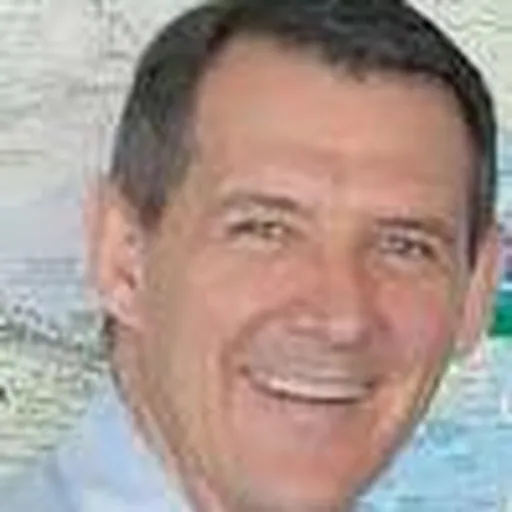
About Michael Gunner
Born 1976. Michael Gunner is an Australian politician.
Michael Patrick Francis Gunner (born 6 January 1976) is an Australian former politician who was the 11th Chief Minister of the Northern Territory from 2016 to 2022. On 27 July 2022, Gunner resigned his position as member for Fannie Bay.
Early life
Gunner was born in Alice Springs in 1976, the eldest of four children, to Mick and Jane Gunner. He has Indigenous relatives in Utopia north of Alice Springs.
Gunner went to school in Alice Springs, Tennant Creek and Darwin. He began a law degree at Northern Territory University (now Charles Darwin University), switching to a Bachelor of Arts degree which he completed.
Early political career
Member for Fannie Bay Gunner was elected to the Northern Territory Legislative Assembly for the Electoral division of Fannie Bay in 2008 after the retirement of Chief Minister Clare Martin at the 2008 election. The election saw Gunner retain the seat for the Labor Party by only a slight margin, over Garry Lambert, former alderman and acting Lord Mayor.
Opposition Leader After a failed attempt in 2013, on 19 April 2015 Gunner announced he would stand for the leadership of the Northern Territory Labor Party against incumbent Delia Lawrie, who was facing criticism of her conduct during an inquiry into the gifting of heritage property Stella Maris to Unions NT while she was a minister. Four days later, Lawrie resigned and Gunner was elected unopposed as leader. He held the portfolios of Major Projects, Northern Australia Development, Police, Fire and Emergency Services, Open and Transparent Government and Business and was Shadow Treasurer. Originally a member of Labor Right, Gunner became factionally unaligned, resigning from the Right after taking over as Opposition Leader. Gunner moved a Motion of No Confidence against the Adam Giles Government on 1 December 2015 but was unsuccessful.
Chief Minister
2016 election Labor went into the 2016 territory election as unbackable favourites, with Northern Territory opinion polls indicating a massive swing against the CLP. Additionally, at the 2016 federal election held two months earlier, Labor picked up a healthy seven-point swing in the Territory, and took the federal seat of Solomon—which is largely coextensive with the Darwin/Palmerston area—off the CLP in a large swing.
At the 27 August Territory election, Gunner led Territory Labor to one of the most comprehensive election victories on record at the state or territory level in Australia. Labor won 18 seats in the 25-member Legislative Assembly on a swing of over 14 percent, the largest two-party swing on record in the Territory. En route, Labor took all but one seat in Darwin/Palmerston, and even ousted Giles in his own seat—only the second time that a Majority Leader/Chief Minister had been rolled in his own electorate. The CLP was cut down to just two seats − the worst defeat of a sitting government in the Territory's history, and among the worst ever suffered by a state or territory government in Australia. Gunner declared that Territorians had "rejected the chaos of the last four years", in part a reference to the numerous reshuffles that had taken place during the previous government, including multiple leadership spills.
Normal practice in Australia calls for a defeated government to stay in office on a caretaker basis until the final results are in. However, with Labor's victory beyond doubt even though counting continued until early September, Gunner arranged to have Administrator John Hardy swear himself, Natasha Fyles, and Nicole Manison as an interim three-person government until all prospective ministers were confirmed as elected. Accordingly, Gunner was sworn in as Chief Minister on 31 August 2016. Gunner held 38 portfolios in the three-person ministry in contrast to Manison solely as Treasurer and Fyles as just Attorney General and Justice Minister. His full ministry was selected on 11 September and sworn in the next day, with Manison as his Deputy Chief Minister after former deputy leader Lynne Walker was narrowly defeated in her own seat. Notably, a majority of the new cabinet -five of its eight members − were women.
First term Gunner shaking hands with United States Navy Admiral Harry B. Harris Jr. in 2017. Gunner entered office in a formidable position. He won the third-largest majority government in Territory history (just percentage points behind Labor's 2005 landslide), and faced only two CLP members as opposition − fewer than the five independents in the chamber. Although Labor was technically the only official party in the legislature, Gunner pledged that the CLP would be properly resourced as an opposition.
Despite Labor's massive majority, Gunner retained CLP-turned-independent Kezia Purick as Speaker of the Northern Territory Legislative Assembly for a second term.
A perennial election issue, Labor removed the CLP's open speed limit and implemented a 130 km/h speed limit along a 300 km stretch of the Stuart Highway between Alice Springs and Tennant Creek.
Gunner ordered a moratorium on fracking, and also undertook a review of all water licences issued under the previous government. The moratorium commenced on 14 September. On 17 April 2018, the moratorium was revoked.
Gunner has expressed support for Chinese government investment in the Northern Territory in the form of the Belt and Road Initiative.
2020 election Gunner led Territory Labor through the 2020 NT election. Labor heavily centered their campaign around Gunner's leadership and government handling of the COVID-19 pandemic, even going as far to say the election was, "literally the difference between life and death," which drew criticism from his opponents. Before the election, opinion polls suggested that Labor would suffer an almost certain swing against them, with the newcomer Territory Alliance party posing a serious threat to the typical two-party system that has dominated NT politics.
Nevertheless, on election night, ABC psephologist Antony Green projected that Labor would win at least a minority government almost three hours after the polls closed. Gunner later declared victory an hour later, saying that he was "very confident" that Labor had won another term, with the Country Liberals refusing to concede defeat on election night.
Ultimately, Gunner led Labor to win 14 of the 25 seats in the Legislative Assembly. Labor suffered a net four seat drop from the 2016 landslide, but retained a bare majority of two seats. Labor grabbed all but two seats in the Darwin/Palmerston area, even managing to oust Territory Alliance leader and former CLP Chief Minister Terry Mills from his own seat of Blain. The CLP, under Lia Finocchiaro, managed to snatch some of its usual heartland seats in Alice Springs and Katherine back from Labor that were swept away amid the massive 2016 landslide, allowing it to quadruple its seat count to eight.
COVID-19 pandemic
Gunner led the Northern Territory's response to the COVID-19 pandemic.
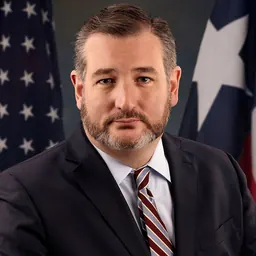
In October 2021, the United States Senator from Texas Ted Cruz posted a tweet that was critical of the Northern Territory's vaccine mandates. Gunner's response to the tweet went viral quickly.
Resignation On 10 May 2022, Gunner announced his resignation from his positions as the NT Chief Minister and Treasurer, citing a desire to spend more time with his family. The ICAC Act (Independent Commissioner Against Corruption Act 2018) was drafted and legislated by the Northern Territory Labor Government in November 2017.
After politics In November 2022, Gunner joined Fortescue Future Industries (FFI). He was promoted to lead FFI's Australia West division in April 2023. In February 2024, Gunner announced he had left his job at Fortescue. In 2025, Gunner was made a partner at consulting firm KPMG.
Political positions Gunner is a republican. He supports a woman's right to have an abortion.
Personal life On 3 December 2017, Gunner married ABC journalist Kristy O'Brien. It is his second marriage.
In late January 2020, it was reported that Gunner would undergo heart surgery, after suffering a heart attack earlier in the month which had originally been described as a "minor heart scare".
Don’t just read it —
keep it.
Full-length biographies made to live with: read them, listen on the way to work, watch them tonight.
- E-book
- Audio
- Video
Instant download · yours to keep · every purchase keeps this site free
Important facts
People in Michael Gunner's life
Named in this biography and alive at the same time




Related people
Same field, nearest in time



Contemporaries
People whose lives overlapped Michael Gunner's
Frequently asked questions
Who is Michael Gunner?
Australian politician
When was Michael Gunner born?
Michael Gunner was born on 6 January 1976 in Alice Springs.
What is Michael Gunner's occupation?
Michael Gunner is a politician.
What nationality is Michael Gunner?
Michael Gunner is Australian.
Sources & further reading
Cite this page
APA: Biography.guide. (2026). Michael Gunner. https://biography.guide/michael-gunner/
MLA: "Michael Gunner." Biography.guide, https://biography.guide/michael-gunner/.
Chicago: "Michael Gunner." Biography.guide. https://biography.guide/michael-gunner/.
Data last updated: 2026-09-22 · Spot an error? Report a correction.
Portrait: Wikimedia Commons · author & licence
Page generated 2026-09-27 05:03 UTC