
Michael Barkun
American political scientist
About Michael Barkun
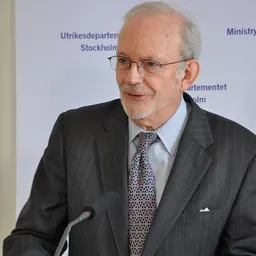
Born 1938. Michael Barkun is an American political scientist, university teacher and sociologist, known for Millenarianism.
Education Barkun earned his Ph.D. from Northwestern University in 1965.
Research on conspiracy theories Barkun has classified conspiracy theories into three kinds:
Event conspiracy theories: This refers to limited and well-defined events. Examples may include such conspiracy theories as those concerning the assassination of J. F. Kennedy, the September 11 attacks, and the origins and spread of HIV/AIDS. Systemic conspiracy theories: The conspiracy is believed to have broad goals, usually conceived as securing control of a country, a region, or even the entire world. The goals are sweeping, whilst the conspiratorial machinery is generally simple: a single, evil organization implements a plan to infiltrate and subvert existing institutions. This is a common scenario in conspiracy theories that focus on the alleged machinations of Jews, Freemasons, communists, or the Catholic Church. Superconspiracy theories: For Barkun, such theories link multiple alleged conspiracies together hierarchically. At the summit is a distant but all-powerful evil force. His cited examples are the ideas of David Icke and Milton William Cooper.
Barkun discusses four types of groups categorized by the nature of secrecy involved: a Type 1 conspiracy theory refers to a secret group which acts secretly, and a Type 3 conspiracy theory refers to a known group which acts secretly (Types 2 and 4 lie outside of conspiracy theory).
A Culture of Conspiracy In his book A Culture of Conspiracy: Apocalyptic Visions in Contemporary America (2003), Barkun dives into the different characteristics of conspiracy theories. According to him, there are certain attributes that occur in every account of conspiracy. First, conspiracy negates the possibility that something could happen by chance. Nothing in a conspiracist worldview is ever due to chance. Conspiracy theories are created at the root of the statement that nothing happens by accident.
Barkun states that in this view the universe is governed by design rather than randomness, which means that there is no room for accidents, everything is intentional. Secondly, when it comes to conspiracy, nothing is as it seems. Conspiracists have to disguise their true intentions and identities through deception. Therefore, according to conspiracy theorists, the appearance of innocence means nothing. Lastly, in conspiracy, everything is connected. Working hand in hand with the claim that nothing is left up to chance, the claim that everything is connected means that patterns are created everywhere in response. Constant linkage and connection must be created to explain what may seem like accidental.
Furthermore, Barkun works to set the stage for the presence of conspiracist views that leave a large amount of questions unanswered. All three of these characteristics can be applied to both political and government conspiracies, but also more causally to all types of conspiracy theories.
Works United Nations System and Its Functions: Selected Readings (1968; co-edited with Robert W. Gregg). Published in Princeton, NJ by Van Nostrand as a 460-page hardcover and paperback. A part of the Van Nostrand political science series. Law Without Sanctions: Order in Primitive Societies and the World Community (1968). Published by Yale University Press as a 179-page hardcover. International Law and the Social Sciences (1970; with Wesley L. Gould). Published by Princeton University Press as a 338-page hardcover . Social Science Literature: A Bibliography for International Law (1972; with Wesley L. Gould). Published in Princeton, NJ for the American Society of International Law by Princeton University Press as a 662-page hardcover . It was republished in paperback in 2015 as part of the Princeton Legacy Library series . Law and the Social System (1973; as editor). Published in New York by Lieber-Atherton as a 128-page hardcover and paperback . Disaster and the Millennium (1974). Published in New Haven by Yale University Press as a 246-page hardcover . It was re-published in paperback in 1986 by Syracuse University Press . Crucible of the Millennium: Burned-Over District of New York in the 1840s (1986) Published by Syracuse University Press as a 194-page hardcover and paperback . Religion and the Racist Right: The Origins of the Christian Identity Movement (1994). Published in Chapel Hill, NC by The University of North Carolina Press as a 290-page hardcover and paperback . A revised edition was published in 1997 as a 330-page hardcover and paperback . Millennialism and Violence (1996; as editor). Published in London and Portland, OR by F. Cass as a 177-page hardcover and paperback . It was the second in the Cass series on political violence. A 243-page hardcover book. It was the 15th book in the Comparative Studies in Religion and Society series. A 251-page paperback edition was published in 2006 . A second edition was published in 2013 as a 320-page paperback . Chasing Phantoms: Reality, Imagination, and Homeland Security Since 9/11 (2011). Published by The University of North Carolina Press as a 208-page hardcover . A paperback edition was published in 2014 .
Don’t just read it —
keep it.
Full-length biographies made to live with: read them, listen on the way to work, watch them tonight.
- E-book
- Audio
- Video
Instant download · yours to keep · every purchase keeps this site free
Important facts
People in Michael Barkun's life
Named in this biography and alive at the same time




Related people
Same field, nearest in time



Contemporaries
People whose lives overlapped Michael Barkun's



Frequently asked questions
Who is Michael Barkun?
American political scientist
When was Michael Barkun born?
Michael Barkun was born on 8 April 1938.
What is Michael Barkun's occupation?
Michael Barkun is a political scientist, university teacher and sociologist.
What is Michael Barkun known for?
Michael Barkun is known for Millenarianism.
What nationality is Michael Barkun?
Michael Barkun is American.
Sources & further reading
Cite this page
APA: Biography.guide. (2026). Michael Barkun. https://biography.guide/michael-barkun/
MLA: "Michael Barkun." Biography.guide, https://biography.guide/michael-barkun/.
Chicago: "Michael Barkun." Biography.guide. https://biography.guide/michael-barkun/.
Data last updated: 2026-09-22 · Spot an error? Report a correction.
Page generated 2026-09-27 05:19 UTC