
About Michael Barkl
Born 1958. Michael Barkl is an Australian musicologist and composer.
Michael Laurence Gordon Barkl , born 1958, is an Australian composer and musicologist.
Biography
Michael Barkl was born in Sydney, New South Wales in 1958 into a musical family. He learnt classical piano from the age of seven, later becoming obsessed with the electric guitar after hearing the album Jimi Hendrix Band of Gypsys as a teenager. From rock guitar he expanded his interests into jazz guitar, and then into bass guitar and double bass. At the New South Wales State Conservatorium of Music he initially studied jazz improvisation with Roger Frampton, and followed this with degree studies in composition with Vincent Plush, Martin Wesley-Smith, Warren Burt, Ross Edwards, Don Banks and Graham Hair. Postgraduate studies in composition and musicology were with Ann Ghandar, , Richard Toop and Greg Schiemer. He graduated with a master's degree in composition (University of New England (Australia)) and doctorates in musicology (Deakin University) and electronic music (University of Wollongong).
After working as a freelance bass player, Barkl joined TAFE NSW in 1987 as foundation head of its contemporary music section. During this time he contributed a series of biographies of Australian composers to The Oxford Companion to Australian Music, A Dictionary of Australian Music, The New Grove Dictionary of Music and Musicians and The Oxford Dictionary of National Biography. Further publications documented the compositional techniques of Franco Donatoni and Riccardo Formosa, explored aspects of the economic and cultural contexts of music composition, and described the process of electronic music composition using the program Pure Data. He also published educational texts on composition, harmonic analysis and improvisation, and a volume of memoirs. From 1997 Barkl was foundation Adviser (later, Chief Examiner) of Contemporary Popular Music for the Australian Music Examinations Board. An early work, Rota (1981) for piano trio, is clearly influenced by twentieth century Italian music, specifically Franco Donatoni. Perhaps unsurprisingly, it was awarded segnalata in the 1981 International Valentino Bucchi Composition Competition. A pair of subsequent orchestral works, Voce di testa (1981) and Voce di petto (1982), while maintaining the Italian association through their titles, added more jazz influence, however slight. Drumming (1983) was characterised as "an exciting piano piece", "bring[ing] together Indian tabla drumming with jazz pianism", while Ballade (1984) for six instruments, structured as a reverie interrupting a café piano solo, brought Barkl to the attention of the critics, Roger Covell describing him "one of the most musical of younger Australian composers". Subsequent works, such as Cabaret for orchestra, Blues for bass clarinet and percussion (based on a Charlie Parker riff), Disco for percussion quartet, Red for recorder (based on Jimi Hendrix’s Red House) and Smoky for harpsichord, developed Barkl’s jazz-inspired instrumental style until a complete change emerged with a series of lengthy electronic works composed using the open source patching language Pure Data. These used large banks of computer generated oscillators to build thick textures of sine waves, saturating the aural space.
Honours
Michael Barkl was awarded a Medal of the Order of Australia in the 2018 Queen's Birthday Honours (Australia) for "service to the performing arts and music education".
Selected works
Orchestral
Voce di testa, 1981 Voce di petto, 1982 Iambus, 1982 Cabaret, 1985 Rondo, 1986
Ensemble
Ballade for six instruments, 1984 The laird of Drumblair for seven instruments, 1987 Disco for four percussion and electronics, 1990
Chamber music
Night Words for viola and piano, 1977 Music for two trumpets and tape, 1978 Rota for piano trio, 1981 Expressive and ferocious for string quartet, 1985 Blues for bass clarinet and percussion, 1986 Vamp for guitar, 1988 Red for descant recorder, 1996 Smoky for harpsichord, 1997 Coming Out, Fanfare for viola and double bass, 1998 Here… for clarinet, piano and cello, 2008
Piano
Jazz music, 1979 Jazz music II for two pianos, 1979 Drumming, 1983 Five pieces, 1995
Choral
Water, where are you going? SATB, 1984
Vocal
Night words – the ravishing for mezzo-soprano and piano, 1977
Concert band
Backyard swing, 1986
Music theatre
The animals Noah forgot, 1988
Electronic
Rosalia, 1980 The paradox of Pythagoras: nos 1–27, 2007 Music of the spheres: Mercury, Venus, Earth, Mars, Jupiter, Saturn, Uranus, Neptune, Pluto, 2007 Music of Grace: The heavy dark trees line the streets of summer, 2007 Music of Grace: The cat dances and the moon shines brightly, 2007 Music of Grace: The crystals in the cave absorb the light as if they have not seen it in a million years, 2008
Don’t just read it —
keep it.
Full-length biographies made to live with: read them, listen on the way to work, watch them tonight.
- E-book
- Audio
- Video
Instant download · yours to keep · every purchase keeps this site free
Important facts
People in Michael Barkl's life
Named in this biography and alive at the same time

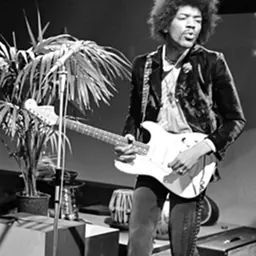





Related people
Same field, nearest in time



Contemporaries
People whose lives overlapped Michael Barkl's


Frequently asked questions
Who is Michael Barkl?
Australian composer and musicologist
When was Michael Barkl born?
Michael Barkl was born on 9 August 1958 in Sydney.
What is Michael Barkl's occupation?
Michael Barkl is a musicologist and composer.
What nationality is Michael Barkl?
Michael Barkl is Australian.
Sources & further reading
Cite this page
APA: Biography.guide. (2026). Michael Barkl. https://biography.guide/michael-barkl/
MLA: "Michael Barkl." Biography.guide, https://biography.guide/michael-barkl/.
Chicago: "Michael Barkl." Biography.guide. https://biography.guide/michael-barkl/.
Data last updated: 2026-09-20 · Spot an error? Report a correction.
Page generated 2026-09-27 05:32 UTC