
About Michael Asher
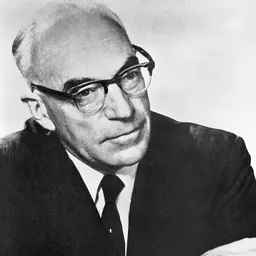
Lived 1943 – 2012 (aged 69). Michael Asher was an American artist, conceptual artist and university teacher.
Michael Max Asher (July 15, 1943 – October 15, 2012) was an American conceptual artist, described by The New York Times as "among the patron saints of the Conceptual Art phylum known as Institutional Critique, an often esoteric dissection of the assumptions that govern how we perceive art." Rather than designing new art objects, Asher typically altered the existing environment, by repositioning or removing artworks, walls, facades, etc.
Asher was also a highly regarded professor of art, who spent decades on the faculty at California Institute of the Arts. Cited by numerous successful artists as an important influence in their development, Asher's teaching has been described by British journalist Sarah Thornton as his "most influential" work.
Early life and education Born in Los Angeles, California, Asher is the son of gallerist Betty Asher and Leonard Asher. While in high school, one of his classmates was future colleague, Thom Andersen. He studied at the University of California, Irvine, where he received his bachelor's degree in fine arts in 1966.
Life and career He began teaching at the California Institute of the Arts in 1973,
Works Asher's work takes the form of "subtle yet deliberate interventions – additions, subtractions or alterations – in particular environments." His pieces were always site-specific; they were always temporary, and whatever was made or moved for them was destroyed or put back after the exhibitions. In 1969, for the group show “Anti-Illusion: Procedures/Materials” at the Whitney Museum of American Art, he concealed a blower above a door to create a slab of air that visitors passed through when they moved from one gallery to the next. In 1979 he started to reposition objects in museum collections. For a show at the Santa Monica Museum of Art in 2008, he decided to re-create all the 44 stud walls that have been built for every exhibition since the museum relocated to Bergamot Station in May 1998. Architectural floor plans for those 44 exhibitions, captioned with the title and dates of each one, are displayed in a small gallery at the show's entrance, providing a key to what visitors are about to see.
His untitled 1991 work featuring a functional, polished, granite drinking fountain juxtaposed with a flag pole was his first permanent public outdoor work in the United States. Part of the Stuart Collection of public art on the campus of the University of California, San Diego, this drinking fountain is an exact replica of commercial metal fountains typically found in business offices and government buildings. Instead of its usual context as interior office furniture, the fountain is placed monument like on a grass island in the center of the campus. It marks the site as the former Camp Matthews, a military training facility from 1917 to 1964. The piece was destroyed by a sledgehammer-wielding vandal on January 13, 2015.
Exhibitions and awards Asher exhibited at documenta (1972, 1982), the MoMA (1979), and the Venice Biennale (1976), and his solo museum shows include the Centre Pompidou (1991), Los Angeles County Museum of Art (2003), Art Institute of Chicago (2005) and Santa Monica Museum of Art (2008).
Asher won the Bucksbaum Award 2010. The jury consisted of: Adam D. Weinberg, the Whitney’s Alice Pratt Brown Director; Donna De Salvo, Whitney Associate Director of Programs and Chief Curator; the 2010 curators Francesco Bonami and Gary Carrion-Murayari; and three guest panelists, Hou Hanru (San Francisco Art Institute), Yasmil Raymond (Dia Art Foundation), and James Rondeau (Art Institute of Chicago). The winner received $100,000 and a solo exhibition at the Whitney Museum of American Art. His project for the 2010 Whitney Biennial involved having the museum remain open 24 hours a day for one week (although this was shortened to three days by the museum due to “budgetary and human resources limitations”).
In the mid-1970s, after a dispute with gallery dealer, Heiner Friedrich, Asher decided to use contractual agreements in order to control the production, dissemination and ownership of his art projects. Using Seth Siegelaub and Robert Projanksy's contract, The Artists Reserved Rights Transfer and Sale Agreement, as a model, Asher crafted his own contract with the help of Los Angeles attorney, Arthur Alef.
Don’t just read it —
keep it.
Full-length biographies made to live with: read them, listen on the way to work, watch them tonight.
- E-book
- Audio
- Video
Instant download · yours to keep · every purchase keeps this site free
Important facts
People in Michael Asher's life
Named in this biography and alive at the same time







Related people
Same field, nearest in time



Contemporaries
People whose lives overlapped Michael Asher's

Frequently asked questions
Who was Michael Asher?
American conceptual artist (1943-2012)
When was Michael Asher born?
Michael Asher was born on 15 July 1943 in Los Angeles.
When did Michael Asher die?
Michael Asher died on 14 October 2012 in Los Angeles.
What was Michael Asher's occupation?
Michael Asher was an artist, conceptual artist and university teacher.
What nationality was Michael Asher?
Michael Asher was American.
Sources & further reading
· DBpedia: Michael Asher (artist)
Cite this page
APA: Biography.guide. (2026). Michael Asher. https://biography.guide/michael-asher/
MLA: "Michael Asher." Biography.guide, https://biography.guide/michael-asher/.
Chicago: "Michael Asher." Biography.guide. https://biography.guide/michael-asher/.
Data last updated: 2026-09-20 · Spot an error? Report a correction.
Page generated 2026-09-27 05:15 UTC