
Michael A. Weinstein
American political philosopher and political scientist
About Michael A. Weinstein
Lived 1942 – 2015 (aged 73). Michael A. Weinstein was a political scientist.
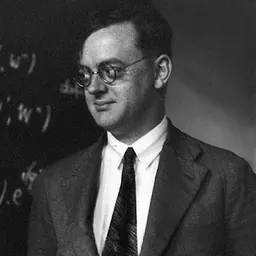
Michael A. Weinstein (August 24, 1942 – September 17, 2015) was an American political philosopher and political scientist, punk musician, and photography critic. He was a Guggenheim Fellow, Professor of Political Science at Purdue University, and the author or co-author of more than twenty books on a wide array of topics in philosophy. but also the Unabomber and the Abu Ghraib torture and prisoner abuses. American classical philosophy, vitalism, Mexican finalist ontology, virtue, and technology, among others. Arthur Kroker has referred to him as an American "Nietzsche for our times", and his work on American classical philosophy in The Wilderness and the City as a definitive commentary. While Weinstein's work is systematic, it is not systemic, offering instead a collection of methods and concepts with which one can evaluate their (and others') lived experience.
"Civil savage" The "civil savage" is a concept found in Culture/Flesh, Weinstein's reflection on the human condition in "postcivilized modernity". According to Weinstein, modernity is a project aimed toward technological advancements, world mastery, and meaning creation that have continuously failed to overcome the fragility of our finite, mortal existence. Postmodernism has attempted to deconstruct modernity, but fails to truly find an effective substitute for the death of God and nihilism. The civil savage is a conceptual persona of the existentialist skeptic who adopts the life strategy of "erotic hedonism" and the motto of "everything is possible and nothing is necessary". In contrast to simple hedonism, erotic hedonism entails a conduct of the self-conscious direction of one's connections to others and the world (p. 54), as well as (following Bergson's method of "intuition") its inquiry in the structure of lived experience of particular beings, "grasped from the inside" of that being's experience. Critical vitalism departs from classical vitalism in its avoidance of "metaphysical speculation" (such as the classical vitalist concept of élan vital), and the restriction of its inquiry to the evidence acquired from lived experience. Vortis released two albums with Weinstein as lead singer, Take the System Down and God Won't Bless America Again. Kurt Morris, one of the editors of the popular music website allmusic.com, described Weinstein's live stage performance as "... like a cross between Jello Biafra, Ice Cube, and Iggy Pop, at the live shows Weinstein can be found running around the stage, flipping people off, and yelling lines like, 'fuck, fuck, fuck, the human race.'
Photography criticism Weinstein began his work in photography criticism in 1990, publishing his first reviews in the Chicago-based Newcity magazine. His method of criticism was distinct in the inspiration it drew from the ideas of Italian philosopher Benedetto Croce, especially Croce's concept of "immanent criticism". Weinstein understood immanent criticism to require that the critic should not come to a work or body of work with a set of standards or values that would then be applied to judge the work, but, instead, should seek to get inside the work and re-live it as the artist intended it to be experienced, if at all possible. Having followed that procedure to the best of his or her ability, the critic would then seek to express the experience of that work in words. The way I put it is that the work is a gift given to the viewer from the artist, and I want to honor that gift by experiencing it as much as possible as the artist wants me to appreciate it. Viewing photography as a gift that allows access to the perspective and experiences of another person, Weinstein's method correspondingly advocates a form of criticism based in "appreciation" rather than negative judgment according to pre-existing metrics.
Don’t just read it —
keep it.
Full-length biographies made to live with: read them, listen on the way to work, watch them tonight.
- E-book
- Audio
- Video
Instant download · yours to keep · every purchase keeps this site free
Important facts
People in Michael A. Weinstein's life
Named in this biography and alive at the same time




Related people
Same field, nearest in time



Contemporaries
People whose lives overlapped Michael A. Weinstein's


Frequently asked questions
Who was Michael A. Weinstein?
American political philosopher and political scientist (1942–2015)
When was Michael A. Weinstein born?
Michael A. Weinstein was born on 24 August 1942.
When did Michael A. Weinstein die?
Michael A. Weinstein died on 17 September 2015.
What was Michael A. Weinstein's occupation?
Michael A. Weinstein was a political scientist.
Sources & further reading
· Wikipedia: Michael A. Weinstein
· DBpedia: Michael A. Weinstein
Cite this page
APA: Biography.guide. (2026). Michael A. Weinstein. https://biography.guide/michael-a-weinstein/
MLA: "Michael A. Weinstein." Biography.guide, https://biography.guide/michael-a-weinstein/.
Chicago: "Michael A. Weinstein." Biography.guide. https://biography.guide/michael-a-weinstein/.
Data last updated: 2026-09-20 · Spot an error? Report a correction.
Page generated 2026-09-27 05:03 UTC