
About Mian Kifait Ali
Lived 1902 – 1994 (aged 91–92). Mian Kifait Ali was a Pakistani writer.
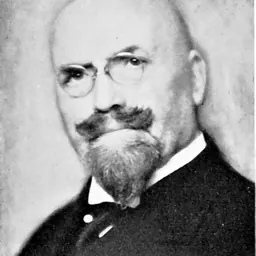
Mian Kifait Ali (, also romanised Kifayat or Kifayet ʿAlī; July 1902 – 1 December 1994) was a Pakistani civil servant, political writer, and military officer. Writing under the pen name A Punjabi (Urdu: , Ik Punjābī), he authored Confederacy of India (Lahore, 1939), a detailed constitutional, geographic, and economic blueprint proposing the division of British India into five sovereign regional federations. Originally titled Pakistan until Muhammad Ali Jinnah personally directed that the title be changed before publication, the work stands as one of the most technically specific schemes to precede the Lahore Resolution of March 1940. By the late 1940s, Ali began writing under his own name, continuing to apply technical analysis to the major constitutional questions facing the new Pakistani state. While his early pseudonymous authorship was known to some contemporaries in Muslim League circles, his identity as the author remained obscure in scholarly literature for decades until the historian K.K. Aziz formally revealed "A Punjabi" as Mian Kifait Ali in his study A History of the Idea of Pakistan.
Early life and career Mian Kifait Ali was born in July 1902 into a Rajput Muslim family in Batala, Gurdaspur district, in the Punjab province of British India (now in the state of Punjab, India).
While working as a civil servant, Kifait Ali began contributing articles to Muslim newspapers under the pseudonym "A Punjabi" (Urdu: , Ik Punjābī). His first sustained political work, (Hindustan aur Milliyat, "India and Nationhood"), was published in Lahore in 1936. The book, written in Urdu, developed a thesis on the nature of nationalism and examined the question of a common nationhood between Hindus and Muslims in a future independent India. :("They asked: 'Does our world suit you?' I said: 'It does not suit.' They said: 'Then overturn it!'") The draft was completed in the third quarter of 1938. Seeking funds for its publication and free distribution, Kifait Ali approached two prominent Muslim League figures: Haji Sir Abdullah Haroon, the Sind Muslim League leader, and Nawab Sir Shahnawaz Khan of Mamdot, the leading Muslim League figure in Punjab and a trusted associate of Jinnah's. Both offered to bear the cost; the offer of the Nawab of Mamdot was accepted. The five proposed federations were:
Indusstan — comprising Punjab (minus its eastern Hindu-majority tracts, specifically Ambala Division), Sind, Baluchistan, the North-West Frontier Province, and Kashmir. The name "Indusstan" was derived from the river Indus, as Kifait Ali explicitly noted; the scheme deliberately avoided the word "Pakistan" as connoting a purely separatist agenda. His calculations placed the total area of Indusstan at approximately 398,000 square miles, with a population of some 33 million, of whom he estimated approximately 82% were Muslim, 8% Hindu, and 6% Sikh. Hindu India Federation — comprising all territories not assigned to other federations, covering the Hindi-speaking heartland. Rajistan Federation — comprising Rajputana and Central India. Deccan States Federation — comprising the princely states of Hyderabad and Mysore. Bengal Federation — comprising Bengal and Assam, excluding their Hindu-majority districts, with a projected total area of approximately 70,000 square miles and a population of some 31 million, of whom approximately 20.5 million were Muslim.
The scheme's economic argument was developed in detail. Kifait Ali contended that in northwestern India, economic life, including agricultural production, rural employment, and access to credit was structured along communal lines: "In the north-west, the Hindus are the capitalists and the Muslims wage earners. The interests of the Muslims are mainly agricultural and those of the Hindus mainly industrial and commercial."
Mushtaq Ahmed Gurmani, who served as Governor of Punjab and later as the first Governor of West Pakistan, wrote, "Mian Kifait Ali has done pioneering work in the evolution of Muslim political thought and has suffered the hardships of a pioneer.. He will find an honourable place among the pioneers and selfless workers in this great field of Muslim national reconstruction." Nawab Iftikhar Hussain Khan of Mamdot, son of the book's patron, Nawab Sir Shahnawaz Khan of Mamdot, later credit Ali by name and described Confederacy of India as "a landmark in the history of Pakistan." A substantive scholarly review appeared in (Tarjamān-ul-Qurʾān), the journal of Maulana Abul Ala Maududi. Historian R.J. Moore, in his study of Jinnah's constitutional strategy, analysed the range of constitutional schemes circulating in 1939 Punjab, locating the Confederacy of India within the set of specific proposals considered by Muslim League leadership in the run-up to the Lahore Resolution. Other historians, such as Farooq Ahmad Dar, have cited the same.
Waheed-uz-Zaman, in Towards Pakistan (Lahore: Publishers United, 1964), assessed the relationship between the scheme and the eventual Lahore Resolution: "the solution proposed in the Confederacy of India differed but little from that proposed by the Muslim League in March 1940. The veneer of a 'Confederacy', which was the main theme of his scheme, could any time be set aside and the remainder would have precisely... Pakistan."
As late as 1964, however, the author's identity remained unknown; Waheed-uz-Zaman's own bibliography for the Confederacy of India carries the notation "author not identified." The work continued to circulate in the scholarly literature under the pseudonym alone.
The definitive scholarly identification of "A Punjabi" as Mian Kifait Ali was made by Khurshid Kamal Aziz in 1987, who devoted approximately fifty pages of A History of the Idea of Pakistan (Vol. 2, pp. 488–537) to a summary and analysis of the book's arguments, praising the proposal for its "uncommon realism" and noting that it spelled out "to the smallest detail the areas demarcated for the Muslim nation."
Later life and career
Military service Following the outbreak of the Second World War, Kifait Ali received a commission as a Second Lieutenant in the British Indian Army in 1940 and was assigned to the Inter-Services Public Relations (ISPR) directorate at military headquarters in New Delhi, eventually rising to the rank of Major. He remained in touch with Muhammad Ali Jinnah in the years leading up to partition.
Post-partition political writing
One Unit scheme After leaving the army, Kifait Ali returned to political writing, now engaging with the constitutional questions of the new Pakistani state. In 1955, the One Unit scheme, the administrative consolidation of all of West Pakistan's provinces into a single unit, moved toward enactment under Prime Minister Chaudhry Muhammad Ali, who was one of Kifait Ali's friends at Islamia College. Kifait Ali published a series of five pamphlets in English arguing in favour of the scheme: West Pakistan, One Unit Scheme, Pakistan in Retrospect and Prospect, Consolidation of West Pakistan, and Financial Advantage of One Unit. Accompanying Urdu pamphlets included (Mughrabi Pakistan) and (Wahdat-i-Nizam-i-Hukumat). He also contributed to the administrative preparation of the One Unit scheme through pamphlets on its political and administrative dimensions. His preoccupation throughout this period was the constitutional tension between the Lahore Resolution of 1940, which he had known and influenced, and the Delhi Resolution of 1946, which he believed had introduced an ambiguity into the separation process that carried long-term dangers for Pakistani unity.
Six Points movement As early as 1953, according to the biographical record, Kifait Ali wrote a full article on the constitutional incorporation of Pakistan's two wings and the dangers of East Pakistan's political isolation, a concern that proved prescient eighteen years later. In 1967, as Sheikh Mujibur Rahman's Six Points Movement gathered momentum in East Pakistan, he published Six Point Formulae X-Rayed (also issued in Bengali translation), offering a critical analysis of the demand for East Pakistani autonomy and its implications for federal structure. His final major publication, Pakistan vs. Bangla Desh (1971), appeared as the political crisis reached its conclusion with the Bangladesh Liberation War and the creation of Bangladesh.
Selected works
(Hindustan Aur Deegar Afsanay, "Hindustan and Other Stories") (Hindustan aur Milliyat, "India and Nationhood") (Lahore, 1936) [Urdu; published under pen name ] Confederacy of India (Lahore: Nawab Sir Muhammad Shah Nawaz Khan of Mamdot / Ripon Printing Press, 1939) [English; published under pen name "A Punjabi"] Pakistan [Urdu pamphlet] (1939) Pakistan: The Critics' Case Examined [English pamphlet] (1941) Separation: A Reply to Its Critics [English pamphlet] (1940) Separation, Socialism and Islam [English pamphlet] (1942) Sir Sikandar's Scheme Under Searchlight [English pamphlet] (1942) Constitution of Hari Sari Party [Urdu and English pamphlet] (1949) West Pakistan — Its Political and Administrative Integration [English pamphlet] (1955) One Unit Scheme [English pamphlet] (1955) Pakistan in Retrospect and Prospect [English pamphlet] (1955) Consolidation of West Pakistan [English pamphlet] (1955) Financial Advantage of One Unit [English pamphlet] (1955) (Mughrabi Pakistan) [Urdu pamphlet] (1955) (Wahdat-i-Nizam-i-Hukumat) [Urdu pamphlet] (1955) Six Point Formulae X-Rayed [English pamphlet, also published in Bengali] (1967) Pakistan vs. Bangla Desh [English pamphlet] (1971)
"A Review of the States Re-organization Commission (India) 1955" [English pamphlet] (1956) "Pakistan's Defense Potential and Security Problems" [English pamphlet] (1956) "Political Background of Pakistan and its Provinces" [English pamphlet] (1956) "Transfer of an Evacuee Property" [English pamphlet] (1964)
Don’t just read it —
keep it.
Full-length biographies made to live with: read them, listen on the way to work, watch them tonight.
- E-book
- Audio
- Video
Instant download · yours to keep · every purchase keeps this site free
Important facts
People in Mian Kifait Ali's life
Named in this biography and alive at the same time




Related people
Same field, nearest in time




Contemporaries
People whose lives overlapped Mian Kifait Ali's




Frequently asked questions
Who was Mian Kifait Ali?
Pakistani writer and activist
When was Mian Kifait Ali born?
Mian Kifait Ali was born in 1902 in Batala.
When did Mian Kifait Ali die?
Mian Kifait Ali died on 1 December 1994 in Delaware.
What was Mian Kifait Ali's occupation?
Mian Kifait Ali was a writer.
What nationality was Mian Kifait Ali?
Mian Kifait Ali was Pakistani.
Sources & further reading
Cite this page
APA: Biography.guide. (2026). Mian Kifait Ali. https://biography.guide/mian-kifait-ali/
MLA: "Mian Kifait Ali." Biography.guide, https://biography.guide/mian-kifait-ali/.
Chicago: "Mian Kifait Ali." Biography.guide. https://biography.guide/mian-kifait-ali/.
Data last updated: 2026-09-20 · Spot an error? Report a correction.
Page generated 2026-09-27 05:31 UTC