About Metrodorus of Lampsacus
Lived 331 BC – 278 BC (aged 52–53). Metrodorus of Lampsacus was a philosopher.
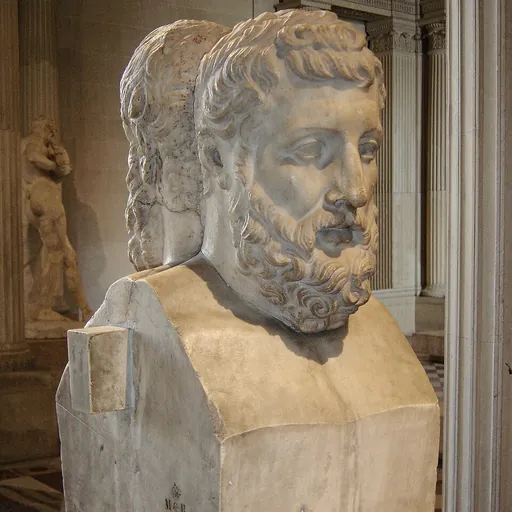
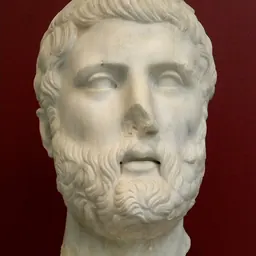
Metrodorus of Lampsacus (, Mētrodōros Lampsakēnos; 331/0–278/7 BC) was a Greek philosopher of the Epicurean school. Although one of the four major proponents of Epicureanism, only fragments of his works remain. A Metrodorus bust was found in Velia, slightly different modeled to depict Parmenides.
Life
Metrodorus was a native of Lampsacus on the Hellespont. His father's name was Athenaeus or Timocrates, his mother's Sande. Together with his brother Timocrates of Lampsacus he joined the school Epicurus had set up in their home town. Timocrates, however, soon fell out with both his brother and Epicurus and devoted the rest of his life to spreading malicious slander about them. Metrodorus on the other hand soon became the most distinguished of the disciples of Epicurus, with whom he lived on terms of the closest friendship, and whom he later followed to Athens, never having left him since he became acquainted with him, except for six months on one occasion, when he paid a visit to his home.
Metrodorus died in 278/7 BC, aged 53, seven years before Epicurus, who would have appointed him his successor had he survived him. He left behind him a son named Epicurus, and a daughter, whom Epicurus, in his will, entrusted to the guardianship of Amynomachus and Timocrates of Potamus, to be brought up under the joint care of themselves and Hermarchus, and provided for out of the property which he left behind him. In a letter also which he wrote upon his death-bed, Epicurus commended the children to the care of Idomeneus, who had married Batis, the sister of Metrodorus. The 20th of each month was kept by the disciples of Epicurus as a festive day in honour of their master and Metrodorus. Leontion is spoken of as the wife or mistress of Metrodorus.
Diogenes Laërtius mentioned Epicurus letter, "All my books to be given to Hermarchus. And if anything should happen to Hermarchus before the children of Metrodorus grow up, Amynomachus and Timocrates shall give from the funds bequeathed by me, so far as possible, enough for their several needs, as long as they are well ordered. And let them provide for the rest according to my arrangements; that everything may be carried out, so far as it lies in their power. Of my slaves I manumit Mys, Nicias, Lycon, and I also give Phaedrium her liberty."
Philosophy Roman copy of a Greek portrait bust of Metrodorus. (Pergamon museum, Berlin) The philosophy of Metrodorus appears to have been of a more sensual kind than that of Epicurus. Perfect happiness, according to Cicero's account, he made to consist in having a well-constituted body, and knowing that it would always remain so. He found fault with his brother for not admitting that the belly was the test and measure of every thing that pertained to a happy life. According to Seneca, Epicurus placed Metrodorus among those who previously required assistance from others to find their way towards the truth, compared with others who could find the truth on their own without any assistance (Epicurus considering himself in this category).
Diogenes Laërtius lists the following works by Metrodorus: Πρὸς τοὺς ἰατρούς, τρία – Against the Physicians (3 volumes) Περὶ αἰσθήσεων – On Sensations Πρὸς Τιμοκράτην – Against Timocrates Περὶ μεγαλοψυχίας – On Magnanimity Περὶ τῆς Ἐπικούρου ἀρρωστίας – On Epicurus's Weak Health Πρὸς τοὺς διαλεκτικούς – Against the Dialecticians Πρὸς τοὺς σοφιστάς, ἐννέα – Against the Sophists (9 volumes) Περὶ τῆς ἐπὶ σοφίαν πορείας – On the Way to Wisdom Περὶ τῆς μεταβολῆς – On Change Περὶ πλούτου – On Wealth Πρὸς Δημόκριτον – Against Democritus Περὶ εὐγενείας – On Noble Birth
Metrodorus also wrote Against the Euthyphro, and Against the Gorgias of Plato. Small fragments of his work On Wealth, were found among the charred remains at the Villa of the Papyri at Herculaneum. Philodemus made use of this work in his own works On Wealth, and On Household Economics. Philodemus cites Metrodorus as the author of the view that Cynic poverty was to be rejected in favour of a more affluent way of life, although wealth in no way contributes to happiness.
Don’t just read it —
keep it.
Full-length biographies made to live with: read them, listen on the way to work, watch them tonight.
- E-book
- Audio
- Video
Instant download · yours to keep · every purchase keeps this site free
Important facts
People in Metrodorus of Lampsacus's life
Named in this biography and alive at the same time

Related people
Same field, nearest in time
Contemporaries
People whose lives overlapped Metrodorus of Lampsacus's
Frequently asked questions
Who was Metrodorus of Lampsacus?
3rd-century BC Greek Epicurean philosopher
When was Metrodorus of Lampsacus born?
Metrodorus of Lampsacus was born in 331 BC in Lampsacus.
When did Metrodorus of Lampsacus die?
Metrodorus of Lampsacus died in 278 BC.
What was Metrodorus of Lampsacus's occupation?
Metrodorus of Lampsacus was a philosopher.
Sources & further reading
· Wikipedia: Metrodorus of Lampsacus
· DBpedia: Metrodorus of Lampsacus (the younger)
Cite this page
APA: Biography.guide. (2026). Metrodorus of Lampsacus. https://biography.guide/metrodorus-of-lampsacus-philosopher/
MLA: "Metrodorus of Lampsacus." Biography.guide, https://biography.guide/metrodorus-of-lampsacus-philosopher/.
Chicago: "Metrodorus of Lampsacus." Biography.guide. https://biography.guide/metrodorus-of-lampsacus-philosopher/.
Data last updated: 2026-09-27 · Spot an error? Report a correction.
Portrait: Wikimedia Commons · author & licence
Page generated 2026-10-04 11:40 UTC