
About Mesomedes
Lived AD 1 – 200. Mesomedes was a Roman poet, composer, epigrammatist, citharode and musician.
Mesomedes of Crete was a Greek citharode and lyric poet and composer of the early 2nd century AD in Roman Greece. Prior to the discovery of the Seikilos epitaph in the late 19th century, the hymns of Mesomedes were the only surviving written music from the ancient world. Three were published by Vincenzo Galilei in his Dialogo della musica antica e della moderna (Florence, 1581), during a period of intense investigation into music of the ancient Greeks. These hymns had been preserved through the Byzantine tradition (Anthol. pal. xiv. 63, xvi. 323), and were presented to Vincenzo by Girolamo Mei.
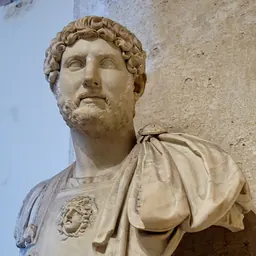
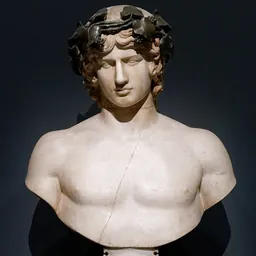
Life and career He was a freedman of the Emperor Hadrian, on whose favorite Antinous he is said to have written a panegyric, specifically called a Citharoedic Hymn (Suda). Two epigrams by him in the Greek Anthology (Anthol. pal. xiv. 63, xvi. 323) are extant, and a hymn to Nemesis. The hymn is one of four which preserve the ancient musical notation written over the text. Two hymns formerly assigned to Dionysius of Alexandria, one to the muse Calliope and one entitled Hymn to the Sun, have also been attributed to Mesomedes. In an article published in 2003, Annie Bélis proves that the Berlin musical papyrus (inv. 6870) contains a Paean to Apollo written by Mesomedes. A total of 15 poems by Mesomedes are known.
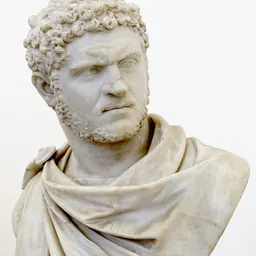
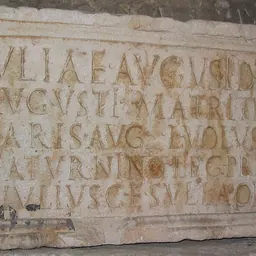
Mesomedes continued in the Musaeum in Alexandria even after Hadrian's death (138); there the Historia Augusta reports that during Antoninus Pius' reign (138–161) his state salary was reduced. The emperor Caracalla (212–217) honored Mesomedes with a cenotaph approximately 50 to 60 years after his death.
See J. F. Bellermann, Die Hymnen des Dionysius und Mesomedes (1840); C. de Jan, Musici scriptores graeci (1899); S. Reinach in Revue des études grecques, ix (1896); Suda s.v.
Hymns Prayer to the Muse The dialect of this hymn is different from the others (Ionian rather than Doric), and the style is also slightly different; for this reason J.G. Landels believes that it is probably not by Mesomedes.
Sing to me, kind Muse, and begin my song. Send a breeze from your groves to stir my mind.
Prayer to Calliope and Apollo
Wise Calliope, leader of the delight-making Muses, and skilful initiator into the mysteries, son of Leto, Delian Paean, favor me with your presence. Father of the Dawn with her snow-white eyelids, you who follow in your rose-pink chariot the track of your flying steeds, exulting in the gold of your hair, twining your darting rays across the boundless vault of sky, whirling around the whole earth the thread of your all-seeing beams, while flowing rivers of your deathless fire beget the lovely day.
For you the peaceful chorus of stars dance their measure across Olympos their lord, forever singing their leisured song, rejoicing in the music of Apollo’s lyre; and leading them the silvery-grey Moon marshals the months and seasons, drawn by her team of milk-white heifers. And your benevolent mind rejoices as it whirls around the manifold raiment of the universe.
The metre of the hymn is known as the apokroton, a metre of anapaestic character popular in the 2nd and 3rd centuries AD. The first two lines are paroemiac, which is the same metre, but where the antepenultimate syllable is lengthened in the music to take up the space of – u:
uu – u u – u u – u – (apokroton) uu – u u – u u –u – (paroemiac)
The music for Mesomedes' Hymn to the Sun, according to Pöhlmann & West (2001), but divided into 2/4 time following Landels (1999).
Don’t just read it —
keep it.
Full-length biographies made to live with: read them, listen on the way to work, watch them tonight.
- E-book
- Audio
- Video
Instant download · yours to keep · every purchase keeps this site free
Important facts
People in Mesomedes's life
Named in this biography and alive at the same time

Related people
Same field, nearest in time





Contemporaries
People whose lives overlapped Mesomedes's

Frequently asked questions
Who was Mesomedes?
Greek poet and composer (early 2nd century AD)
When was Mesomedes born?
Mesomedes was born in AD 1 in Crete.
When did Mesomedes die?
Mesomedes died in 200.
What was Mesomedes's occupation?
Mesomedes was a poet, composer, epigrammatist, citharode and musician.
What nationality was Mesomedes?
Mesomedes was Roman.
Sources & further reading
Cite this page
APA: Biography.guide. (2026). Mesomedes. https://biography.guide/mesomedes/
MLA: "Mesomedes." Biography.guide, https://biography.guide/mesomedes/.
Chicago: "Mesomedes." Biography.guide. https://biography.guide/mesomedes/.
Data last updated: 2026-09-20 · Spot an error? Report a correction.
Page generated 2026-09-27 05:16 UTC