About Meryatum
Meryatum was a priest.
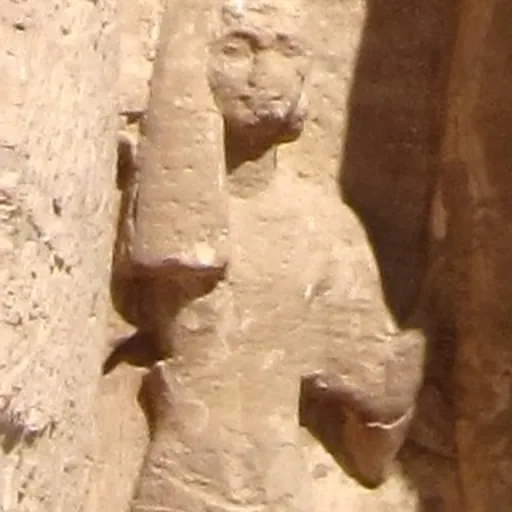
Meryatum (“Beloved of Atum”) was an ancient Egyptian prince and High Priest of Re, the son of Pharaoh Ramesses II and Queen Nefertari.
He is shown as 16th on the processions of princes, and is likely to have been the last child born to Ramesses and Nefertari (after Amun-her-khepeshef, Pareherwenemef, Meritamen, Henuttawy and Meryre). He is depicted in the Smaller Abu Simbel temple, dedicated to Nefertari. Inscriptions at Karnak and elsewhere show Nefertari was his mother.
Two of his statues are now in Berlin and a stela belonging to him is in Hildesheim. An ostrakon mentions work on his tomb and that of Isetnofret, who is more likely a female descendant of Ramesses II than a queen, given the absence of a cartouche or royal titles; it implies he was buried in the area of the Valley of the Kings, though it is also possible he was buried in KV5, the tomb built for the sons of Ramesses, since a fragment of one of his canopic jars was found there.
Meryatum is referred to as the “King’s Eldest Son” in an inscription on a statue. This title is understood to denote the eldest living son born of the same mother, which indicates that all his full older brothers had died before him. He is believed to have died during the 46th to 52nd year of Ramesses II’s reign, and based on records of the succession of the High Priest of Ra, an earlier date of death is considered more likely.
Inscriptions Meryatum is known from several inscriptions. Inscription at Serabit el-Khadim depicting Prince Meryatum with the Troop-commander and Royal Cupbearer Ashahebsed and Troop-commander Amenemope. Façade of the Small Temple at Abu Simbel; two of the colossal statues of the King are flanked by small statues of the King’s Son Meryatum and the King’s Son Meryre (the other two are flanked by Amun-her-khepeshef and Prehirwenemef) Inscription at the Temple of Mut at Karnak; The inscription names Meryatum and Queen Nefertari: Text made by the King’s Son Ramesses-Meryatum, born of Queen Nefertari-Meryetmut, may she live forever! (Kitchen) Statue of Queen Nefertari with a depiction of Prince Meryatum at the left side (Brussels E.2459) Stela of Subordinate Akhpet from Qantir (Pelizaeus-Museum) mentions the King’s Son, Chief of Seers, pure of hands in the House of Re, Mery-Atum, justified. A statue with Standards (Berlin 19716) mentions on the Dorsal Pillar: ''Hereditary Prince and Count, Chief of Secrets in the Mansion of the Bennu bird, bodily King’s son, beloved of him, Chief of Seers, Mery-Atum. (Kitchen
Don’t just read it —
keep it.
Full-length biographies made to live with: read them, listen on the way to work, watch them tonight.
- E-book
- Audio
- Video
Instant download · yours to keep · every purchase keeps this site free
Important facts
Related people
Same field, nearest in time




Frequently asked questions
Who was Meryatum?
ancient Egyptian prince and high priest of Ra
What was Meryatum's occupation?
Meryatum was a priest.
Sources & further reading
Cite this page
APA: Biography.guide. (2026). Meryatum. https://biography.guide/meryatum/
MLA: "Meryatum." Biography.guide, https://biography.guide/meryatum/.
Chicago: "Meryatum." Biography.guide. https://biography.guide/meryatum/.
Data last updated: 2026-09-22 · Spot an error? Report a correction.
Portrait: Wikimedia Commons · author & licence
Page generated 2026-09-27 05:04 UTC