
About Merlo J. Pusey
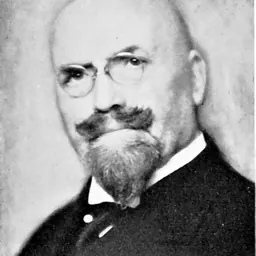
Lived 1902 – 1985 (aged 83). Merlo J. Pusey was an American biographer, author and journalist.
Merlo John Pusey (February 3, 1902 in Woodruff, Utah – November 22, 1985 in Washington, D.C.) was an American biographer and editorial writer. He won the 1952 Pulitzer Prize for Biography or Autobiography and the 1952 Bancroft Prize for his 1951 biography of U.S. Chief Justice Charles Evans Hughes.
Born and raised on a farm near Woodruff, Utah, Pusey was a Latter-day Saint. He attended the Latter-day Saints University—now Ensign College—and graduated as a member of Phi Beta Kappa from the University of Utah after working on the college newspaper. He later became a reporter and assistant city editor at The Deseret News in Salt Lake City.
Pusey worked for The Washington Post from 1928 to 1971, becoming associate editor in 1946, continuing to contribute occasional pieces until about two years before his death.
Between 1931 and 1933, Pusey was a part-time member of the staff of the U.S. Senate Finance Committee. From 1939 until 1942, he was an instructor in journalism at George Washington University.
His interest in Roosevelt's "court packing plan" led directly to his biography of Hughes, who was chief justice at the time, and who gave him a number of interviews and full access to his private papers. Other books include Big Government: Can We Control It? (1945), Eisenhower the President (1956), The USA Astride the World (1971), and Eugene Meyer (1974), a biography of the financier and public official who bought The Washington Post at a bankruptcy sale in June 1933.
In later years, Pusey lived on a farm in Dickerson, Maryland. He was a member of the American Political Science Association, the Cosmos Club, and the National Press Club. After publishing Ripples of Intuition, a book of poetry, in 1984, he died of cancer in 1985.
Books The Supreme Court Crisis (Macmillan, 1937) Big Government: Can We Control It? (Harper, 1945) Charles Evans Hughes (2 vols., Macmillan, 1951). Pulitzer Prize for Biography or Autobiography Eisenhower, the President (Macmillan, 1956) The Way We Go to War (Houghton Mifflin, 1969) The USA Astride the Globe (Houghton Mifflin, 1971) Eugene Meyer (Knopf, 1974) Builders of the Kingdom, George A. Smith, John Henry Smith, George Albert Smith (Brigham Young University, c1981) Ripples of Intuition (Eden Hill, 1984; Signature Books, Inc., 1986).
Don’t just read it —
keep it.
Full-length biographies made to live with: read them, listen on the way to work, watch them tonight.
- E-book
- Audio
- Video
Instant download · yours to keep · every purchase keeps this site free
Important facts
People in Merlo J. Pusey's life
Named in this biography and alive at the same time
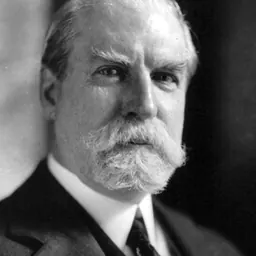





Related people
Same field, nearest in time

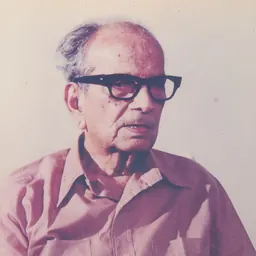
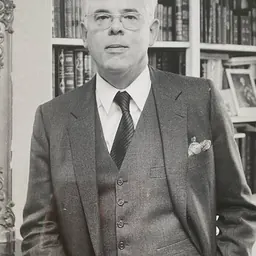
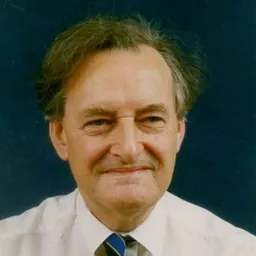
Contemporaries
People whose lives overlapped Merlo J. Pusey's




Frequently asked questions
Who was Merlo J. Pusey?
American journalist and nonfiction writer
When was Merlo J. Pusey born?
Merlo J. Pusey was born on 3 February 1902 in Woodruff.
When did Merlo J. Pusey die?
Merlo J. Pusey died on 22 November 1985.
What was Merlo J. Pusey's occupation?
Merlo J. Pusey was a biographer, author and journalist.
What nationality was Merlo J. Pusey?
Merlo J. Pusey was American.
Sources & further reading
Cite this page
APA: Biography.guide. (2026). Merlo J. Pusey. https://biography.guide/merlo-j-pusey/
MLA: "Merlo J. Pusey." Biography.guide, https://biography.guide/merlo-j-pusey/.
Chicago: "Merlo J. Pusey." Biography.guide. https://biography.guide/merlo-j-pusey/.
Data last updated: 2026-09-20 · Spot an error? Report a correction.
Page generated 2026-09-27 05:01 UTC