
About Memphis Pal Moore
Lived 1894 – 1953 (aged 58). Memphis Pal Moore was an American boxer.
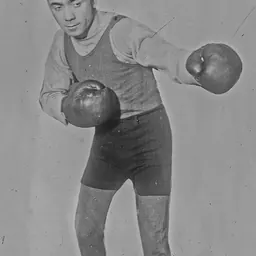
Memphis Pal Moore (born Thomas Wilson Moore) was an American boxer from Memphis, Tennessee, who claimed the World Bantamweight Championship in 1918 defeating championship claimant Johnny Ertle in Baltimore. He was rated as the seventeenth best bantamweight of all time by boxing.com, and was elected to the International Boxing Hall of Fame in 2010.
Managed by Tommy Walsh, Moore fought over 260 fights. He fought over thirty bouts with fifteen world champions, of which he impressively won nineteen.
Boxing record
Early boxing career Moore was born on July 28, 1894, in Kenton, Tennessee. Beginning in 1913 in the Memphis area, he was undefeated in his first 10 fights.
Claiming the World Bantamweight Championship, Johnny Ertle, April 1918 Moore fought Johnny Ertle claimant of the World Bantamweight championship in Baltimore on April 10, 1918, defeating Ertle by decision. The Indianapolis News wrote that Moore had taken the decision with "great ease". Moore claimed the World Bantamweight Championship as a result of this win, but was not universally recognized to have held the title and is not recognized today. Moore had first defeated Ertle in a controversial eight-round decision on April 5, 1916, in Memphis. Criqui would hold the French Featherweight Title in 1921, the European Featherweight Title in 1922, and the World Featherweight Title in 1923. On October 26, 1920, Moore drew with Lynch according to the newspapers in St. Louis. Moore's holding cost him the decision as he carried the fight to his opponent in nearly every round. On May 6, 1921, Moore defeated Lynch in twelve by decision of the Courier Journal in Louisville, Kentucky. Other newspapers considered the bout too close to call, as in the twelfth round Lynch, reigning champion, tried hard to knockout Moore, and effectively used his left jab throughout. Many spectators considered the bout the best between Moore and Lynch.
On September 4, 1922, the newspapers gave a twelve-round decision to Lynch in Indiana before a significant crowd of 8,000. In this instance, Lynch had a decisive victory, knocking Moore to the canvas twice in the seventh round, for counts of six and four. Jack Dempsey fought an exhibition in the first match before the crowded house. On November 27, 1923, Moore defeated Lynch by a ten-round newspaper decision in St. Louis, though the match was considered close and dull by most newspaper accounts. Lynch may have dealt a few blows which connected, but Moore's boxing and scientific defense did not seem as stellar as in his earlier career. On February 24, 1926, Moore drew with Lynch in a ten-round points decision in Ft. Lauderdale, though a few newspapers gave Moore the edge. On March 4, 1926, the Miami Daily News gave the decision to Moore in Miami. Many in the crowd jeered the boxers.
Moore fought Johnny Gannon who was the bantamweight champion of the U.S. Army on March 16, 1921, to a ten-round draw in Rockford, Illinois. Moore fought Kid Pancho in Memphis, winning by decision.
Bouts with champion Sammy Mandell, 1921–22
On August 26, 1921, Moore first met Sammy Mandell in Aurora Illinois, losing in a ten-round newspaper decision of the Aurora Daily Star. The bout was the main event of the evening. The Logansport Pharos Tribune believed Mandell may have had the edge in the fairly close bout but noted that "Moore displayed the greater cleverness and landed the most blows", but "Mandell's hitting was more effective". Mandell's strong display in the bout gained him notice a number of boxing reporters. He drew with Mandell in a newspaper decision in Memphis on July 4, 1922. In the fast bout, Mandell had a slight weight advantage and was considered the better puncher which forced Moore to use his speed and science to outbox his opponent. The bout was described as exciting with "The men...on their toes and slugging from the beginning until the end of the bout." The referee present said if he had called the decision, he would have ruled for a draw. Mandell took the World Lightweight Championship on July 3, 1926, and held it for four years. Moore's first match with Taylor was a newspaper win by the Aurora Daily Star in Illinois in ten rounds on June 23, 1922. As was not unusual in this stage of Moore's career, he was described as having performed a shade better in his boxing technique, but Taylor was described as landing more solid blows, though the bout was close. The second, Moore won by ten-round newspaper decision of the Chicago Tribune on the USS Commodore (IX-7) off Chicago on December 22, 1922. The third was a ten-round draw by newspaper decision in Indiana on January 15, 1923. Shortly after this bout, Moore expressed his intention to go after the World Flyweight Championship and perhaps face Pancho Villa, but a World Flyweight Championship Match never materialized for Moore. Moore drew in their fourth meeting on February 13, 1923, in Indianapolis by a ten-round newspaper decision of two Indianapolis papers. The bout was described as a "whale of a battle from start to finish", with each boxer exchanging the lead, though Taylor was described as landing more blows by several newspapers.
Moore also fought Frankie Genaro on April 23, 1923, in Chicago but lost in a sixth-round DQ. The New York Times said the foul was an accidental upper cut to the groin. The foul seemed unintentional as one account wrote that Genaro had jumped six inches off the floor into the punch. According to the El Paso Herald, Moore's loss by foul was his first in eleven years of fighting. Genaro would take the NBA World Flyweight Championship on February 6, 1926, and hold it almost continuously until October 1931. McLarnin would hold multiple weight division world titles in his career.
On July 12, 1927, Moore lost to reigning World Flyweight Champion Fidel LaBarba before a crowd of 18,000, at Wrigley Field, in Chicago, Illinois, in a ten-round points decision. A few newspapers said LaBarba had a clear victory, or that he landed cleaner, stiffer punches, against Moore who threw punches from every angle. There were no knockdowns in the bout, nor obvious injuries.
Retirement from boxing, death and honors Moore retired from boxing in 1930 after his last bout with Leroy Dougan in Memphis. He died on March 15, 1953, reportedly from a stomach ulcer and a severe asthmatic condition that may have forced him from his ring career. He received twelve decisions over champions in his weight class, but each match was a no-decision bout, and received only newspaper decisions, rather than a points decision for a title. Moore defeated Kid Williams, Joe Lynch, Pete Herman, and Johhny Buff by newspaper decision, and each held the Bantamweight Championship in their career.
In 2010, Pal Moore was selected to join the International Boxing Hall of Fame.
Professional boxing record All information in this section is derived from BoxRec, unless otherwise stated.
Official record
All newspaper decisions are officially regarded as "no decision" bouts and are not counted in the win/loss/draw column.
Unofficial record
Record with the inclusion of newspaper decisions in the win/loss/draw column.
Don’t just read it —
keep it.
Full-length biographies made to live with: read them, listen on the way to work, watch them tonight.
- E-book
- Audio
- Video
Instant download · yours to keep · every purchase keeps this site free
Important facts
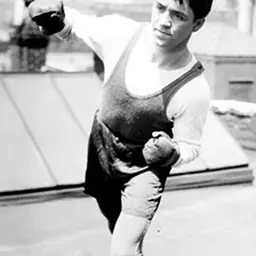
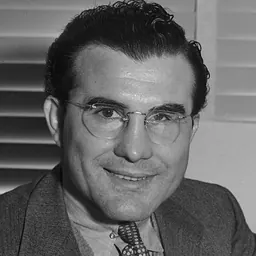
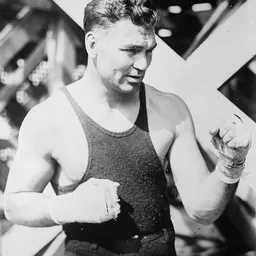
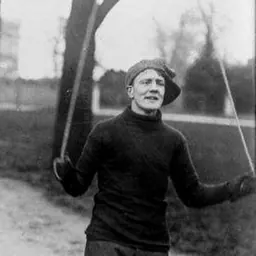
People in Memphis Pal Moore's life
Named in this biography and alive at the same time



Related people
Same field, nearest in time



Contemporaries
People whose lives overlapped Memphis Pal Moore's


Frequently asked questions
Who was Memphis Pal Moore?
American boxer (1894–1953)
When was Memphis Pal Moore born?
Memphis Pal Moore was born on 28 July 1894 in Kenton.
When did Memphis Pal Moore die?
Memphis Pal Moore died on 18 May 1953 in Memphis.
What was Memphis Pal Moore's occupation?
Memphis Pal Moore was a boxer.
What nationality was Memphis Pal Moore?
Memphis Pal Moore was American.
Sources & further reading
· Wikipedia: Memphis Pal Moore
Cite this page
APA: Biography.guide. (2026). Memphis Pal Moore. https://biography.guide/memphis-pal-moore/
MLA: "Memphis Pal Moore." Biography.guide, https://biography.guide/memphis-pal-moore/.
Chicago: "Memphis Pal Moore." Biography.guide. https://biography.guide/memphis-pal-moore/.
Data last updated: 2026-09-20 · Spot an error? Report a correction.
Page generated 2026-09-27 05:32 UTC