
Melville Fuller
Chief justice of the United States from 1888 to 1910
About Melville Fuller
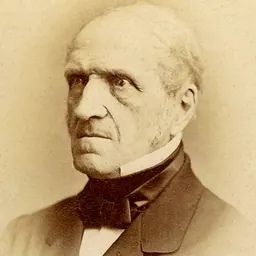
Lived 1833 – 1910 (aged 77). Melville Fuller was an American lawyer, judge and politician.
Melville Weston Fuller (February 11, 1833 – July 4, 1910) was an American politician, attorney, and jurist who served as the eighth chief justice of the United States from 1888 until his death in 1910. Staunch conservatism marked his tenure on the Supreme Court, exhibited by his tendency to support unfettered free enterprise and to oppose broad federal power. He wrote major opinions on the federal income tax, the Commerce Clause, and citizenship law, and he took part in important decisions about racial segregation and the liberty of contract. The rulings faced criticism in the during and after Fuller's tenure, and many were later overruled or abrogated. The legal academy has generally viewed Fuller negatively, although a revisionist minority has taken a more favorable view of his jurisprudence.
Born in Augusta, Maine, Fuller established a legal practice in Chicago after graduating from Bowdoin College. A Democrat, he became involved in politics and campaigned for Stephen A. Douglas in the 1860 presidential election. During the Civil War, he served a single term in the Illinois House of Representatives, where he opposed the policies of President Abraham Lincoln. Fuller became a prominent attorney in Chicago and was a delegate to several Democratic National Conventions. He declined three separate appointments offered by President Grover Cleveland before accepting Cleveland's nomination to succeed Morrison Waite as chief justice in 1888. Despite some voicing objections over his political past, Fuller was confirmed by the Senate. He served as chief justice until his death in 1910, gaining a reputation for collegiality and able administration.
Fuller's jurisprudence was conservative, focusing strongly on states' rights, limited federal power, and economic liberty. His majority opinion in Pollock v. Farmers' Loan & Trust Co. (1895) ruled a federal income tax to be unconstitutional; the Sixteenth Amendment later superseded the decision. Fuller's opinion in United States v. E. C. Knight Co. (1895) narrowly interpreted Congress's authority under the Commerce Clause, limiting the reach of the Sherman Act and making government prosecution of antitrust cases more difficult. In Lochner v. New York (1905), Fuller agreed with the majority that the Constitution forbade states from enforcing wage-and-hour restrictions on businesses, contending that the Due Process Clause prevents government infringement on one's liberty to control one's property and business affairs. Fuller joined the majority in Plessy v. Ferguson (1896), in which the Court articulated the doctrine of separate but equal and upheld Jim Crow laws. He argued in the Insular Cases that residents of the territories are entitled to constitutional rights, but he dissented when, in United States v. Wong Kim Ark (1898), the majority ruled in favor of birthright citizenship.
Many of Fuller's decisions did not stand the test of time. His views on economic liberty were squarely rejected by the Court during the New Deal era, and the Plessy opinion was unanimously reversed in Brown v. Board of Education (1954). Fuller's historical reputation has been generally unfavorable, with many scholars arguing that he was overly deferential to corporations and the wealthy. While a resurgence of conservative legal thought has brought Fuller new defenders, an increase in racial awareness has also led to new scrutiny of his vote in Plessy. In 2021, Kennebec County (Maine) commissioners voted unanimously to remove a statue of Fuller from public land with the aim of dissociating the county from racial segregation.
Early life Melville Weston Fuller was born on February 11, 1833, in Augusta, Maine, the second son of Frederick Augustus Fuller and his wife, Catherine Martin . His maternal grandfather, Nathan Weston, served on the Supreme Court of Maine, and his paternal grandfather was a probate judge. His father practiced law in Augusta. Three months after Fuller was born, his mother sued successfully for divorce on grounds of adultery; she and her children moved into Judge Weston's home. While he did not receive a degree from Harvard, his attendance made him the first chief justice to have received formal academic legal training. Later that year, he moved back to Augusta to become the editor of The Age, Maine's primary Democratic newspaper, in partnership with another uncle. Fuller was elected to Augusta's common council in March 1856, serving as the council's president and as the city solicitor. During this time, the majority-Democrat legislature clashed with Republican governor Richard Yates and opposed the wartime policies of President Lincoln. Furthermore, the sixty-six-year-old Phelps was thought to be too old for the job, and the Supreme Court already had one justice from New England. Fuller was formally nominated on April 30.
The full Senate took up Fuller's nomination on July 20. Ten Republicans, including Republican National Committee chair Matthew Quay and two senators from Fuller's home state of Maine, joined the Democrats in supporting Fuller's nomination.
Chief justice
Chief Justice Fuller (left) administering the oath to William McKinley (center) as president on March 4, 1897. Outgoing president Grover Cleveland stands to the right. Fuller served twenty-two years as chief justice, remaining in the center chair until his death in 1910. Although he lacked legal genius, his potent administrative skills made him a capable manager of the court's business. Hoping to increase the Court's collegiality, Fuller introduced the practice of the justices' shaking hands before their private conferences. He successfully maintained more-or-less cordial relationships among the justices, many of whom had large egos and difficult tempers. Fuller was the first chief justice to lobby Congress directly in support of legislation, successfully urging the adoption of the Circuit Courts of Appeals Act of 1891. As chief justice, Fuller was generally responsible for assigning the authorship of the court's majority opinions. He tended to use this power modestly, his opinions were lengthy and contained numerous quotations. In what biographer Willard King calls "erhaps the worst year in the history of the Court" – the term from October 1909 to May 1910 – two justices died and one became fully incapacitated; Fuller's weakened state compounded the problem. Yet he was also skeptical of the states' powers: he agreed with the concept of substantive due process and used it to strike down state laws that, in his view, unduly encroached upon the free market. In 1894, Congress passed the Wilson–Gorman Tariff Act, which contained a rider that levied a two-percent tax on incomes exceeding $4,000 a year. Since it imposed the nation's first peacetime income tax, this provision was deeply controversial, provoking acrimonious debate along geographic, societal, and political lines. The majority opinion, written by Fuller, held that the Framers intended the term "direct tax" to include property and that income was itself a form of property. Fuller thus ruled the entire act to be unconstitutional. The decision provoked withering criticism from each of the four dissenters, including a paroxysm of ire by Justice John Marshall Harlan that one scholar characterized as "one of the most spectacular displays ever staged by a member of the Court".
The Pollock decision was distinctly unpopular. Much of the public questioned whether Fuller's constitutional analysis was truly in good faith: many felt that the Court was more committed to protecting the wealthy than to following any particular legal philosophy. The Sixteenth Amendment to the U.S. Constitution, ratified in 1913, abrogated Pollock by allowing Congress to levy income taxes without apportionment; it marked only the third time in American history that a Supreme Court decision was reversed via constitutional amendment. and wealth taxes. In any event, Fuller's Pollock opinion remains relevant in contemporary public policy.
Interstate commerce Fuller was suspicious of attempts to assert broad federal power over interstate commerce. The Department of Justice had filed suit under the Sherman Act against the American Sugar Refining Company, arguing that it was a monopoly because it controlled over ninety percent of the American sugar refining market. Fuller feared that a broader interpretation of the Commerce Clause would impinge upon states' rights, and he thus held the Sugar Trust could only be broken up by the states in which it operated. The Court's expansive Commerce Clause decisions during the New Deal period essentially abrogated Knight. The dissenters argued that simply holding stock in a company did not count as interstate commerce, and so they would have held that the Sherman Act did not apply to holding companies. and law professor David P. Currie wrote that the apparent contradiction "suggests that [Fuller] may not have been guided exclusively by neutral legal principles".
Fuller's attempts to limit the national government's power did not always meet with the support of his fellow justices. In his opinion, Fuller demurred that the majority's reasoning gave Congress "the absolute and exclusive power to prohibit the transportation of anything or anybody from one state to another. The ruling in Ames was among the first to grant the federal government a de facto police power to protect the welfare of the public. Lochner involved a New York law that capped hours for bakery workers at sixty hours a week. In a decision widely viewed to be among the Supreme Court's worst, Peckham rejected the state's argument that the law was intended to protect workers' health, citing the "common understanding" that baking was not unhealthy. The Fuller Court was not exclusively hostile to labor regulation: in Muller v. Oregon (1908), for example, it unanimously upheld an Oregon law capping women's working hours at ten hours a day.
Judicial authority Because of his support for property rights, Fuller favored a broad conception of the judicial role, endorsing doctrinal developments that expanded the federal courts' power to issue injunctions. In the case of In re Debs (1895), for instance, Fuller and his fellow justices bolstered the judiciary's authority to enjoin deprivations of public rights. A Chicago federal court issued an injunction against the union's leaders, ordering them to stop facilitating the strike. Broadly construing the federal government's powers, the Court held the judicial branch had the power to enjoin anything that obstructed interstate commerce. and it substantially expanded the courts' equitable authority. decision aided the Fuller Court in its quest to strike down state economic regulations, but its reasoning has permitted the federal judiciary to hear challenges to state laws in a wide variety of other contexts. Although some modern scholars have criticized the ruling in Young, attorney Rochelle Bobroff noted in 2009 that it "remains one of the most powerful tools to compel states to comply with federal law". Ely characterized the decision as "a milestone in the Fuller Court's transformation of federal judicial power",
Fuller wrote the majority opinion in United States v. Shipp (1909), A Tennessee court sentenced Ed Johnson, an African-American man, to death for rape. the justices sat as a jury to determine the defendants' guilt. Fuller, writing for a five-justice majority, found Shipp and several other defendants guilty of contempt. case of Plessy v. Ferguson (1896), he joined six of his colleagues in upholding a Louisiana law that required the racial segregation of railroad passengers. The majority opinion, penned by Justice Brown, rejected the claim that the law violated the Equal Protection Clause, maintaining instead that "separate but equal" distinctions were constitutional. Citing "the nature of things", the majority asserted that equal protection did not require the "commingling" of blacks and whites. Justice Harlan dissented, using in the process the now-famous phrase "Our Constitution is color-blind." The Plessy decision placed the Court's imprimatur on Jim Crow laws. It instituted a half-century of what Louis H. Pollak called "humiliation-by-law", For instance, Fuller joined the unanimous majority in Williams v. Mississippi (1898), which rejected a challenge to poll taxes and literacy tests that in effect disenfranchised Mississippi's African-American population. Even though a lower court had admitted the arrangement was intended "to obstruct the exercise of suffrage by the negro race", the Supreme Court refused to strike it down, reasoning that the provisions passed constitutional muster because they did not explicitly single out African-Americans. The Williams majority distanced itself from the Court's previous ruling in Yick Wo v. Hopkins (1886), in which the Waite Court had struck down a law that, while neutral on its face, discriminated against a racial minority. Such reasoning seemed likely to persuade the Court, given its history of striking down laws that interfered with the business decisions of private entities. But the justices were not convinced, upholding the law on the basis that, because corporations had no right to be granted a charter, states could impose otherwise unconstitutional restrictions on them.
Citizenship, immigration, and the territories As a result of the Spanish–American War, the United States took control of Puerto Rico and the Philippines, raising knotty legal issues about their status under the Constitution. The Supreme Court addressed these disputes in a series of rulings in the so-called Insular Cases. In Downes v. Bidwell (1901), a fractured Court ruled 5–4 that the people living in the territories were not entitled to the rights guaranteed by the Constitution. Fuller, writing for the four dissenters, argued that Congress had no power to hold the territories "like a disembodied shade" free from all constitutional limits. He contended that the Constitution could not tolerate unrestricted congressional power over the territories, writing that it rejected that proposition in a way "too plain and unambiguous to permit its meaning to be thus influenced". Fuller's opinion was in line both with his strict-constructionist views and his party's opposition to American imperialism. In a unanimous opinion by Fuller, the Justices ruled that Puerto Ricans were not aliens under federal law, but they refused to decide whether the people of Puerto Rico were American citizens. Fuller penned a dissent, in which he maintained that Congress had no authority to order the confiscation of property. Although treaties with China allowed for immigration, the Court held that Congress was not bound by them, ruling that the Act abrogated all treaty obligations to the contrary. According to Ely, Fuller's dissent shows that he "occasionally demonstrated concern over civil liberties". Writing for himself and Justice Harlan, Fuller claimed Chinese aliens were not "subject to the jurisdiction" of the United States because they retained allegiance to the Chinese emperor. No Chief Justice had ever before had a mustache, and numerous newspapers debated the propriety of Fuller's facial hair. His support of the widely execrated Plessy and Lochner decisions has been particularly responsible for his low historical reputation. its positions on economic regulation and labor fared particularly poorly. Fuller's rulings were often favorable to corporations, and some scholars have claimed that the Fuller Court was biased towards big business and against the working class. Fuller wrote few consequential majority opinions, leading Yale professor John P. Frank to remark that "f the measure of distinction is influence on the life of our own times, Fuller's score is as close to zero as any man's could be who held his high office so long". Yet the Fuller Court's jurisprudence was also a key source of the legal academy's criticism.
However, the growth of conservative legal thought in the late 20th century has brought Fuller new supporters. In a 1995 book, James W. Ely argued that the traditional criticisms of the Fuller Court are flawed, maintaining that its decisions were based on principle instead of partisanship. He noted that Fuller and his fellow justices rendered rulings that generally conformed with contemporaneous public opinion. Lawrence Reed of the Mackinac Center for Public Policy wrote in 2006 that Fuller was "a model Chief Justice", favorably citing his economic jurisprudence. While these revisionist ideas have become influential in the scholarly academy, they have not attained universal support: many academics continue to favor more critical views of the Fuller Court. Yale professor Owen M. Fiss, himself sympathetic to the revisionists' views, In a 1998 review of Ely's book, law professor John Cary Sims argued that Fuller and his fellow justices failed to fulfill their obligation to go "against the prevailing political winds" instead of simply deferring to the majority.
Statue In 2013, a statue of Fuller, donated by a cousin, was installed on the lawn in front of Augusta's Kennebec County Courthouse. With Black Lives Matter protests and other attention in 2020, focus on the Plessy decision led to debate about the appropriateness of the statue's placement. In August 2020, the Maine Supreme Judicial Court requested that the statue be removed, citing Plessy. Commissioners appointed a committee to identify a new home for the statue. In April 2021, the original donor offered to take the statue back, agreeing to pay the costs for removing it. County commissioners accepted the offer later that month; they agreed that the statue could remain in front of the courthouse for up to a year while the original donor attempted to find a new location where it can be displayed.
Don’t just read it —
keep it.
Full-length biographies made to live with: read them, listen on the way to work, watch them tonight.
- E-book
- Audio
- Video
Instant download · yours to keep · every purchase keeps this site free
Important facts
People in Melville Fuller's life
Named in this biography and alive at the same time



Related people
Same field, nearest in time


Contemporaries
People whose lives overlapped Melville Fuller's


Frequently asked questions
Who was Melville Fuller?
chief justice of the United States from 1888 to 1910
When was Melville Fuller born?
Melville Fuller was born on 11 February 1833 in Augusta.
When did Melville Fuller die?
Melville Fuller died on 4 July 1910 in Sorrento.
What was Melville Fuller's occupation?
Melville Fuller was a lawyer, judge and politician.
What nationality was Melville Fuller?
Melville Fuller was American.
Sources & further reading
Cite this page
APA: Biography.guide. (2026). Melville Fuller. https://biography.guide/melville-fuller/
MLA: "Melville Fuller." Biography.guide, https://biography.guide/melville-fuller/.
Chicago: "Melville Fuller." Biography.guide. https://biography.guide/melville-fuller/.
Data last updated: 2026-09-20 · Spot an error? Report a correction.
Page generated 2026-09-27 05:33 UTC