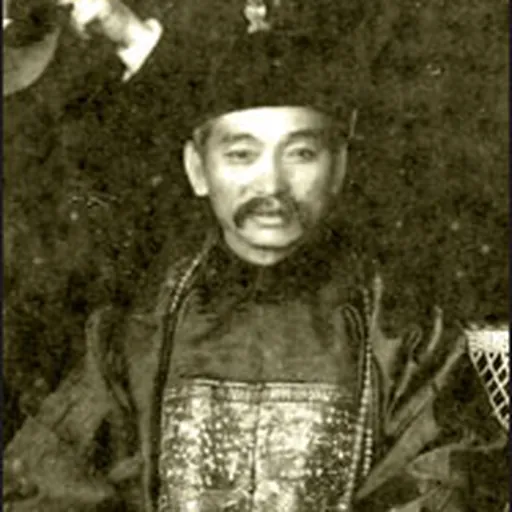
About Mei Quong Tart
Lived 1850 – 1903 (aged 52–53). Mei Quong Tart was a businessperson.
Moy Quong Tart (1850–1903), often anachronistically known as Mei Quong Tart, was a prominent nineteenth century Sydney merchant from China. He was one of Sydney's most famous and well-loved personalities and made a significant impact on the social and political scene of Sydney at a time of strong anti-Chinese sentiment. His Australian contemporaries referred to him by his Chinese given name, Quong Tart, which would go on to be the surname used by his descendants, such as Josh Quong Tart.
Public life
A prominent businessman, he owned a network of tearooms in the Sydney Arcade, the Royal Arcade and King Street. His crowning success was the ‘Elite Hall’ in the Queen Victoria Market, now the Queen Victoria Building. He was also a community leader, well connected with the local political and social elites. The Imperial government of China awarded him the status of a Mandarin of the fifth degree, with blue feather, in 1887, in acknowledgment of his service to the Overseas Chinese community and to European-Chinese relations in Australia and for assisting with the 1887 Chinese mission to Australia sponsored by Zhang Zhidong, which was the first official Chinese mission to visit Australia. Quong Tart's parents and grandparents were also granted titles at the same time. He also had progressive ideas about Sydney social politics. His tea rooms were the site of the first meetings of Sydney's suffragettes, and he devised new and improved employment policies for staff, such as paid sick leave. , Duanfen in southern Taishan, Guangdong province, China. His father, named Mei Kuoyuan, On returning to Sydney, he established a chain of silk stores and tea shops. The tea shops were intended to provide customers with samples of tea, but became so successful that he turned his shops into tea rooms, the first tea rooms in Sydney.
On 30 August 1886, he married a young English school teacher, Margaret Scarlett. at 137 King Street, Sydney. It was his grandest tea room, with marble fountains and ponds with golden carp.
He was well known as a uniquely Victorian character, being a Chinese Australian who adopted the dress and manners of an English gentleman. Quong Tart was "as well known as the Governor himself" and "quite as popular among all classes" in NSW.
Name
Born in Duanfen (端芬),Taishan, “Quong Tart” is a romanization that reflects the local Taishanese dialect (a Yue Chinese dialect, related to Cantonese). In this dialect, his full name, 梅光達, would be romanized as Moy Quong Tart (cf. Cantonese Jyutping Mui4 Gwong1 Daat6). In Mandarin Chinese, the characters are pronounced quite differently and would be written in Hanyu Pinyin as Mei Guangda.
During his life, he was referred to by what non-Chinese Australians assumed was his surname—"Quong Tart," but was in actuality his given name, as a result of others not knowing that the surname goes first in Chinese names: "My lady friends will thus be shocked to hear that for all these years they have been calling the admirable Quong Tart by his Christian name. What should they have called him? That is the question. In full, the appellation by which he would have been known in China appears to be Moy Quong Tart …"
The name Mei Quong Tart is thus a recent Australianism combining the historic Taishanese-based romanisation (Quong Tart) with the surname in the now prevalent Mandarin pinyin, 'Mei.'
Death
On 26th of July 1903, Quong Tart was brutally bashed with an iron bar and robbed of a few pounds at his office in the Queen Victoria Building, a crime that shocked Sydney. The attacker, Frederick Duggan, described as a "dim-witted thug,"
Descendants
Josh Quong Tart, Australian actor (Great-grandson)
Don’t just read it —
keep it.
Full-length biographies made to live with: read them, listen on the way to work, watch them tonight.
- E-book
- Audio
- Video
Instant download · yours to keep · every purchase keeps this site free
Important facts
People in Mei Quong Tart's life
Named in this biography and alive at the same time


Related people
Same field, nearest in time
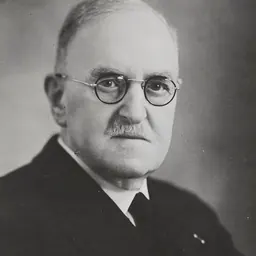
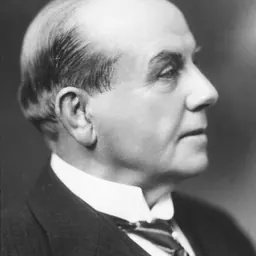


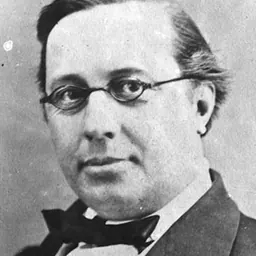
Contemporaries
People whose lives overlapped Mei Quong Tart's


Frequently asked questions
Who was Mei Quong Tart?
Chinese merchant
When was Mei Quong Tart born?
Mei Quong Tart was born in 1850 in Taishan.
When did Mei Quong Tart die?
Mei Quong Tart died on 26 July 1903 in Ashfield.
What was Mei Quong Tart's occupation?
Mei Quong Tart was a businessperson.
Sources & further reading
Cite this page
APA: Biography.guide. (2026). Mei Quong Tart. https://biography.guide/mei-quong-tart/
MLA: "Mei Quong Tart." Biography.guide, https://biography.guide/mei-quong-tart/.
Chicago: "Mei Quong Tart." Biography.guide. https://biography.guide/mei-quong-tart/.
Data last updated: 2026-09-21 · Spot an error? Report a correction.
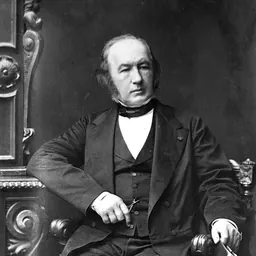
Portrait: Wikimedia Commons · author & licence
Page generated 2026-09-27 05:00 UTC