
About Mehdi Haeri Yazdi
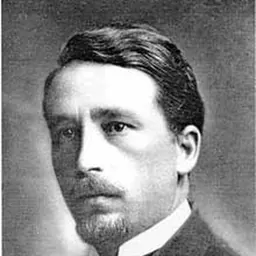
Lived 1923 – 1999 (aged 75–76). Mehdi Haeri Yazdi was an Iranian philosopher, writer, akhoond and theologian.
Mehdi Haeri Yazdi ( ; ; ; 1923 – 8 July 1999) was an Iranian philosopher and Shia Islamic cleric. He was the first son of Abdul Karim Haeri Yazdi, the founder of Qom Seminary and teacher of Ayatollah Ruhollah Khomeini, who became the leader of the Iranian Revolution and founder of the Islamic Republic of Iran.
Family Mahdi Ha'iri Yazdi was son of the late Ayatollah Ha'iri, a Shiite authority and disciple of Ayatollah Boroujerdi. He was a teacher of theology and Islamic philosophy.
Academic career Ha'iri received his Ph.D. in philosophy from University of Toronto. He taught Islamic philosophy at the University of Toronto and McGill University.
Background Mehdi Haeri Yazdi was "one of Khomeini's prominent pupils" but parted ways with Khomeini on several issues. He opposed Khomeini's theory of velayat-e faqih as justification for rule of the Islamic state by Islamic jurists, Khomeini's unwillingness to end the Iran–Iraq War, and believed Khomeini's fatwa against Salman Rushdie was "inconsistent with the principles of Islamic law, or Shari'a" and "against the interests of Muslim society." Haeri-Yazdi published his objection to the velayat-e faqih in his 1994 book Hekmat va Hokumat. The book was published in London, but nevertheless has been widely distributed in Iran.
In 1992 he published The Principles of Epistemology in Islamic Philosophy : Knowledge by Presence. The book aimed to present Western scholars and philosophers a theme that he considered most important : knowledge by presence - knowledge that arises from immediate and intuitive awareness.
With his knowledge of Islamic philosophy and other Islamic fields, as well as his formal training in contemporary Western philosophical traditions, Mehdi Haeri Yazdi sought to study the core concerns of modernity and Islam. Farzin Vahdat discusses Yazdi's ideas in his book Islamic Ethos and the Specter of Modernity (2015).
Works In Persian: Hekmat va Hokumat (London 1994) Kavushha-ye Aql-e Nazari Hiram-e Hasti Kavushha-ye Aql-e Amali safare Nafs( the journey of soul) Analytical philosophy Memoirs of Hairi-Yazdi, 2004 (Harvard Iranian Oral History) (English and Old Persian Edition) In English: The Principles of Epistemology in Islamic Philosophy: Knowledge by Presence. SUNY Press 1992
Don’t just read it —
keep it.
Full-length biographies made to live with: read them, listen on the way to work, watch them tonight.
- E-book
- Audio
- Video
Instant download · yours to keep · every purchase keeps this site free
Important facts
People in Mehdi Haeri Yazdi's life
Named in this biography and alive at the same time
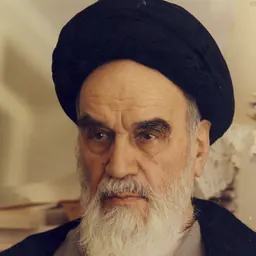

Related people
Same field, nearest in time


Contemporaries
People whose lives overlapped Mehdi Haeri Yazdi's
Frequently asked questions
Who was Mehdi Haeri Yazdi?
Iranian ayatollah (1923–1999)
When was Mehdi Haeri Yazdi born?
Mehdi Haeri Yazdi was born in 1923 in Qom.
When did Mehdi Haeri Yazdi die?
Mehdi Haeri Yazdi died on 8 July 1999 in Tehran.
What was Mehdi Haeri Yazdi's occupation?
Mehdi Haeri Yazdi was a philosopher, writer, akhoond and theologian.
What nationality was Mehdi Haeri Yazdi?
Mehdi Haeri Yazdi was Iranian.
Sources & further reading
· Wikipedia: Mehdi Haeri Yazdi
Cite this page
APA: Biography.guide. (2026). Mehdi Haeri Yazdi. https://biography.guide/mehdi-haeri-yazdi/
MLA: "Mehdi Haeri Yazdi." Biography.guide, https://biography.guide/mehdi-haeri-yazdi/.
Chicago: "Mehdi Haeri Yazdi." Biography.guide. https://biography.guide/mehdi-haeri-yazdi/.
Data last updated: 2026-09-20 · Spot an error? Report a correction.
Page generated 2026-09-27 05:00 UTC