
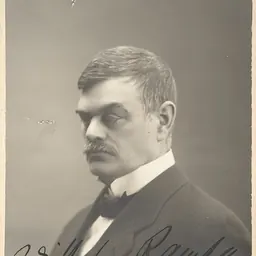
Meade Lux Lewis
American boogie-woogie pianist and composer
About Meade Lux Lewis
Lived 1905 – 1964 (aged 58). Meade Lux Lewis was an American composer, pianist, jazz musician and blues musician.
Anderson Meade "Lux" Lewis (September 4, 1905 – June 7, 1964) was an American pianist and composer, remembered for his playing in the boogie-woogie style. His best-known work, "Honky Tonk Train Blues", has been recorded by many artists.
Biography Lewis was born in Chicago, on September 4, 1905 (September 3 and 13 have also been cited as his date of birth in sources). In his youth he was influenced by the pianist Jimmy Yancey.
His father, a guitarist who made two recordings of his own, introduced Meade to music and arranged for him to have violin lessons. He gave up the violin at age 16, shortly after his father's death, and switched to the piano. The nickname "Lux" was given to him by his boyhood friends. He would imitate a couple of characters from a popular comic strip in Chicago, Alphonse and Gaston, and stroke an imaginary beard as part of the routine. His friends started calling him the Duke of Luxembourg because of this, and the name stuck for the rest of his life. He became friends with Albert Ammons during childhood, a friendship that would last throughout their lives.
A 1927 rendition of his composition "Honky Tonk Train Blues”, released by Paramount Records, marked his recording debut.
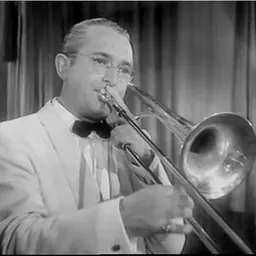
They had an extended engagement at Café Society, toured as a trio, and inspired the formation of Blue Note Records in 1939. Their success led to a decade-long boogie-woogie craze, with big-band swing treatments by Tommy Dorsey, Will Bradley, and others; and numerous country boogie and early rock-and-roll songs.
In 1941 Lewis played the piano-like Celeste (also called Celesta) in Edmond Hall's Celeste Quartet.
Lewis appeared in the movies New Orleans (1947) and Nightmare (1956).
Lewis was fond of the Minneapolis area, where a niece lived, and would visit as often as he could. He appeared annually at the White House Restaurant (no longer extant) in Golden Valley. He began a successful three-week engagement there in May 1964. Around 2 a.m. on Sunday, June 7, Lewis left the parking lot of the White House and headed east on Olson Memorial Highway, when his Chrysler Imperial was rear-ended by a vehicle driven by Ronald Bates, who was traveling an estimated 80 mph. Lewis's car was pushed 400 feet and crashed into a tree; he was killed instantly. He was 58. Bates survived, but his passenger died the following day. 1955: Boogie Woogie Piano and Drums, Clef 1956: Out of the Roaring Twenties with Meade Lux Lewis ABC Paramount ABC 164 1975: Tell Your Story, Oldie Blues OL 2805 1982: Giant of Blues and Boogie Woogie 1905–1964, Oldie Blues OL 2810 1984: Chicago Piano Blues and Boogie Woogie 1936–1951 Vol. 3, Oldie Blues OL 2827
Don’t just read it —
keep it.
Full-length biographies made to live with: read them, listen on the way to work, watch them tonight.
- E-book
- Audio
- Video
Instant download · yours to keep · every purchase keeps this site free
Important facts
People in Meade Lux Lewis's life
Named in this biography and alive at the same time




Related people
Same field, nearest in time




Contemporaries
People whose lives overlapped Meade Lux Lewis's



Frequently asked questions
Who was Meade Lux Lewis?
American boogie-woogie pianist and composer (1905–1964)
When was Meade Lux Lewis born?
Meade Lux Lewis was born on 4 September 1905 in Chicago.
When did Meade Lux Lewis die?
Meade Lux Lewis died on 7 June 1964 in Minneapolis.
What was Meade Lux Lewis's occupation?
Meade Lux Lewis was a composer, pianist, jazz musician and blues musician.
What nationality was Meade Lux Lewis?
Meade Lux Lewis was American.
Sources & further reading
Cite this page
APA: Biography.guide. (2026). Meade Lux Lewis. https://biography.guide/meade-lux-lewis/
MLA: "Meade Lux Lewis." Biography.guide, https://biography.guide/meade-lux-lewis/.
Chicago: "Meade Lux Lewis." Biography.guide. https://biography.guide/meade-lux-lewis/.
Data last updated: 2026-09-24 · Spot an error? Report a correction.
Page generated 2026-09-27 05:04 UTC