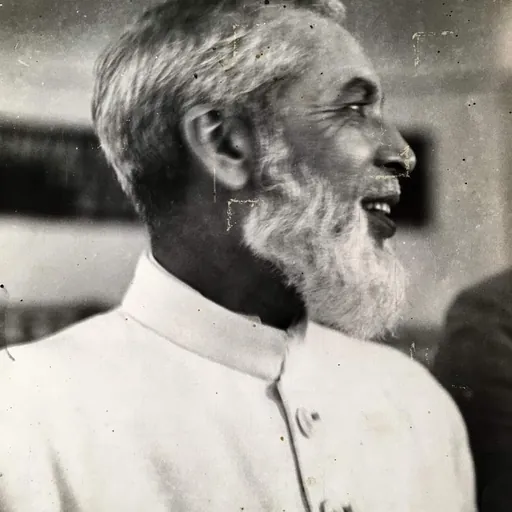
Md. Hafizur Rahman
Bengali politician and civil servant
About Md. Hafizur Rahman
Lived 1902 – 1984 (aged 81). Md. Hafizur Rahman was a Bangladeshi.
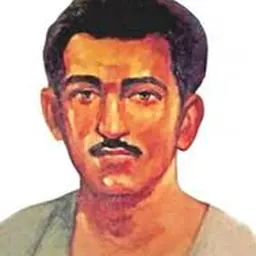
Mohammad Hafizur Rahman (, ; 2 June 1902– 15 May 1984), known as Md. Hafizur Rahman , was a senior civil servant and minister, whose career spanned British colonial India, Pakistan, and Bangladesh. Born into a Bengali Muslim family in British India, Hafizur Rahman rose from a village boy in Mymensingh to prominent positions of authority. He excelled academically, securing scholarships and graduating with honors in Economics from the University of Dhaka.
After retiring from politics, Hafizur Rahman remained involved in economic development initiatives in underprivileged areas of East Pakistan. His father Munshi Zainul Abedin was an Imam of a mosque. He was the second among six brothers and four sisters. Hammad, Hafizullah, Dr. Hamidur Rahman, Dr. Lutfur Rahman, and Habibur Rahman were his brothers. He achieved remarkable academic success, securing scholarships throughout his education from lower primary to postgraduate levels. He studied at Mymensingh Zilla School, He passed the Matriculation examination in 1919 and graduated from Presidency College Calcutta in 1921. He graduated with honors in economics from University of Dhaka, obtaining a first-class degree in both his Bachelor of Arts in 1924 and Master of Arts in 1925.
Career Early career (1925-1951) After graduating in 1925, Hafizur Rahman worked as an assistant lecturer at Dhaka University until he joined the Bengal Civil Service on 8 July 1926. From August 1928 to July 1938, he served in various districts of Bengal, fulfilling the duties of a Magistrate Revenue Officer. He also worked in the Co-operative Department as an Assistant Registrar of Cooperative Societies.
Minister of Food and Agriculture (1958-1960) After Muhammad Ayub Khan came to power in October 1958, Hafizur Rahman was appointed as Minister of Food and Agriculture in the central government of Pakistan. In 1959, he led the Pakistan delegation to the 10th Session of the F.A.O. conference in Rome. In order to study the developments that the European countries had attained in the various sectors of agriculture, he also visited Spain, U.K., Holland, Turkey and Syria. and saw through a controlled irrigation project spanning vast acres of land in East Pakistan.
Minister of Commerce (1960-1962) In 1960, after a reshuffling of portfolios between the Ministers of the Presidential Cabinet Minister, Hafizur Rahman was made Minister of Commerce.
As East Pakistani federal ministers of the central government, Hafizur Rahman, A. K. Khan, Muhammad Ibrahim, Habibur Rahman served a crucial role in upholding the interests of East Pakistan for its development.
Hafizur Rahman emphasized that the economic disparity between East and West Pakistan was mainly due to the failure of former politicians from East Pakistan to safeguard their province's interests. He highlighted that the current government had invested significantly in East Pakistan, with average annual development expenditure rising from 170.2 million rupees (1955–58) to 310.9 million rupees (1958–60). However, he asserted that despite these efforts, more substantial measures would be required to effectively end the economic disparity between the two wings after decades of exploitation.
The Bengali ministers focus on economic disparity between East and West Pakistan laid the groundwork for the later formulation of the six-point demands. However, to curtail their influence, ministerial portfolios were subject to constant divisions and changes, resulting in significant reductions in the portfolios of the four Bengali ministers without prior input or consensus.
On 12 January 1960, Hafizur Rahman and William M. Rountree, United States Ambassador to Pakistan signed protocols relating to the Treaty of Friendship between Pakistan and the United States which provided favored nation status between the two countries and reduced trade barriers.
In March 1960, a trade delegation led by Hafizur Rahman visited New Delhi to negotiate with his counterpart Lal Bahadur Shastri and sign the Indo-Pakistan Trade Agreement which created special arrangements for trade between the countries.
On 29 June 1960, Hafizur Rahman held discussions with the Law Minister Justice Muhammad Ibrahim regarding the appropriate course of action in response to Ayub Khan's speeches, inclinations, and actions concerning the Constitution that he was making changes to. Privately, the ministers concurred on demanding provincial autonomy for East Pakistan in all matters except defense, foreign policy, and currency, which they considered as the minimum requirement to fulfill East Pakistan's needs and safeguard it from exploitation.
On 6 November 1961, Hafizur Rahman welcomed the U.S. Investment Development Mission led by David E. Westly from the U.S. Department of Commerce to discuss the prospects of developing trade in manufacturing goods for the United States Markets.
In December 1961, he met the Burmese trade delegation again in Pakistan to finalize imports to meet the major portion of East Pakistan's rice demands.
In March 1962, the new constitution unveiled by Ayub Khan vested all executive authority of the republic in the president. Throughout the Ayub years, East Pakistan and West Pakistan grew farther apart. The new constitution contributed further to the resentment as it did not provide the concessions that the East Pakistanis have been asking for. One change from prior was that the provinces would run their separate provincial governments. To that effect, Hafizur Rahman had internally decided to join the provincial government in East Pakistan.
That same month, Hafizur Rahman addressed the international jute conference and stressed the importance of price stabilization for the mutual benefit of sellers and buyers, underscoring the need for implementing measures like the creation of a buffer stock based on the Jute Inquiry Commissioner's recommendation.
In May 1962, Hafizur Rahman headed a trade promotion mission to a number of Middle-East countries. Between 9 and 12 May 1962, he led an official trade delegation to Baghdad, Iraq, resulting in a formal trade agreement between the two countries. The agreement facilitated the exchange of rice, jute, electrical materials, and other industrial products from Pakistan for Iraqi cement, petroleum products, and dates. In Beirut, Lebanon, he held discussions with Lebanese of Food and Agriculture; and Economic Minister, Rafie Naja and business representatives to explore the prospects of promoting trade between Pakistan and Lebanon. On 20 May 1962, Hafizur Rahman signed a new Trade and Payments Agreement with Iran in Tehran. The agreement aimed to restart trade between Pakistan and Iran. Hafizur Rahman resigned as the Commerce Minister in the central government and moved back to East Pakistan. On the same day, he was appointed as the provincial Minister of Finance and Planning of East Pakistan under the new constitution enacted a few months earlier.
Minister of Finance and Planning (1962-1965)
Hafizur Rahman was sworn in as Finance Minister of East Pakistan on 29 May 1962. His first task was to tackle the tea shortage in Pakistan by assuring the public that there was sufficient tea in stock for domestic use, while attributing the cause of the shortage to large tea exports, necessary for driving East Pakistan's economic growth.
Hafizur Rahman represented Pakistan as the leader of the delegation during a successful mission to Tokyo, Japan, in March 1964, focusing on obtaining aid for the country's development and the establishment of a proposed steel mill, which was seen as a crucial step in the country's fight against poverty and efforts to boost the local economy.
In January 1965, Hafizur Rahman met with Barbara Castle, the British Minister for Overseas Development, in Dacca to discuss possible assistance that the U.K. Government could provide for the Province's development projects, with focus on addressing economic disparities in East Pakistan.
Throughout his tenure, he also held the portfolios of Commerce and Industry at various times. Rahman aggressively pursued policies aimed at bridging the economic disparity between East and West Pakistan. He emphasized the need to examine demands for separate industrial units based on economic and physical advantages and stressed the importance of industrializing East Pakistan to address the economic imbalance and bridge the gap of disparity between the two wings of the country. He urged industrialists and bankers to create more capital in East Pakistan. He was party to massive developmental projects including development of the Chalna Anchorage, a milk plant in Dacca, construction of bridges and introduction of mechanized farming in East Pakistan. He retired from his post in 1965.
Post-retirement
After retirement, he became actively involved in furthering economic development in underprivileged areas in East Pakistan. As part of these efforts, he was appointed as an Honorary Adviser to Pakistan Industrial Credit and Investment Corporation (PICIC), with the specific task of overseeing its operations in East Pakistan. This appointment aimed to increase PICIC's assistance and support to less developed regions, aligning with Hafizur Rahman's expertise and experience as a former Central Minister and Finance Minister of East Pakistan.
After Bangladesh emerged as a new state, Hafizur Rahman continued to contribute to the development of Bangladesh's post-war broken economy under the Presidency of Ziaur Rahman.
Commercial and industrial involvement Outside of his government positions, Hafizur Rahman was involved in various commercial and industrial organizations.
Positions Founder and Chairman of Great Eastern Insurance Company (1965–1972) Chairman of Alfa Tobacco till 1972 Chairman of Tea Enquiry Committee, 1968 Chairman of National Ceramic Industries of Pakistan Ltd Chairman of Food and And Agriculture Council, Pakistan Chairman of Pakistan Insurance Corporation (1969–1970) Chairman of National Insurance Corporation (1972–1973) Vice- Chairman Industrial Promotion Services of Pakistan Director, State Bank of Pakistan (1966–1971) Director, National Bank of Pakistan Director, Investment Corporation of Pakistan (inception-1971) His funeral was held at Tiptop Mosque in Dhaka.
Don’t just read it —
keep it.
Full-length biographies made to live with: read them, listen on the way to work, watch them tonight.
- E-book
- Audio
- Video
Instant download · yours to keep · every purchase keeps this site free
Important facts
People in Md. Hafizur Rahman's life
Named in this biography and alive at the same time



Contemporaries
People whose lives overlapped Md. Hafizur Rahman's





Frequently asked questions
Who was Md. Hafizur Rahman?
Bengali politician and civil servant (1902–1984)
When was Md. Hafizur Rahman born?
Md. Hafizur Rahman was born on 2 June 1902.
When did Md. Hafizur Rahman die?
Md. Hafizur Rahman died on 15 May 1984 in Dhaka.
What nationality was Md. Hafizur Rahman?
Md. Hafizur Rahman was Bangladeshi.
Sources & further reading
· Wikipedia: Md. Hafizur Rahman
Cite this page
APA: Biography.guide. (2026). Md. Hafizur Rahman. https://biography.guide/md-hafizur-rahman/
MLA: "Md. Hafizur Rahman." Biography.guide, https://biography.guide/md-hafizur-rahman/.
Chicago: "Md. Hafizur Rahman." Biography.guide. https://biography.guide/md-hafizur-rahman/.
Data last updated: 2026-09-23 · Spot an error? Report a correction.
Portrait: Wikimedia Commons · author & licence
Page generated 2026-09-27 05:07 UTC