
May Tennant
British civil servant
About May Tennant
Lived 1869 – 1946 (aged 76–77). May Tennant was a factory inspector.
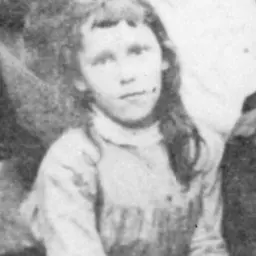
Margaret Edith (May) Tennant, CH (1869 – 11 July 1946), née Abraham, born in Rathgar, County Dublin, Ireland, was a civil servant, trade unionist, factory inspector, and campaigner, who worked to improve conditions for industrial workers and was also involved in women's health and education. She was one of the first people to be appointed to the Order of the Companions of Honour in 1917.
Early life May was born and raised in Rathgar, a neighbourhood in Dublin County. Her father, Dr. George W. Abraham, was a Dublin lawyer. He died in 1887, leaving the family impoverished but not without connections. With a letter of introduction to Lady Dilke, May left Rathgar and moved to London in search of employment.
Trade unionism In London she became secretary to Emilia, Lady Dilke, who was a leader of the Women's Trade Union League, an organisation of which Tennant became treasurer. She supported the London Dock Strike of 1889 and helped organise laundresses.
In 1891 she was appointed to the Royal Commission on Labour, set up to investigate the poor conditions faced by industrial workers, as one of four women assistant commissioners. She resigned in 1897 shortly before the birth of her first son, to devote herself to her family. She went on to have five children. Her eldest son, Henry, was killed in battle in 1917 during World War I.
Henry (b. 1898) John (b. 1900) Alison Margaret (b. 1904) Archibald (b. 1908)
Later work Despite her new family life, she did not give up her work entirely, remaining on the Committee on Dangerous Trades and in 1899 she became chairman of the Industrial Law Indemnity Fund, which provided compensation to victimised workers. She was on the Royal Commission on Divorce in 1909, and was a founder and treasurer of the Central Committee for Women's Employment.
During World War I, she took on more work: she worked initially for the War Office as welfare advisor, then briefly in the Women's Department of the National Service Department, before moving to the Ministry of Munitions. After the war, she reduced her workload, but still served on committees on maternal mortality and maternal health. She was also a governor of Bedford College in London, an institution founded for the education of women that was part of the University of London. From 1941 she was closely involved in campaigning for the Royal Air Force Benevolent Fund.
Private life She and her husband bought and rebuilt a country house, Great Maytham, at Rolvenden, Kent, a property whose old walled garden had earlier been the inspiration for The Secret Garden by Frances Hodgson Burnett. Tennant herself developed expertise as a gardener, becoming prominent in the Royal Horticultural Society. Her husband died in 1935 and she died at Great Maytham on 11 July 1946.
Don’t just read it —
keep it.
Full-length biographies made to live with: read them, listen on the way to work, watch them tonight.
- E-book
- Audio
- Video
Instant download · yours to keep · every purchase keeps this site free
Important facts
People in May Tennant's life
Named in this biography and alive at the same time


Related people
Same field, nearest in time




Contemporaries
People whose lives overlapped May Tennant's






Frequently asked questions
Who was May Tennant?
British civil servant
When was May Tennant born?
May Tennant was born in 1869.
When did May Tennant die?
May Tennant died in 1946.
What was May Tennant's occupation?
May Tennant was a factory inspector.
Sources & further reading
Cite this page
APA: Biography.guide. (2026). May Tennant. https://biography.guide/may-tennant/
MLA: "May Tennant." Biography.guide, https://biography.guide/may-tennant/.
Chicago: "May Tennant." Biography.guide. https://biography.guide/may-tennant/.
Data last updated: 2026-09-26 · Spot an error? Report a correction.
Page generated 2026-09-27 05:13 UTC