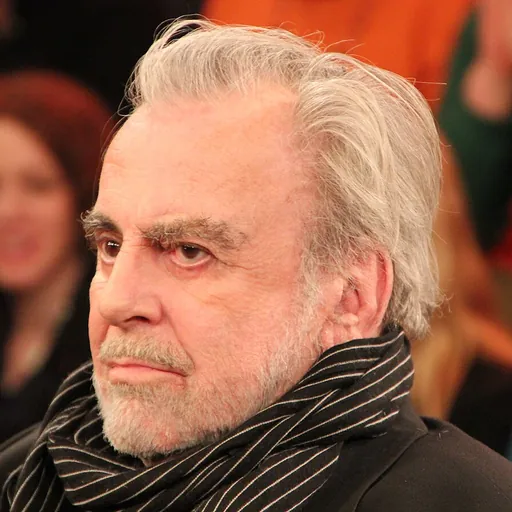
Maximilian Schell
Swiss and Austrian film and stage actor
About Maximilian Schell
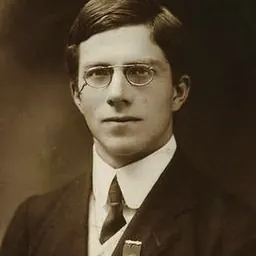
Lived 1930 – 2014 (aged 83). Maximilian Schell was a Swiss and Austrian film director, film producer, autobiographer, screenwriter, stage actor and film actor.
Maximilian Schell (8 December 1930 – 1 February 2014) was a Swiss actor, theatre director, filmmaker, and musician of Austrian origin. He was one of the most internationally acclaimed German-speaking actors of his generation, earning accolades for his work on both screen and stage. Born and initially raised in Vienna, where his parents were involved in the arts, he grew up surrounded by performance and literature. While he was still a child, his family fled to Switzerland in 1938 when Austria was annexed by Nazi Germany, and they settled in Zürich. After the Second World War, Schell took up acting and directing full-time.
Schell won the Academy Award for Best Actor for playing a lawyer in the legal drama Judgment at Nuremberg (1961). He was Oscar-nominated for playing a character with multiple identities in The Man in the Glass Booth (1975) and for playing a man resisting Nazism in Julia (1977). Fluent in both English and German, Schell earned top billing in a number of Nazi-era themed films. He acted in films such as Topkapi (1964), The Deadly Affair (1967), Counterpoint (1968), Simón Bolívar (1969), The Odessa File (1974), A Bridge Too Far (1977), and Deep Impact (1998). He made his film directorial debut with the period romantic drama First Love (1970), and would be nominated for the German Film Award for Best Director three times.
On television, he received two Primetime Emmy Award nominations for the NBC film Miss Rose White and the HBO television film Stalin (1992), the later of which earned him the Golden Globe Award for Best Supporting Actor – Series, Miniseries or Television Film. He also portrayed Otto Frank in the TV film The Diary of Anne Frank (1980), the Russian emperor Peter the Great in the NBC series Peter the Great (1986), Frederick the Great in the British series Young Catherine (1991), and Brother Jean le Maistre in the miniseries Joan of Arc (1999).
Schell also performed in a number of stage plays, including a celebrated performance as Prince Hamlet, and was a director of stage plays and operas. He was an accomplished pianist and conductor, performing with Claudio Abbado and Leonard Bernstein, and with orchestras in Berlin and Vienna. The Deutsches Filminstitut called him "a universal artist." Though later in his career he would play several Jewish characters, his parents were both Roman Catholic, and Schell stated he had no known Jewish ancestry. and Immaculata "Immy" Schell (1935–1992).
Schell's father was never enthusiastic about young Maximilian becoming an actor like his mother, feeling that it could not lead to "real happiness". However, Schell was surrounded by acting in his early youth:
quote|I grew up in a theatre atmosphere and took it for granted. I remember the theatre, as a child, the way most people remember their mother's cooking. Acting was all around me, and so was poetry. I made my debut in the theatre at the age of three, in Vienna ...
In Zürich, Schell "grew up reading the classics" and, when he was ten, wrote his first play.
Career 1955–1959: Early work and theater roles Schell's film debut was in the German anti-war film Kinder, Mütter und ein General (Children, Mothers, and a General, 1955). It was the story of five mothers who confronted a German general at the front line, after learning that their sons, some as young as 15, had been "slated to be cannon fodder on behalf of the Third Reich." The film co-starred Klaus Kinski as an officer, with Schell playing the part of an officer-deserter. The story, which according to one critic, "depicts the insanity of continuing to fight a war that is lost," would become a "trademark" for many of Schell's future roles: "Schell's sensitivity in his portrayal of a young deserter disillusioned with fighting became a trademark of his acting."
Schell subsequently acted in seven more films made in Europe before going to the U.S. Among those was The Plot to Assassinate Hitler (also 1955). Later in the same year he had a supporting role in Jackboot Mutiny, in which he plays "a sensitive philosopher", who uses ethics to privately debate the arguments for assassinating Hitler. He made his Hollywood debut in the World War II film, The Young Lions (1958), as the commanding German officer in another anti-war story, with Marlon Brando and Montgomery Clift. German film historian Robert C. Reimer writes that the film, directed by Edward Dmytryk, again drew on Schell's German characterisation to "portray young officers disillusioned with a war that no longer made sense." After winning the New York Film Critics award for his role, Schell recalled the pride he felt upon receiving a letter from his older sister Maria Schell, who was already an award-winning actress, "I received the most wonderful letter from Maria. She wrote, 'Now, when you have my letter in your hand, a beautiful day is coming for you. I will be with you, proud, because I knew such recognition would come one day, leading to something even greater and better ... not only because you are close to me but because I count you among the truly great actors, and it is wonderful that besides that you are my brother.' Maria and I are very close". Author Barry Monush describes the impact of Schell's acting, "Again, on the big screen, he was nothing short of electrifying as the counselor whose determination to place the blame for the Holocaust on anyone else but his clients, and brings morality into question".
Producer-director Stanley Kramer assembled a star-studded ensemble cast which included Spencer Tracy and Burt Lancaster. They "worked for nominal wages out of a desire to see the film made and for the opportunity to appear in it," notes film historian George McManus. Actor William Shatner remembers that, prior to the actual filming, "we understood the importance of the film we were making." It was nominated for eleven Academy Awards, winning two. In 2011, Schell appeared at a 50th anniversary tribute to the film and his Oscar win, held in Los Angeles at the Academy of Motion Picture Arts and Sciences, where he spoke about his career and the film.
Beginning in 1968 Schell began writing, producing, directing and acting in a number of his own films: Among those were The Castle (1968), a German film based on the novel by Franz Kafka, about a man trapped in a bureaucratic nightmare. Soon after he made Erste Liebe (First Love) (1970), based on a novel by Ivan Turgenev. The film was nominated for the Academy Award for Best Foreign Language Film.
Schell's next film, The Pedestrian (1974), is about a German tycoon "haunted by his Nazi past". In this film, notes one critic, "Schell probes the conscience and guilt in terms of the individual and of society, reaching to the universal heart of responsibility and moral inertia." It was nominated for the Best Foreign Language Film Oscar and was a "great and commercial success in Germany," notes Roger Ebert.
In a number of films Schell played the role of a Jewish character: as Otto Frank, Anne Frank's father, in The Diary of Anne Frank (1980); as the modern Zionist father in The Chosen (1981); in 1996, he played an Auschwitz survivor in Through Roses, a German film, written and directed by Jürgen Flimm; Schell, who at that period in his career saw himself primarily as a director, felt compelled to accept the part when it was offered to him:
quote|It's just that once in a long while a role comes along that I simply can't turn down. This was a role like that — how could I say no to it? Schell was nominated for the Academy Award for Best Actor and the Golden Globe Award for Best Actor for his performance. To avoid being typecast, Schell also played more diverse characters in numerous films throughout his career: he played a museum treasure thief in Topkapi (1964); the eponymous Venezuelan revolutionary in Simón Bolívar (1969); a 19th-century ship captain in Krakatoa, East of Java (1969); a Captain Nemo-esque scientist/starship commander in the science fiction film, The Black Hole (1979).
1980–2009: Career fluctuations
He took roles such as the Russian emperor in the television miniseries, Peter the Great (1986), opposite Laurence Olivier, Vanessa Redgrave, and Trevor Howard, which won an Emmy Award; a comedy role with Marlon Brando in The Freshman (1990); Reese Witherspoon's surrogate grandfather in A Far Off Place; a treacherous Cardinal in John Carpenter's Vampires (1998); as Frederick the Great in a TV film, Young Catherine (1991); as Vladimir Lenin in the TV series, Stalin (1992), for which he won the Golden Globe Award; a Russian KGB colonel in Candles in the Dark (1993); the Pharaoh in Abraham (1994); and Tea Leoni's father in the science fiction thriller, Deep Impact (1998).
From the 1990s until late in his career, Schell appeared in many German-language made-for-TV films, such as the 2003 film Alles Glück dieser Erde (All the Luck in the World) opposite Uschi Glas and in the television miniseries (2004), which was based on Henning Mankell's novel The Return of the Dancing Master. In 2006 he appeared in the stage play of Arthur Miller's Resurrection Blues, directed by Robert Altman, which played in London at the Old Vic. In 2007, he played the role of Albert Einstein on the German television series Giganten (Giants), which enacted the lives of people important in German history.
Schell also served as a writer, producer and director for a variety of films, including the documentary film Marlene (1984), with the participation of Marlene Dietrich. It was nominated for an Oscar, received the New York Film Critics Award and the German Film Award. Originally, Dietrich, then 83 years of age, had agreed to allow Schell to interview and film her in the privacy of her apartment. However, after he began filming, she changed her mind and refused to allow any actual video footage of her be shown. During a videotaped interview, Schell described the difficulties he had while making the film.
Schell creatively showed only silhouettes of her along with old film clips during their interview soundtrack.
Schell produced My Sister Maria in 2002, an intimate documentary about his sister, the noted actress Maria Schell. In the film, he chronicles her life, career and eventual diminished capacity due to illness. The film, made three years before her death, shows her mental and physical frailty, leading to her withdrawing from the world.
On other occasions, Schell worked with Italian conductor Claudio Abbado and the Berlin Philharmonic, which included a performance in Chicago of Igor Stravinsky's Oedipus Rex and another in Jerusalem of Arnold Schoenberg's A Survivor from Warsaw. 2002: Austrian Cross of Honour for Science and Art, 1st class
Personal life Marriages and relationships During the 1960s Schell had a three-year-long affair with Soraya Esfandiary-Bakhtiary, former second wife of Mohammad Reza Pahlavi, the last Shah of Iran. He also was rumored to have been engaged to the first African-American Supermodel Donyale Luna in the mid 1960s. In 1971 he had an affair with Neile Adams, according to her. In 1985, he met the Russian actress Natalya Andrejchenko, whom he married in June 1985; their daughter Nastassja was born in 1989.
In 2023, his niece Marie Theres Relin (daughter of Maria Schell), wrote in a book that she was abused and lost her virginity to an "uncle" in 1980, when she was 14. She later confirmed to the media that the uncle was Maximilian Schell. Shortly thereafter, Schell's daughter Nastassja said to the media that she had known about this, and that she herself had also been sexually abused by her father as a child.
Following Relin and Nastassja's accusations, the Deutsches Filminstitut, which had previously hosted a museum exhibition dedicted to the actor, disclaimed:
The DFF takes the current accusations against Maximilian Schell very seriously. They cast a different light on the person whose work the institution has been engaged with for years – including in a comprehensive special exhibition and publication, in various film programs and, not least, in the preservation of his artistic legacy. We reject any form of sexual and sexualized violence and express our solidarity with the victims. Separating the person of the artist from his or her work can in no way mitigate such allegations as are currently being made. In dealing with our collections and exhibitions, this means taking a respectful stance toward the individuals involved, while at the same time not engaging in censorship. It is also part of our institution’s responsibility to examine controversial aspects of the lives of famous people whose works have found a place in the cultural heritage of film. The German television news service Tagesschau reported that he had been receiving treatment for pneumonia. His funeral was attended by Waltraud Haas, Christian Wolff, Karl Spiehs, Lawrence David Foldes, Elisabeth Endriss, and Peter Kaiser. His grave is in Preitenegg/Carinthia (Austria).
Actor Jim Beaver, who studied under Schell at the University of Southern California, eulogized him as "one of the greatest actors of his generation, an astonishing performer of enormous power and breadth."
Filmography Film Year Title Role Notes 1955 Kinder, Mütter und ein General Deserteur 1955 The Plot to Assassinate Hitler Member of the Kreisau Circle 1955 Ripening Youth Jürgen Sengebusch 1956 The Girl from Flanders Alexander Haller 1956 The Marriage of Doctor Danwitz Dr. Oswald Hauser 1956 A Heart Returns Home Wolfgang Thomas 1957 The Last Ones Shall Be First Lorenz Darrandt 1958 The Young Lions Captain Hardenberg 1958 Josef Ospel 1961 Judgment at Nuremberg Hans Rolfe 1962 Five Finger Exercise Walter The Condemned of Altona Franz von Gerlach The Reluctant Saint Giuseppe 1964 Topkapi Walter Harper1965 Return from the Ashes Stanislaus Pilgrin The Doctor and the Devil1967 The Deadly Affair Dieter Frey The Desperate Ones Marek1968 Counterpoint General Schiller The Castle 'K.' Krakatoa, East of Java Captain Hanson 1969 Simón Bolívar Simón Bolívar 1970 Erste Liebe Father 1972 Michele Cantarini Pope Joan Adrian 1973 The Pedestrian Andreas Giese 1974 The Odessa File Eduard Roschmann The Rehearsal1975 The Man in the Glass Booth Arthur Goldman Der Richter und sein Henker Robert Schmied on Audiotape Voice; Uncredited role The Day That Shook the World Djuro Sarac 1976 St. Ives Dr. John Constable1977 Cross of Iron Hauptmann von Stransky A Bridge Too Far Wilhelm Bittrich Julia Johann 1979 Players Marco Geschichten aus dem Wienerwald Theatre Visitor Uncredited Avalanche Express Col. Nikolai Bunin Together? Giovanni The Black Hole Dr. Hans Reinhardt 1980 Arch of Triumph 1981 The Chosen Professor David Malter 1983 Fabrice 1984 Man Under Suspicion Lawyer Landau 1986 Laughter in the Dark 1988 An American Place Alfred Steiglitz 1989 The Rose Garden Aaron 1990 The Freshman Larry London1991 Labyrinth1993 A Far Off Place Colonel Mopani Theron Justice Isaak Kohler 1994 Little Odessa Arkady Shapira 1996 The Vampyre Wars Rodan 1997 Through Roses Carl Stern 1997 Telling Lies in America Dr. Istvan Jonas1998 The Eighteenth Angel Father Simeon Left Luggage Mr. Silberschmidt Vampires Cardinal Alba Deep Impact Jason Lerner 1999 Hochberg2000 I Love You, Baby Walter Ekland Just Messing About Poser 2001 Festival in Cannes Viktor Kovner 2006 The House of Sleeping Beauties Kogi 2008 The Brothers Bloom Diamond Dog 2009 Flores negras Jacob Krinsten 2015 Les brigands Mr. Escher Final film role; filmed in 2012
Television
TV series
TV films and miniseries Year Title Role Notes 1961 Hamlet Prince Hamlet 1968 Heidi Richard Sessemann 1980 The Diary of Anne Frank Otto Frank 1983 Sándor Korvin/The Phantom 1986 Peter the Great Peter the Great 1991 Young Catherine Frederick the Great 1992 Miss Rose White Mordecai Weiss 1992 Stalin Vladimir Lenin 1993 Candles in the Dark Colonel ArkushAlso director 1994 Abraham Pharaoh 1996 The Thorn Birds: The Missing Years Cardinal Vittorio 1999 Joan of Arc Brother Jean le Maistre 2003 Coast to Coast Casimir 2004 Fernando Hereira 2005 Die Liebe eines Priesters Pater Christoph 2006 The Shell Seekers Lawrence Sterne 2007 Karl Friedrich Weidemann
Partial stage credits A non-exhaustive list of Maximillian Schell's theatre credits, both as actor and director:
Awards and nominations Year Award Category Nominated work Result 1961 Academy Award Best Actor Judgment at Nuremberg BAFTA Award Best Actor in a Leading Role Golden Globe Award Best Actor - Motion Picture Drama New York Film Critics Circle Best Actor Laurel Award Top Male Dramatic Performance 1975 Academy Award Best Actor The Man in the Glass Booth Golden Globe Award Best Actor - Motion Picture Drama 1977 Academy Award Best Supporting ActorJulia Golden Globe Award Best Supporting Actor - Motion Picture Draa National Society of Film Critics Best Supporting Actor New York Film Critics Circle Best Supporting Actor 1992 Primetime Emmy Award Outstanding Lead Actor in a Miniseries or a Movie Miss Rose White 1992 Golden Globe Award Best Supporting Actor - Series, Miniseries or Television Film Stalin Primetime Emmy Award Outstanding Supporting Actor in a Miniseries or a Movie
Don’t just read it —
keep it.
Full-length biographies made to live with: read them, listen on the way to work, watch them tonight.
- E-book
- Audio
- Video
Instant download · yours to keep · every purchase keeps this site free
Important facts
Family & relationships
People in Maximilian Schell's life
Named in this biography and alive at the same time






Related people
Same field, nearest in time


Contemporaries
People whose lives overlapped Maximilian Schell's

Frequently asked questions
Who was Maximilian Schell?
Swiss and Austrian film and stage actor (1930–2014)
When was Maximilian Schell born?
Maximilian Schell was born on 8 December 1930 in Vienna.
When did Maximilian Schell die?
Maximilian Schell died on 1 February 2014 in Innsbruck.
What was Maximilian Schell's occupation?
Maximilian Schell was a film director, film producer, autobiographer, screenwriter, stage actor and film actor.
What nationality was Maximilian Schell?
Maximilian Schell was Swiss and Austrian.
Sources & further reading
· Wikipedia: Maximilian Schell
Cite this page
APA: Biography.guide. (2026). Maximilian Schell. https://biography.guide/maximilian-schell/
MLA: "Maximilian Schell." Biography.guide, https://biography.guide/maximilian-schell/.
Chicago: "Maximilian Schell." Biography.guide. https://biography.guide/maximilian-schell/.
Data last updated: 2026-09-20 · Spot an error? Report a correction.
Portrait: Wikimedia Commons · author & licence
Page generated 2026-09-27 04:57 UTC