
About Max Wilhelm Carl Weber
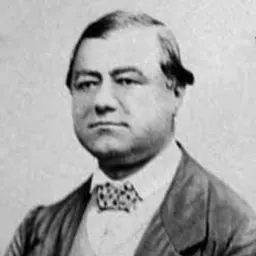
Lived 1852 – 1937 (aged 84). Max Wilhelm Carl Weber was a German and Dutch zoologist, ichthyologist, university teacher and scientific collector.
Max Carl Wilhelm Weber van Bosse or Max Wilhelm Carl Weber (5 December 1852 – 7 February 1937) was a German-Dutch zoologist and biogeographer.
Weber studied at the University of Bonn, then at the Humboldt University in Berlin with the zoologist Eduard Carl von Martens (1831–1904). He obtained his doctorate in 1877. Weber taught at the University of Utrecht then participated in an expedition to the Barents Sea. He became Professor of Zoology, Anatomy and Physiology at the University of Amsterdam in 1883. In the same year he received naturalised Dutch citizenship.
His discoveries as leader of the Siboga Expedition led him to conclude that Wallace's Line was placed too far to the west. His studies, along with others, led to a series of alternative lines to be proposed to delimit two major biogeographic realms, the Australasian realm and the Indomalayan realm. These lines were based on the fauna and flora in general, including the mammalian fauna. Later, Pelseneer published an influential paper on this topic, in which he proposed to call his preferred limit Weber's Line, to honour Weber's contributions in that field. As is the case with plant species, faunal surveys revealed that for mollusks and most vertebrate groups Wallace’s line was not the most significant biogeographic boundary. The Tanimbar Island group, and not the boundary between Bali and Lombok, appears to be the major interface between the Oriental and Australasian regions for mammals and other terrestrial vertebrate groups.
With G.A.F. Molengraaff, Weber gave names to the Sahul Shelf and the Sunda Shelf in 1919.
Weber became member of the Royal Netherlands Academy of Arts and Sciences in 1887.
Weber is commemorated in the scientific names of three species of reptiles: Anomochilus weberi, Hydrosaurus weberi, and Pachydactylus weberi. Two species of mammal are also named after him: Prosciurillus weberi and Myotis weberi.
Publications Weber, M. [W. C.] (ed.), 1890-1907. Zoologische Ergebnisse einer Reise in Niederländisch Ost-Indien, 1 (1890-1891): [i-v], i-xi, maps I-III, 1-460, pls. I-XXV; 2 (1892): [i-v], 1-571, pls. I-XXX; 3 (1894): [i-v], 1-476, pls. I-XXII; 4 (1897-1907): [i-v], 1-453, pls. I-XVI (E. J. Brill, Leiden) . Weber, M. [W. C.], 1902. Introduction et description de l'expedition, I. Siboga-expeditie . Weber, M. [W. C.], 1904b. Enkele resultaten der Siboga-expeditie. Versl. gewone Vergad. wis- en natuurk. Afd. K. Akad. Wet. Amsterdam, 12 (2): 910-914. Weber, M. [W. C.] & L. F. de Beaufort, 1911-1962. The fishes of the Indo-Australian Archipelago, I (1911). Index of the ichthyological papers of P. Bleeker: i-xi, 1-410, 1 portrait; II. (1913). Malacopterygii, Myctophoidea, Ostariophysi: I Siluroidea: i-xx, 1-404, 1 portrait; III. (1916) Ostariophysi: II Cyprinoidea, Apodes, Synbranchii]: i-xv, 1-455; IV. (1922) Heteromi, Solenichthyes, Synentognathi, Percesoces, Labyrinthici, Microcyprini]: i-xiii, 1-410
Gallery
Taxon described by him See :Category:Taxa named by Max Carl Wilhelm Weber
Taxon named in his honor The pipefish Cosmocampus maxweberi (Whitley, 1933) was named after him.
Abyssal plain named in his honor Weber Deep with a depth of 7,351 meters, (24,117 feet, 4.56 miles) in the Banda Sea.
Don’t just read it —
keep it.
Full-length biographies made to live with: read them, listen on the way to work, watch them tonight.
- E-book
- Audio
- Video
Instant download · yours to keep · every purchase keeps this site free
Important facts
People in Max Wilhelm Carl Weber's life
Named in this biography and alive at the same time



Related people
Same field, nearest in time




Contemporaries
People whose lives overlapped Max Wilhelm Carl Weber's


Frequently asked questions
Who was Max Wilhelm Carl Weber?
German-Dutch zoologist (1852–1937)
When was Max Wilhelm Carl Weber born?
Max Wilhelm Carl Weber was born on 5 December 1852 in Bonn.
When did Max Wilhelm Carl Weber die?
Max Wilhelm Carl Weber died on 7 February 1937 in Eerbeek.
What was Max Wilhelm Carl Weber's occupation?
Max Wilhelm Carl Weber was a zoologist, ichthyologist, university teacher and scientific collector.
What nationality was Max Wilhelm Carl Weber?
Max Wilhelm Carl Weber was German and Dutch.
Sources & further reading
· Wikipedia: Max Wilhelm Carl Weber
· DBpedia: Max Carl Wilhelm Weber
Cite this page
APA: Biography.guide. (2026). Max Wilhelm Carl Weber. https://biography.guide/max-wilhelm-carl-weber/
MLA: "Max Wilhelm Carl Weber." Biography.guide, https://biography.guide/max-wilhelm-carl-weber/.
Chicago: "Max Wilhelm Carl Weber." Biography.guide. https://biography.guide/max-wilhelm-carl-weber/.
Data last updated: 2026-09-20 · Spot an error? Report a correction.
Page generated 2026-09-27 05:20 UTC