
About Max van Berchem
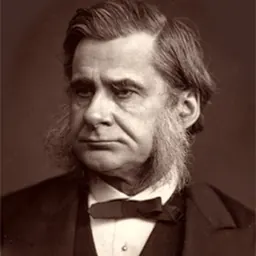
Lived 1863 – 1921 (aged 57). Max van Berchem was a Swiss orientalist, philologist, historian, art historian, epigrapher and academic.
Edmond Maximilien Berthout van Berchem (16 March 1863, Geneva – 7 March 1921, Vaumarcus) commonly known as Max van Berchem, was a Swiss philologist, epigraphist and historian. Best known as the founder of Arabic epigraphy in the Western world, he was the mastermind of the Corpus Inscriptionum Arabicarum, an international collaboration among eminent scholars to collect and publish Arabic inscriptions from the Middle East.
Life
Family background
Berchem originated from a dynasty of Flemish aristocrats in the former Duchy of Brabant whose roots are traced back to the 11th century. The only branch which survived until today is the one that converted to Protestantism and emigrated with the Anabaptist leader David Joris to Basel in 1544.
After changing their locations a number of times, those van Berchems settled in what is now Romandy, the French-speaking Western part of Switzerland, around 1764/65 and became citizens of the republic and canton of Geneva in 1816. like the Saladin and the Sarasin.
Max van Berchem's parents Alexandre (1836-1872), who inherited the Château de Crans from his maternal family side of Saladin, and Mathilde (née Sarasin,1838-1917), who inherited the Château des Bois in Satigny, were rentiers, who received an income from their assets and investments. The fact that they were both buried at the Cimetière des Rois ("Cemetery of Kings"), the city's "Panthéon" in Plainpalais, where the right to rest is strictly limited to distinguished personalities, illustrates the privileged status they enjoyed in Geneva's society. They were part of the patrician class which «turned to banking and philanthropic activities at the end of the 19th century, after losing control of the major public offices in Geneva.» Max was born in the Rue des Granges 12 of Geneva's Old Town as the second child of his parents after his brother Paul (1861-1947), who went on to become a pioneer physicist specialised in telegraphy, a member of the Grand Council of Vaud and military officer. In the following year, his brother Victor (1864-1938) was born, who went on to become a prominent historian and member of the Calvinist ecclesiastical court of the Protestant Church of Geneva. He also volunteered at the International Committee of the Red Cross (ICRC). Max and Victor had a particularly close relationship, which «was always like a summer without any clouds.» One of his teachers at Leipzig University, which was at that time a centre of oriental studies, was Heinrich Leberecht Fleischer (1801-1888), the founder of Arab studies in Germany who himself had studied under the mentorship of Silvestre de Sacy - the founder of Arab studies in the Western world - in Paris.
In April 1883, Max van Berchem moved to Strasbourg to study during the summer semester at the Kaiser-Wilhelm-University under the mentorship of Theodor Nöldeke (1836-1930), another eminent German orientalist and author of the standard work "The History of the Qur’ān". In the summer of that year, van Berchem returned to Switzerland to do a part of his military service.
In late 1883, Max van Berchem moved to Berlin to continue his studies at the Friedrich Wilhelm University, where he joined his brother Victor. His main academic inspiration there became Eduard Sachau (1845-1930), a professor for Semitic philology who - unlike some of his "armchair" colleagues - based his expertise also on travels in the Middle East. In the summer of the following year, van Berchem once again returned to Switzerland to do another part of his military service.
Sachau also became the supervisor of his doctoral thesis on land ownership and land tax under the rule of the first caliphate (La propriété territorial et l'impôt sous les premiers califes). In March 1986, at the age of just 23, he obtained his degree with maxima cum laude from Leipzig University.
In September 1886, Max van Berchem participated in the 7th Congress of Orientalists in Vienna with Édouard Naville. On 11 April 1892, Elisabeth gave birth to Marguerite Augusta.
In 1892, Max van Berchem laid out his plan to create a compendium of Arabic inscriptions in a letter to the French orientalist Charles Barbier de Meynard (1826-1908), who was a member of the Académie des Inscriptions et Belles-Lettres and president of the Société asiatique. He reasoned:«Islamic monuments are in a state of neglect, their ruins, though beautiful yet, will soon be no more than the shapeless remains of a glorious artistic past; the historical inscriptions they bear are vanishing. We must immediately catalogue all texts engraved on mosques, tombs, caravanserais, madrasas, fortified castles, and bridges, we must photograph monuments, explore all Muslim regions, study all of the many objects that sit in museums and private collections, and systematically publish these texts so as to make them into a living commentary of Islamic institutions.»At the end of the same year, he undertook his third journey to Egypt. This time he was accompanied by his wife Elisabeth, who acquired basic Arabic language skills by taking lessons from Ali Baghat. Their stay was altogether more touristic in nature though. After some three months in Cairo they departed in early March 1893 to Jerusalem, where they stayed for three weeks, before travelling via Beirut to Damascus, which Max on that occasion found more interesting than Cairo in terms of unpublished inscriptions. Accordingly, he started documenting as many of them as possible.
Shortly after their return to Switzerland, on 31 May 1893, Victor van Berchem married Isabelle Blanche Naville, a daughter of Édouard Naville. Just two days later, "tragically",
Following this heavy stroke of fate, Max van Berchem travelled to Paris in the autumn of 1893, where he discussed his plans to publish the collected inscriptions with Barbier de Meynard, the Egyptologist Gaston Maspero (1846-1916), and the archaeologist Charles Simon Clermont-Ganneau (1846-1923) at the Académie des Inscriptions et Belles Lettres.
In the beginning of April 1894, van Berchem travelled via Alexandria, Beirut and Hauran, where he was joined by two German diplomats with a shared interest in epigraphy, to Damascus. After about one month of collecting inscriptions there, he spent the next month in Jerusalem for the same purpose, followed by a tour through Southern Palestine, including Beit Jibrin, Gaza, Ramla, and Hebron.
Upon his return to Geneva, van Berchem joined the organising committee of the 10th Congress of Orientalists which was held in his hometown during the first half of September 1894 and chaired by Édouard Naville, the father-in-law of his brother Victor. Apart from Naville and van Berchem, Geneva was also home to two other eminent Orientalists: Ferdinand de Saussure, an expert for the Indo-Iranian languages, and the sinologist François Turrettini. The conference was attended by a large number of scholars.
Still in the same year, he published the first volume of the Matériaux pour un Corpus Inscriptionum Arabicarum, which dealt with inscriptions from Cairo. who originated from another Patrician family in Geneva and was - like Victor van Berchem - married to a daughter of Édouard Naville. The journey was focused on rural Syria, which was difficult to access and featured relatively few inscriptions. The tour led them from Beirut via Tripoli to Homs, Hama, Aleppo, Antiochia, Latakia, and back. It was to be his last trip to the region for almost twenty years.
Following his return to Europe, Max van Berchem spent the autumn of 1895 in Paris. During an extended stay there, which lasted until the beginning of 1896, he prepared several study papers and networked with other orientalists. Still in 1896, he published the second volume of the Corpus from the series dealing with inscription from Cairo. who was a remote cousin of Édouard Naville and thus a remote relative of Max as well. and her mother a scioness of another prominent family, best known for their theologians: the Turrettini. demonstrate that «van Berchem was an exceptional human being with a positive genius for friendship.» The only trip that Max van Berchem did outside of Europe during those years was a journey to Algiers where he attended the 14th Congress of Orientalists in 1905. The Maghreb, however, was not a priority for his studies, since its inscriptions were already being published by French scholars.
It was only in 1913 that van Berchem returned to the Middle East, this time travelling with his wife to Anatolia, where they met for the first time Max' friend and collaborator Halil Edhem, the general director of the Istanbul Museum.
In early 1915, van Berchem was offered a professorship by the University of Lausanne to replace the late epigraphist Jean Spiro (1847-1914), but he declined.
In early 1919, van Berchem was hospitalised and had surgery for unknown reasons.
In late 1920, van Berchem travelled to Egypt to supervise the printing of the Corpus for Jerusalem. When van Berchem fell ill in Cairo, he hastily returned to Switzerland and was hospitalised in the clinic "Vers la Rive" in Vaumarcus at Lake Neuchâtel. There he died nine days before his 58th birthday, almost exactly four years after the death of his mother. His death certificate recorded pneumonia as the immediate cause of his death. It also noted that van Berchem had "no occupation" (sans profession). The inscription on his gravestone, a white obelisk, quotes 2 Corinthians 5:17: «TOUTES CHOSES SERONT FAITES NOUVELLES» ("all things will have become new")
Legacy Dedication in the book "Mosaïques chrétiennes du IVme au Xme siècle" Still in 1921, van Berchem's widow Alice donated a part of his collection of artefacts to Geneva's Musée d’art et d’histoire (MAH).
Van Berchem's work was partly continued by his oldest daughter Marguerite (1892 – 1984) who also played a prominent role in the ICRC since the First World War. Following what was apparently her father's wish, she focused her interest on mosaics. Based on study trips, especially to Italy, she published in 1924 a book about Christian mosaics from the 4th to 10th centuries with drawings by her younger half-sister Marcelle and in collaboration with the archivist and palaeographer Étienne Clouzot (1881–1944).
In the second half of the 1920s, the architectural historian Keppel Archibald Cameron Creswell entrusted her with the study of the mosaics of the Dome of the Rock in Jerusalem and of the Great Mosque of Damascus. As an Inspector of Monuments in the Occupied Enemy Territory Administration (OETA) – the joint British, French and Arab military administration over parts of the Levant and Mesopotamia (1917–1920) – he had entertained friendly relations with Max van Berchem, whom he admired. In later years, she particularly focused on exploring the ruins of Sedrata in the Algerian Sahara.
In 1973, Gautier-van Berchem, who married the banker Bernard Gautier in 1966, donated the Villa Saladin-van Berchem to the Swiss Confederation. Max van Berchem had inherited the estate with its surrounding park after the death of his mother in 1917, while the Château de Crans went to his older brother Paul and the Château des Bois to his younger brother Victor.
In the same year, 1973, upon the initiative of Gautier-van Berchem, the Fondation Max van Berchem was established. It kept the ownership of the archives but in 1987 deposited its main part on the premises of the Foundation in the Champel quarter of Geneva, with the exception of van Berchem's correspondences and the Etienne Combe papers. As of 2021, the Foundation's Board is made up of four members of the van Berchem and Gautier families. The president of the foundation's scientific committee – Max van Berchem's biographer Charles Genequand – is a member as well. The scientific committee, which was created in 1985, advises the board on project proposals. It consists of ten international experts, including one family member.
On the occasion of the 100th anniversary of Max van Berchem's death, the MAH honoured him in cooperation with his namesake foundation and the Bibliothèque de Genève from 16 April until 6 June 2021 by hosting the exposition«The adventure of Arabic epigraphy».
Associated works Matériaux pour un Corpus inscriptionum Arabicarum (1894-1925).
Alt:
Inscriptions arabes de Syrie, 1897 – Arab inscriptions of Syria. Epigraphie des Assassins de Syrie, 1897 – Epigraphy of the Assassins of Syria. Materialien zur älteren geschichte Armeniens und Mesopotamiens, (with Carl Ferdinand Friedrich Lehmann-Haupt), 1906 – Materials pertaining to the ancient history of the Armenians and Mesopotamians. Amida: Matériaux pour l'épigraphie et l'histoire musulmanes du Diyar-bekr, 1910 – Amida, material pertaining to the epigraphy and Islamic history of Diyarbakır. Voyage en Syrie, 1913 – Voyage to Syria. "Opera minora". La Correspondance entre Max Van Berchem et Louis Massignon: 1907-1919 – Correspondence with Louis Massignon, 1907–1919. Max van Berchem, 1863–1921: Hommages rendus à sa mémoire, by Alice van Berchem (1923). La Jérusalem musulmane dans l'œuvre de Max van Berchem by Marguerite Gautier-van Berchem, (1978). "Muslim Jerusalem in the work of Max van Berchem", by Marguerite Gautier-van Berchem (1982). "Corpus Inscriptionum Arabicarum Palaestinae addendum squeezes in the Max van Berchem collection (Palestine, Trans-Jordan, Northern Syria): squeezes 1-84", (2007).
Don’t just read it —
keep it.
Full-length biographies made to live with: read them, listen on the way to work, watch them tonight.
- E-book
- Audio
- Video
Instant download · yours to keep · every purchase keeps this site free
Important facts
People in Max van Berchem's life
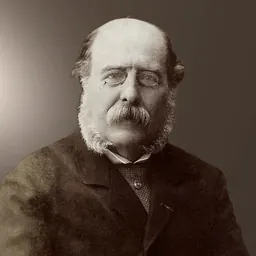
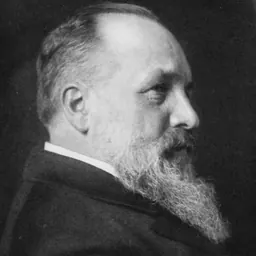
Named in this biography and alive at the same time





Related people
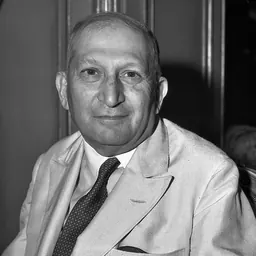
Same field, nearest in time
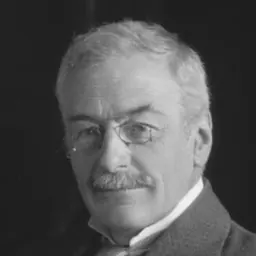
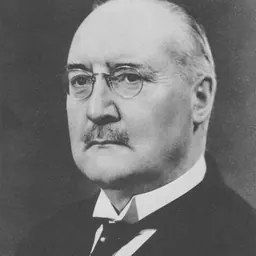
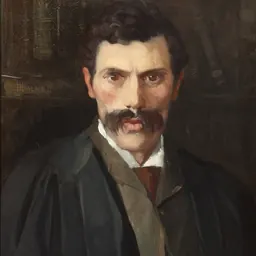
Contemporaries
People whose lives overlapped Max van Berchem's

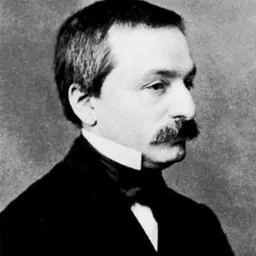


Frequently asked questions
Who was Max van Berchem?
Swiss epigraphist (1863-1921)
When was Max van Berchem born?
Max van Berchem was born on 16 March 1863 in Geneva.
When did Max van Berchem die?
Max van Berchem died on 7 March 1921 in Vaumarcus.
What was Max van Berchem's occupation?
Max van Berchem was an orientalist, philologist, historian, art historian, epigrapher and academic.
What nationality was Max van Berchem?
Max van Berchem was Swiss.
Sources & further reading
Cite this page
APA: Biography.guide. (2026). Max van Berchem. https://biography.guide/max-van-berchem/
MLA: "Max van Berchem." Biography.guide, https://biography.guide/max-van-berchem/.
Chicago: "Max van Berchem." Biography.guide. https://biography.guide/max-van-berchem/.
Data last updated: 2026-09-20 · Spot an error? Report a correction.
Page generated 2026-09-27 05:27 UTC