
About Max Meldrum
Lived 1875 – 1955 (aged 79). Max Meldrum was an Australian painter.
Duncan Max Meldrum (3 December 1875 – 6 June 1955) was a Scottish-born Australian artist and art teacher, best known as the founder of Australian tonalism, a representational painting style that became popular in Melbourne during the interwar period. He also won fame for his portrait work, winning the prestigious Archibald Prize for portraiture in 1939 and 1940.
Early life Max Meldrum was born in 1875 in Edinburgh, Scotland. His father, Edward Meldrum, was an analytical chemist and his mother, Christina Meldrum (née Macglashan), a schoolteacher. Products of the Scottish enlightenment, both parents fervently embraced scientific progress and empiricism. His mother was said to be particularly zealous in her beliefs in scientific progress, having “inverted Calvinism into an equally fierce agnosticism…[her] eyes would gleam with holy fire while she would orate upon her favorite scheme of filling the churches with scientific instruments and the cathedrals with mighty telescopes.” Edward, who was friends with many of the city’s painters, introduced Max to art from an early age - he and his father spent many a day touring the city’s well-regarded art galleries when Max was a young boy.
Learning the painting trade Max entered the National Gallery Art School in 1892, the very same year that Lindsay Bernard Hall, a staunchly conservative English-born artist and teacher, began his long tenure as the school’s director. Bernand Hall took a classical approach to teaching; before a student could even pick up a brush they had to first master charcoal drawing to a level that their work could be included in the school's annual exhibition. He believed painting should “proceed from breadth to detail, from general to particular truths, but always to see them in their order of importance; that is, to draw.” In addition to classes at the National Gallery, Meldrum also studied under George Coates. Coates' classes, held at the North Melbourne Trades Hall, became a gathering point for Melbourne’s bohemian scene and were attended by artists such as Lional and Percy Lindsey, as well as George Bell. Upon winning, Meldrum is said to have slashed his entry to pieces, exclaiming he “would never again put an insincere brush to canvas.”
Max chose Paris as his destination for the travelling scholarship.
Despite his dedication to study – classes occupied both his days and his nights – Meldrum quickly became disillusioned with the quality of the training. In a letter to a friend dated June 1900, he compares the painting instruction he received in Melbourne favorably to that in Paris and hints at pursuing a more self-directed approach to his study. By mid-1901, he was living with his uncle in Edinburgh where he continued work on his study of the nude. By the end of that year he had shipped his completed work to the scholarship’s trustees in Melbourne.
Meldrum had returned to Paris by 1902 to attend the Louvre to work on his copy of Paolo Veronese’s The Flight of Loth (AKA Flight from Sodom). While he again took up places at the academies, it was more for want of a place to work, later remarking that he “took little interest” in their teaching.
Career
He ran the Meldrum School of Painting there between 1916 and 1926. Among his students were Clarice Beckett, Colin Colahan, Auguste Cornels, Percy Leason, John Farmer, Polly Hurry, Justus Jorgensen, Arnold Shore and Gray Smith, and had considerable influence on the work of his friend Alexander Colquhoun, whose son Archibald was also a Meldrum student at that time. In 1916–17 he was elected president of the Victorian Artists' Society, but was dropped from the position amidst controversy the following year, inspiring his students to form a breakaway group, the Twenty Melbourne Painters Society, which remains active in the Melbourne arts scene to this day. Drawing on Meldrum's principles, the group released a statement describing their central tenet:
Meldrum influenced the young Albert Ernest Newbury.
On modern art
Despite his leadership of a group, the Australian tonalists, which has lately come to be regarded as a precursor to minimalism, Meldrum's attitude to modern art was reactionary; in 1937 he described it as 'savagery', 'crude and vile' and 'likely to debase the taste of our children', condemning one example as 'an explosion in a sawmill'.
On women artists Though women were amongst his followers, with one, Clarice Beckett, whom he held in high regard, Meldrum in criticizing Nora Heysen's winning the 1938 Archibald Prize, proclaimed:
Personal life While living in France, he married Jeanne Eugenie Nitsch, a singer with the Opéra-Comique. Meldrum and his wife returned to Australia firstly in 1912 and by 1915 he had received official portrait commissions and established his teaching practice. In April 1926 he returned with his wife and two daughters for another extended period of residence in France, spending time in Paris and Rennes. Meldrum also undertook a successful lecture tour of North America in 1928. Meldrum and his family returned permanently to Melbourne on board the cargo liner in 1931.
Death Meldrum died on 6 June 1955 in Kew, Victoria, aged 79.
Exhibitions 1943, from 1 December; Inclusion in a group show of ninety-one paintings and etchings with Arnold Shore, Allan Jordan, John Rowell, Jas. Quinn, John Farmer, Mary Hurry, Dora Serle, Margaret Pestell, Dora Wilson, Isabel Tweddle, Aileen Dent, Murray Griffin, Geo. Colville, and Victor Cog. Hawthorn Library.
Don’t just read it —
keep it.
Full-length biographies made to live with: read them, listen on the way to work, watch them tonight.
- E-book
- Audio
- Video
Instant download · yours to keep · every purchase keeps this site free
Important facts
People in Max Meldrum's life
Named in this biography and alive at the same time


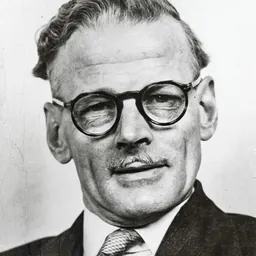
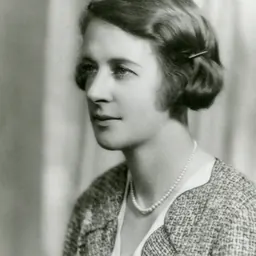
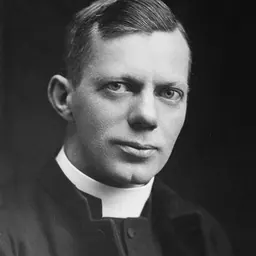

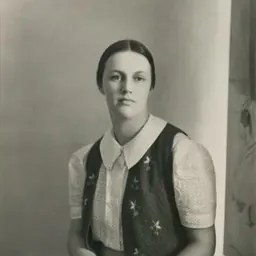

Related people
Same field, nearest in time

Contemporaries
People whose lives overlapped Max Meldrum's
Frequently asked questions
Who was Max Meldrum?
Australian painter (1875-1955)
When was Max Meldrum born?
Max Meldrum was born on 3 December 1875 in Edinburgh.
When did Max Meldrum die?
Max Meldrum died on 6 June 1955 in Kew.
What was Max Meldrum's occupation?
Max Meldrum was a painter.
What nationality was Max Meldrum?
Max Meldrum was Australian.
Sources & further reading
Cite this page
APA: Biography.guide. (2026). Max Meldrum. https://biography.guide/max-meldrum/
MLA: "Max Meldrum." Biography.guide, https://biography.guide/max-meldrum/.
Chicago: "Max Meldrum." Biography.guide. https://biography.guide/max-meldrum/.
Data last updated: 2026-09-20 · Spot an error? Report a correction.
Page generated 2026-09-27 05:30 UTC