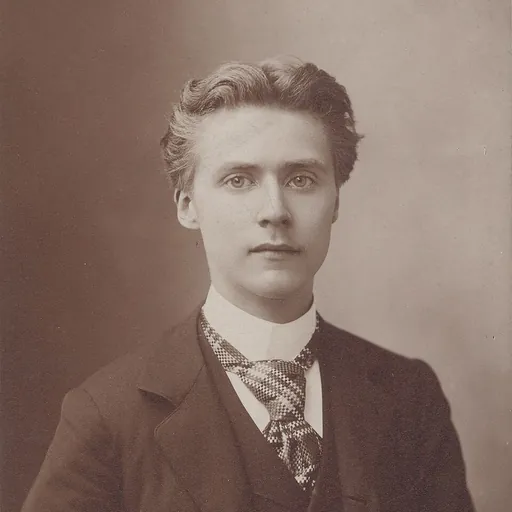
About Max d'Ollone
Lived 1875 – 1959 (aged 83). Max d'Ollone was a French composer, choreographer, music educator and librettist.
Maximilien-Paul-Marie-Félix d'Ollone (13 June 1875 – 15 May 1959) was a 20th-century French composer.
Life and career Born in Besançon, d'Ollone started composing very early, entering the Paris Conservatoire at 6, winning many prizes, receiving the encouragement of Gounod, Saint-Saëns, Massenet, Thomas and Delibes. His teachers at the Conservatoire were Lavignac, Massenet, Gédalge and Lenepveu; he won the Prix de Rome in 1897.
He was director of music in Angers, professor at the Paris Conservatoire and director of the Opéra-Comique. His work was part of the music event in the art competition at the 1912 Summer Olympics. In 1932 he wrote three important articles for Le Ménestrel (29 July, 9 and 16 December) arguing for a more populist approach to composition.
At the time of the German occupation of France during World War II, d'Ollone was a member of the Groupe Collaboration.
In addition to the works listed below, d'Ollone produced a number of song cycles (including "Les Chants d'Ailleurs"; " Les Chants d'Exil"; "Impressions d'Automne"), which demonstrate a considerable mastery of the French mélodie. There are several works for orchestra, solo instrument and orchestra, and piano works.
Works
Stage works Jean (opera in five acts, 1900–1905). Bacchus et Silène (ballet, 1901, Béziers). Le Retour (drame lyrique in two acts to his own libretto, 1911, Angers). Les Amants de Rimini (opera in four acts to his own libretto). L'Étrangère (opera in two acts, 1913). Les Uns et les Autres (comédie lyrique in one act with text by Paul Verlaine, 6 November 1922, Opéra-Comique). L'Arlequin (comédie lyrique in five acts, 22 December 1924, Paris Opera). George Dandin (opéra comique in three acts after Molière, 1930). Le Temple abandonné (one-act ballet, 1931, Monte Carlo). La Samaritaine (opera in three acts after Rostand, 1937, Paris). Sous les Saules (musical comedy in four acts after Andersen, 1950). Olympe de Clèves (opera in four acts after Dumas, unpublished).
Orchestral Les villes maudites, symphonic poem (1895). Lamento (1908). Au cimetière, Symphonic Poem (1908). Le Roi des Aulnes, Film score (1930).
Concertante Fantaisie for piano and orchestra in E-flat major (1897) Le menetrier, poem for violin and orchestra (published by Heugel, 1911) Fantaisie orientale, for clarinet and orchestra (reduction published by Leduc, ca.2010)
Voice and Orchestra Daphné (cantata composed for the Prix de Rome (1894). Frédégonde, Lyrical Scene after Charles Morel (1894). Melusine, Lyrical Scene after Beissier (1894). Clarissa Harlowe, Cantata (1895). La Vision de Dante (Lyrical Poem for soloists, choir and orchestra (1899). Saint François d'Assise, Oratorio (1910) Elévation (1912). Hymne du matin, for soprano et orchestra after Lamartine (1943).
Chamber music String Quartet in D major (1898) Piano Quartet in E minor Fantaisie orientale for clarinet and piano Piano Trio in A minor (published 1921) Andante et Allegro en style ancien for flute and piano (dedicated to Philippe Gaubert, published 1926)
Vocal music Frédégonde, winning cantata for the Prix de Rome in 1897
Recordings Le temple abandonné (2023); William and Mary Symphony Orchestra, 2023. Les villes maudites (2023); William and Mary Symphony Orchestra, 2023. Les funérailles du poète (2023); William and Mary Symphony Orchestra, 2023. Fantaisie, for piano (2023); Daniel Inamorato, piano; William and Mary Symphony Orchestra, 2023. Cantates et chœurs pour le prix de Rome; Brussels Philharmonic, Flemish Radio Choir, Hervé Niquet; Palazzetto Bru Zane; Ediciones Singulares, 2013. Les Villes Maudites, for orchestra; Brussels Philharmonic, Flemish Radio Choir, Hervé Niquet; Palazetto Bru Zane; Ediciones Singulares, 2013. Le Ménétrier, for violin and orchestra (1910); Mark Kaplan, Orchestra Simfonica de Barcelona i National de Catalunya, Lawrence Foster, Claves 2003. Lamento, for orchestra (1908); Orchestra Simfonica de Barcelona i National de Catalunya, Lawrence Foster, Claves 2003. Fantaisie for piano and orchestra (1999); François-Joël Thiollier, Orchestra Simfonica de Barcelona i National de Catalunya, Lawrence Foster, Claves 2003. La Samaritaine, opera (1937); Berthe Monmart, soprano; Tony Aubin, direction; Orchestre Lyrique de la Radio Diffusion Française et des Choeurs de la RTF, 1955, INA. Le Retour, opera (1912); Alain Pâris, direction; Choeur et orchestre Lyrique de Radio France, 1975. Mélodies vol. 1, including the cycle In Memoriam, Didier Henry, baryton, Patrice d'Ollone, piano, Maguelone. Mélodies Vol. 2, Elsa Maurus, mezzo-soprano; Didier Henry, baryton; Patrice d'Ollone, piano; Maguelone. Trio for piano, violin and cello (1920); Quatuor Athenæum Enesco and Patrice d'Ollone, piano; éd. disques Pierre Verany, Arion, 1999. Quartet for piano and strings (1949); Quatuor Athenæum Enesco and Patrice d'Ollone, piano; Discs Pierre Verany, Arion, 1999. String quartet (1898); Athenæum Enesco Quartet; Disques Pierre Verany, Arion, 1999. Trio for piano, violin and cello (1920); Trio Anima Mundi, Melbourne. Trio pour piano, violin and cello (1920); Dimitris Saroglou, piano; Gérard Poulet, violin; Dominique de Williencourt, cello; Europe et Art, 2011. Chamber music; Alessandro Carbonare, clarinet; Philippe Pierlot, flute; Régis Poulain, bassoon; Elisabeth Glab, violin; Jean-Luc Bourré, Emmanuel Petit, Emma Savouret, Stéphane Manent, cello; Isabelle Perrin, harp; Parisii Quartet; Patrice d'Ollone, piano; Angéline Pondepeyre, piano; Maguelone, 2005. Fantaisie orientale (1913); Sylvie Hue, clarinet; Roger Boutry, piano, REM. Andante et scherzo, for three cellos (1933); Gürzenich Cello Trio, Westdeutscher Rundfunk, Köln, ANA records. Andante et scherzo, for three cellos (1933); Members of Orchestra Simfonica de Barcelona i National de Catalunya, Claves 2003. Romance et tarentelle (1928); Régis Poulain, bassoon; and Angeline Pondepeyre, piano; Maguelone, 1996. Etudes de concert (1904); Dimitris Saroglou, piano; Europe et Art, 2011.
Don’t just read it —
keep it.
Full-length biographies made to live with: read them, listen on the way to work, watch them tonight.
- E-book
- Audio
- Video
Instant download · yours to keep · every purchase keeps this site free
Important facts
People in Max d'Ollone's life
Named in this biography and alive at the same time






Related people
Same field, nearest in time




Contemporaries
People whose lives overlapped Max d'Ollone's

Frequently asked questions
Who was Max d'Ollone?
French composer (1875–1959)
When was Max d'Ollone born?
Max d'Ollone was born on 13 June 1875 in Besançon.
When did Max d'Ollone die?
Max d'Ollone died on 15 May 1959 in Paris.
What was Max d'Ollone's occupation?
Max d'Ollone was a composer, choreographer, music educator and librettist.
What nationality was Max d'Ollone?
Max d'Ollone was French.
Sources & further reading
Cite this page
APA: Biography.guide. (2026). Max d'Ollone. https://biography.guide/max-d-ollone/
MLA: "Max d'Ollone." Biography.guide, https://biography.guide/max-d-ollone/.
Chicago: "Max d'Ollone." Biography.guide. https://biography.guide/max-d-ollone/.
Data last updated: 2026-09-21 · Spot an error? Report a correction.
Portrait: Wikimedia Commons · author & licence
Page generated 2026-09-27 05:01 UTC