
About Max Blecher
Lived 1909 – 1938 (aged 28). Max Blecher was a Romanian poet, novelist and writer.
Max Blecher (8 September 1909 – 31 May 1938) was a Romanian writer.9
Life and work Max Blecher's father was a successful Jewish merchant and the owner of a porcelain shop. Blecher attended primary and secondary school in Roman. After graduating from the Roman-Vodă High School and receiving his baccalaureat, Blecher left for Paris to study medicine. Shortly thereafter, in 1928, he was diagnosed with spinal tuberculosis (Pott's disease) and forced to abandon his studies. He sought treatment at various sanatoriums: Berck-sur-Mer in France, Leysin in Switzerland, and Tekirghiol in Romania. For the remaining ten years of his life, he was confined to his bed and practically immobilized by the disease. Despite his illness, he wrote and published his first piece in 1930, a short story called "Herrant" in Tudor Arghezi's literary magazine Bilete de papagal. He contributed to André Breton's literary review Le Surréalisme au service de la révolution and carried on an intense correspondence with the foremost writers and philosophers of his day such as André Breton, André Gide, Martin Heidegger, Ilarie Voronca, Geo Bogza, Mihail Sebastian, and Sașa Pană. In 1934 he published Corp transparent, a volume of poetry.
In 1935, Blecher's parents moved him to a house on the outskirts of Roman, Neamț county where he continued to write until his death in 1938 at the age of 28. During his lifetime he published two other major works, Întâmplări în irealitate imediată (Adventures in Immediate Irreality) and Inimi cicatrizate (Scarred Hearts), as well as a number of short prose pieces, articles and translations. Vizuina luminată: Jurnal de sanatoriu (The Lit-Up Burrow: Sanatorium Journal) was published posthumously in part in 1947 and in full in 1971.
Major works Corp transparent (Transparent Body) Întâmplări din irealitatea imediată (Adventures in Immediate Unreality) Inimi cicatrizate (Scarred Hearts) Vizuina luminată: Jurnal de sanatoriu (The Lit-Up Burrow: Sanatorium Journal)
Translations Max Blecher's books have been translated into English, Esperanto, Estonian, French, German, Spanish, Turkish, Czech, Portuguese, Hungarian, Dutch, Danish, Swedish, Italian, Polish, Catalan and Greek. The German translation of Inimi cicatrizate, Vernarbte Herzen in German, was number one on Die Zeit s list of Notable Books.
English translations Adventures in Immediate Unreality, Jeanie Han (trans.) (2007) A free download of the translation is available at maxblecher.wordpress.com or at https://archive.org/details/AdventuresInImmediateUnreality Occurrence in the Immediate Unreality, Alistair Ian Blyth (trans.), University of Plymouth Press (2009) Scarred Hearts, Henry Howard (trans.) London: Old Street Publishing (2008) Adventures in Immediate Irreality, newly translated into English by Michael Henry Heim. New Directions, February, 2015. Something is still present and isn't, of what's gone. A bilingual anthology of avant-garde and avant-garde inspired Rumanian poetry, Victor Pambuccian (trans.) Rome: Aracne editrice (2018) The Illuminated Burrow: A Sanatorium Journal, Gabi Reigh (trans.), introduction by Gabriela Glăvan, artwork by the author, Twisted Spoon Press (2022). The Lighted Burrow - A Sanatorium Journal, Christina Tudor-Sideri (trans.) Sublunary Editions (2022)
Notable translations in other languages Accadimenti nell'irrealtà immediata, Bruno Mazzoni (trans.), Rovereto: Keller editore (2012) Aus der unmittelbaren Unwirklichkeit, Ernest Wichner (trans.), Frankfurt: Suhrkamp Verlag (2003) Aventures dans l'irréalité immédiate, Marianne Sora (trans.), Paris: Editions Denoel (1972) Vernarbte Herzen, Ernest Wichner (trans.), Frankfurt: Suhrkamp Verlag (2006) Acontecimientos de la Irrealidad Inmediata; la Guarida Iluminada: Diario de Sanatorio, Joaquín Garrigós (trans.), Valencia: Aletheia (2007) Cuerpo transparente, Joaquín Garrigós (trans.), Barcelona: Rosa Cúbica (2008) Corazones cicatrizados, Joaquín Garrigós (trans.), Valencia: Pre-Textos (2009) Corpo transparente/Corp transparent, Fernando Klabin (trans.), (n.t.) Revista Literária em Tradução, nº 1 (set/2010), Fpolis/Brasil, ISSN 2177-5141 Cœurs cicatrisés, Gabrielle Danoux (trans.), Kingersheim (2014), Corps transparent, Gabrielle Danoux (trans.), Kingersheim (2017) Corpi cicatrizzati, Bruno Mazzoni (trans.), Keller editore, Rovereto, (novembre 2017), Verkaro (preskaŭ) kompleta, Tomasz Chmielik, Ionel Oneţ (trans.), Ars Libri, Lublin (2018). . The most complete volume in any language other than Romanian. Händelser ur den omedelbara overkligheten, Inger Johansson (trans.), h:ström Text & kultur, Umeå (2010). Upplyst gryt, Inger Johansson (trans.), h:ström Text & kultur, Umeå (2021). Esdeveniments en la irrealitat immediata, Jana Balacciu Matei (trans.), Martorell: Adesiara Editorial (2025) .
Don’t just read it —
keep it.
Full-length biographies made to live with: read them, listen on the way to work, watch them tonight.
- E-book
- Audio
- Video
Instant download · yours to keep · every purchase keeps this site free
Important facts
People in Max Blecher's life
Named in this biography and alive at the same time

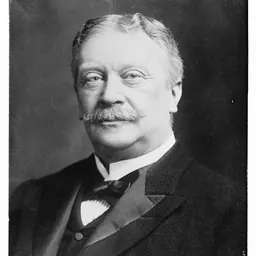

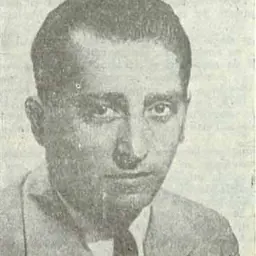
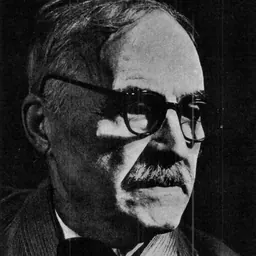
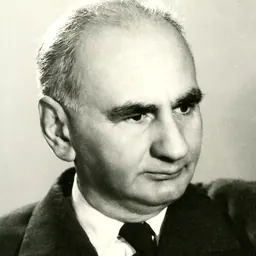
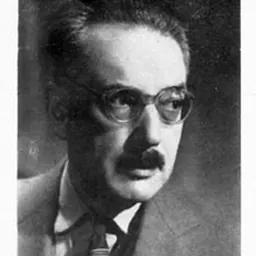
Related people
Same field, nearest in time

Contemporaries
People whose lives overlapped Max Blecher's



Frequently asked questions
Who was Max Blecher?
Romanian writer (1909-1938)
When was Max Blecher born?
Max Blecher was born on 8 September 1909 in Botoșani.
When did Max Blecher die?
Max Blecher died on 31 May 1938 in Roman.
What was Max Blecher's occupation?
Max Blecher was a poet, novelist and writer.
What nationality was Max Blecher?
Max Blecher was Romanian.
Sources & further reading
Cite this page
APA: Biography.guide. (2026). Max Blecher. https://biography.guide/max-blecher/
MLA: "Max Blecher." Biography.guide, https://biography.guide/max-blecher/.
Chicago: "Max Blecher." Biography.guide. https://biography.guide/max-blecher/.
Data last updated: 2026-09-20 · Spot an error? Report a correction.
Page generated 2026-09-27 05:11 UTC