
About Maurice Yvain
Lived 1891 – 1965 (aged 74). Maurice Yvain was a French composer.
Maurice Yvain (12 February 1891 – 27 July 1965) was a French composer noted for his operettas of the 1920s and 1930s. Some of which were written for Mistinguett, at one time the best-paid female entertainer in the world. In the 1930s and 1940s, he became a major success in the United States and several of his pieces appeared in the famous Ziegfeld Follies on Broadway. He also composed music for several films of notable directors such as Anatole Litvak, Julien Duvivier, and Henri-Georges Clouzot. Yvain's music blended with the then "spirit of Paris".
Biography
Maurice Yvain was born in 1891 into a musical family in Paris. He was educated by his father, who played the trumpet in the Orchestre de l'Opéra-Comique. From 1903, he studied at the Conservatoire de Paris where he was a pupil of Louis Diemer and Xavier Leroux. An excellent pianist, he first played as an accompanying pianist at the Casino d'Évian. He went on to play with the orchestra at the Casino de Monte Carlo and in the Parisien Cabaret des Quat'z'Arts.
After military service from 1912 to 1919, One of his early successes was "Dansez-vous le foxtrot" in 1919. Maurice Chevalier, whom he had met in the army, introduced him to Albert Willemetz and to the popular Mistinguett who sang one of his best-known songs "Mon Homme" ("My Man") (1920). His "Mon Homme" featured in the 1936 MGM Academy Award-winning film The Great Ziegfeld. He composed music for several films of notable directors such as Anatole Litvak, Julien Duvivier and Henri-Georges Clouzot. Yvain died in 1965 in Suresnes, near Paris.
1919 – "Pour être heureux", sung by Polaire 1920 – "En douce", song created for Mistinguett 1920 – "Rien qu'un baiser" sung by Félix Mayol et Dalbret 1920 – "Mon homme", song created for Mistinguett 1920 – "Si tu ne veux pas payer d'impôts", song created for Dréan 1920 – "J'n'ose pas", song created for Maurice Chevalier 1920 – "Cach' ton piano", song created for Dréan 1920 – "Tout en dansant le fox-trot", song created for Maurice Chevalier 1920 – "L'un dans l'autre", song created for Maurice Chevalier 1921 – Ta Bouche, libretto by Yves Mirande and A. Silent 1921 – "Avec le sourire", song created for Maurice Chevalier 1923 – Là-Haut, opéra bouffe, libretto by Yves Mirande and Albert Willemetz with Maurice Chevalier and Dranem 1922 – "La Java", song created for Mistinguett 1922 – "J'en ai marre", song created for Mistinguett 1924 – Gosse de Riche (Rich Kid), musical comedy, libretto by J. Bousquet and H. Falk 1924 – La Dame en décolleté (The Lady in cleavage), libretto by Yves Mirande and Lucien Boyer 1925 - Pas sur la bouche (Not on the lips), libretto by André Barde and Maurice Yvain 1925 – "La Belote", song created for Mistinguett 1925 – Un bon garcon, combining music and theatre, music and lyrics by Yvain 1927 – "Dites-moi ma mère", song created for Maurice Chevalier 1928 – Les Ailes (Wings), musical revue, libretto by Albert Willemetz, A. Mouézy-Eon and Saint-Granier 1928 – Yes, libretto by P. Soulaine, R. Pujol and Albert Willemetz 1928 – "Je t'emmène à la campagne", song created for Georges Milton 1928 – "Charmantes choses", sung by Florelle 1929 – Elle est à vous, libretto by André Barde 1929 – "Pouêt-Pouêt", song created for Georges Milton 1931 – Paris qui brille, libretto by H. Varna with Mistinguett 1932 – "J'ai pas su y faire", sung by Yvonne George 1932 – "La môme caoutchouc", sung by Jean Gabin then in 1935 by Fréhel 1933 – Oh! Papa, libretto by André Barde 1934 – La Belle histoire, libretto by Henri-Georges Clouzot based on Perrault's Le Chat Botté (Puss in Boots) 1935 – Au Soleil du Mexique, operetta, libretto bye Albert Willemetz and A. Mouézy-Eon 1935 – "C'est toujours ça de pris", song created for Marie Dubas 1935 – Aux portes de Paris, film music 1935 – Sans famille, film music 1935 – Vacances, operetta, libretto by H. Duvernois and André Barde 1936 – Les deux gamines, film musique 1937 – Vents (Winds), ballet for the Universal Exposition 1947 – Chanson gitane (Gypsy song), libretto by Louis Poterat 1949 – "Le chant des étoiles" 1950 - Snowhite 1953 – Toutes les femmes (All Women), libretto by Albert Willemetz 1958 – Le Corsaire Noir (The Black Corsair), libretto by J. Valmy, created in Marseille
He has also rendered 100 dance and dance songs.
Books 1962. My beautiful operetta [memories]. Paris: The Round Table.
Don’t just read it —
keep it.
Full-length biographies made to live with: read them, listen on the way to work, watch them tonight.
- E-book
- Audio
- Video
Instant download · yours to keep · every purchase keeps this site free
Important facts
People in Maurice Yvain's life
Named in this biography and alive at the same time




Related people
Same field, nearest in time

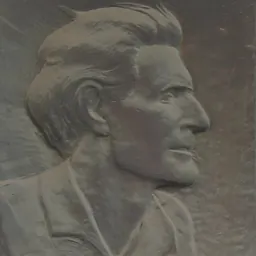


Contemporaries
People whose lives overlapped Maurice Yvain's

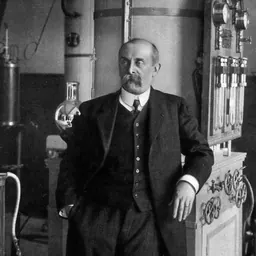




Frequently asked questions
Who was Maurice Yvain?
French composer (1891–1965)
When was Maurice Yvain born?
Maurice Yvain was born on 12 February 1891 in 2nd arrondissement of Paris.
When did Maurice Yvain die?
Maurice Yvain died on 27 July 1965 in Suresnes.
What was Maurice Yvain's occupation?
Maurice Yvain was a composer.
What nationality was Maurice Yvain?
Maurice Yvain was French.
Sources & further reading
Cite this page
APA: Biography.guide. (2026). Maurice Yvain. https://biography.guide/maurice-yvain/
MLA: "Maurice Yvain." Biography.guide, https://biography.guide/maurice-yvain/.
Chicago: "Maurice Yvain." Biography.guide. https://biography.guide/maurice-yvain/.
Data last updated: 2026-09-25 · Spot an error? Report a correction.
Page generated 2026-09-27 05:12 UTC