
About Maurice Jarre
Lived 1924 – 2009 (aged 84). Maurice Jarre was a French composer, conductor, film score composer, musician and bandleader.
Maurice-Alexis Jarre (; 13 September 1924 – 28 March 2009) was a French composer and conductor, mainly of film scores. He was particularly known for his collaborations with film director David Lean, composing the scores to all of his films from 1962 to 1984. He received numerous accolades over the course of his career, including three Academy Awards, three BAFTA Awards, four Golden Globes, and a Grammy Award.
Jarre won three Academy Awards for Best Original Score for the David Lean films Lawrence of Arabia (1962), Doctor Zhivago (1965), and A Passage to India (1984). He was Oscar-nominated for Sundays and Cybèle (1962), The Message (1976), Witness (1985), Gorillas in the Mist (1988), and Ghost (1990). Notable scores also include Eyes Without a Face (1959), The Longest Day (1962), The Train (1964), The Collector (1965), Grand Prix (1966), The Man Who Would Be King (1975), The Year of Living Dangerously (1982), Fatal Attraction (1987), and Dead Poets Society (1989). He worked with such directors as Alfred Hitchcock, Elia Kazan, John Huston, Luchino Visconti, John Frankenheimer, and Peter Weir.
Three of his compositions spent a total of 42 weeks on the UK singles chart. The biggest hit was "Somewhere My Love" (to his tune "Lara's Theme", with lyrics by Paul Francis Webster) performed by the Mike Sammes Singers, which reached Number 14 in 1966 and spent 38 weeks on the chart.
Jarre was the father of musician Jean-Michel Jarre and the adoptive father of screenwriter Kevin Jarre.
Early life and education Maurice-Alexis Jarre was born on 13 September 1924 in Lyon, France, the son of Gabrielle Renée (née Boullu) and André Jarre, a radio technical director.
He first enrolled in the engineering school at the Sorbonne, but decided to pursue music courses instead. He left the Sorbonne against his father's will and enrolled at the Conservatoire de Paris to study composition and harmony and chose percussion as his major instrument. He wrote the score for Toute la mémoire du monde by Alain Resnais. In 1954, his radio opera, Ruisselle, won the Prix Italia for musical works in Perugia.
Film scoring
In 1961, Jarre's music career experienced a major change when American film producer Sam Spiegel asked him to write the score for the 1962 epic Lawrence of Arabia, directed by David Lean. The acclaimed score won Jarre his first Academy Award and he would go on to compose the scores to all of Lean's subsequent films. He followed with The Train (1964) and Grand Prix (1966), both for director John Frankenheimer, and in between had another great success in David Lean's Doctor Zhivago, which included the lyricless tune "Lara's Theme" (later the tune for the song "Somewhere My Love"), and which earned him his second Oscar. He worked with Alfred Hitchcock on Topaz (1969): although Hitchcock's experiences with the film were unhappy, he was satisfied with Jarre's score, telling him, "I have not given you a great film, but you have given me a great score."
Jarre's score for David Lean's Ryan's Daughter (1970), set in Ireland, completely eschews traditional Irish music styles, according to Lean's preferences. The song "It Was a Good Time" from Ryan's Daughter went on to be recorded by musical stars such as Liza Minnelli, who used it in her critically acclaimed television special Liza with a Z, as well as by others during the 1970s. He contributed the music for Luchino Visconti's The Damned (1969), and John Huston's The Man Who Would Be King (1975).
He was again nominated for an Academy Award for scoring The Message in 1976, for the director and producer Moustapha Akkad. He followed with Witness (1985) and Dead Poets Society (1989), for which he won a British Academy Award.
In the 1970s and 1980s, Jarre turned his hand to science fiction, with scores for The Island at the Top of the World (1974), Dreamscape (1984), Enemy Mine (1985), and Mad Max Beyond Thunderdome (1985). The last is written for full orchestra, augmented by a chorus, four grand pianos, a pipe organ, digeridoo, fujara, a battery of exotic percussion, and three ondes Martenot, which feature in several of Jarre's other scores, including Lawrence of Arabia, Jesus of Nazareth, The Bride and Prancer. The balalaika features prominently in Jarre's score for Doctor Zhivago.
In 1990, Jarre was again nominated for an Academy Award, scoring the supernatural love story/thriller Ghost. His music for the final scene of the film is based on "Unchained Melody" composed by fellow film composer Alex North.
Jarre's television work includes the theme for the short-lived 1967 Western series on CBS, Cimarron Strip, his score for the miniseries Jesus of Nazareth (1977), directed by Franco Zeffirelli, Shōgun (1980), and the theme for PBS's Great Performances. who was "among the most sought-after composers in the movie industry" and "a creator of both subtle underscoring and grand, sweeping themes, not only writing for conventional orchestras ... but also experimenting with electronic sounds later in his career".
Style and artistry Jarre wrote mainly for orchestras, but began to favour synthesized music in the 1980s. Jarre pointed out that his electronic score for Witness was actually more laborious, time-consuming and expensive to produce than an orchestral score. Jarre's electronic scores from the 1980s also include Fatal Attraction, The Year of Living Dangerously, Firefox and No Way Out. A number of his scores from that era also feature electronic / acoustic blends, such as Gorillas in the Mist, Dead Poets Society, The Mosquito Coast and Jacob's Ladder.
Personal life Marriages and family Jarre was married four times, the first three marriages ending in divorce. In the 1940s, his marriage to Francette Pejot, a French Resistance member and concentration camp survivor, produced a son, Jean-Michel Jarre, a French composer, performer, and music producer, who is one of the pioneers in electronic music. When Jean-Michel was five years old, Maurice split up with his wife and moved to the United States, leaving Jean-Michel with his mother in France.
In 1965, Jarre married French actress Dany Saval; together they had a daughter, Stephanie Jarre. He next married American actress Laura Devon (1967–1984), resulting in his adopting her son, Kevin Jarre, a screenwriter, with credits on such films as Tombstone and Glory (1989). From 1984 to his death, he was married to Fui Fong Khong.
Death Jarre died of cancer on 28 March 2009 in Los Angeles.
Filmography Film
Television
Awards and nominations
Jarre received three Academy Awards and received a total of nine nominations, eight for Best Original Score and one for Best Original Song. He also won four Golden Globes and was nominated for ten. The American Film Institute ranked Jarre's score for Lawrence of Arabia number three on their list of the greatest film scores. His scores for the following films were also nominated for the list: Doctor Zhivago (1965), A Passage to India (1984), and Ryan's Daughter (1970). Numerous additional awards include ASCAP's Lifetime Achievement Award in 1993. He received a star on the Hollywood Walk of Fame.
Award Year Category Project Result Ref.Academy Award 1962 Best Original Score Lawrence of Arabia 1963 Sundays and Cybele 1965 Doctor Zhivago 1972 Best Original Song The Life and Times of Judge Roy Bean ("Marmalade, Molasses & Honey") 1976 Best Original Score The Message 1984 A Passage to India 1985 Witness 1988 Gorillas in the Mist 1990 Ghost British Academy Film Award 1985 Best Film Music A Passage to India Witness 1989 Dead Poets Society Golden Globe Award 1962 Best Original Score Lawrence of Arabia 1965 Doctor Zhivago 1965 Doctor Zhivago 1970 Ryan's Daughter 1984 A Passage to India 1985 Witness 1987 Fatal Attraction Saturn Award 1980 Best Music Resurrection 1985 The Bride 1990 Ghost
Don’t just read it —
keep it.
Full-length biographies made to live with: read them, listen on the way to work, watch them tonight.
- E-book
- Audio
- Video
Instant download · yours to keep · every purchase keeps this site free
Important facts
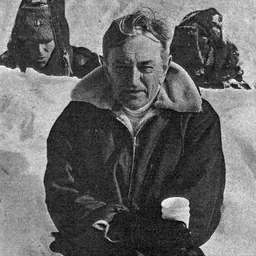
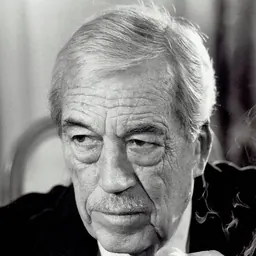
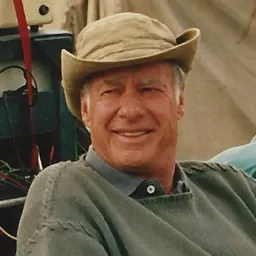
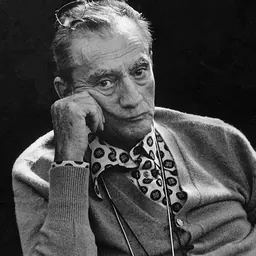
People in Maurice Jarre's life
Named in this biography and alive at the same time




Related people
Same field, nearest in time



Contemporaries
People whose lives overlapped Maurice Jarre's


Frequently asked questions
Who was Maurice Jarre?
French composer and conductor (1924-2009)
When was Maurice Jarre born?
Maurice Jarre was born on 13 September 1924 in 5th arrondissement of Lyon.
When did Maurice Jarre die?
Maurice Jarre died on 28 March 2009 in Los Angeles, Malibu.
What was Maurice Jarre's occupation?
Maurice Jarre was a composer, conductor, film score composer, musician and bandleader.
What nationality was Maurice Jarre?
Maurice Jarre was French.
Sources & further reading
Cite this page
APA: Biography.guide. (2026). Maurice Jarre. https://biography.guide/maurice-jarre/
MLA: "Maurice Jarre." Biography.guide, https://biography.guide/maurice-jarre/.
Chicago: "Maurice Jarre." Biography.guide. https://biography.guide/maurice-jarre/.
Data last updated: 2026-09-21 · Spot an error? Report a correction.
Portrait: Wikimedia Commons · author & licence
Page generated 2026-09-27 05:01 UTC